
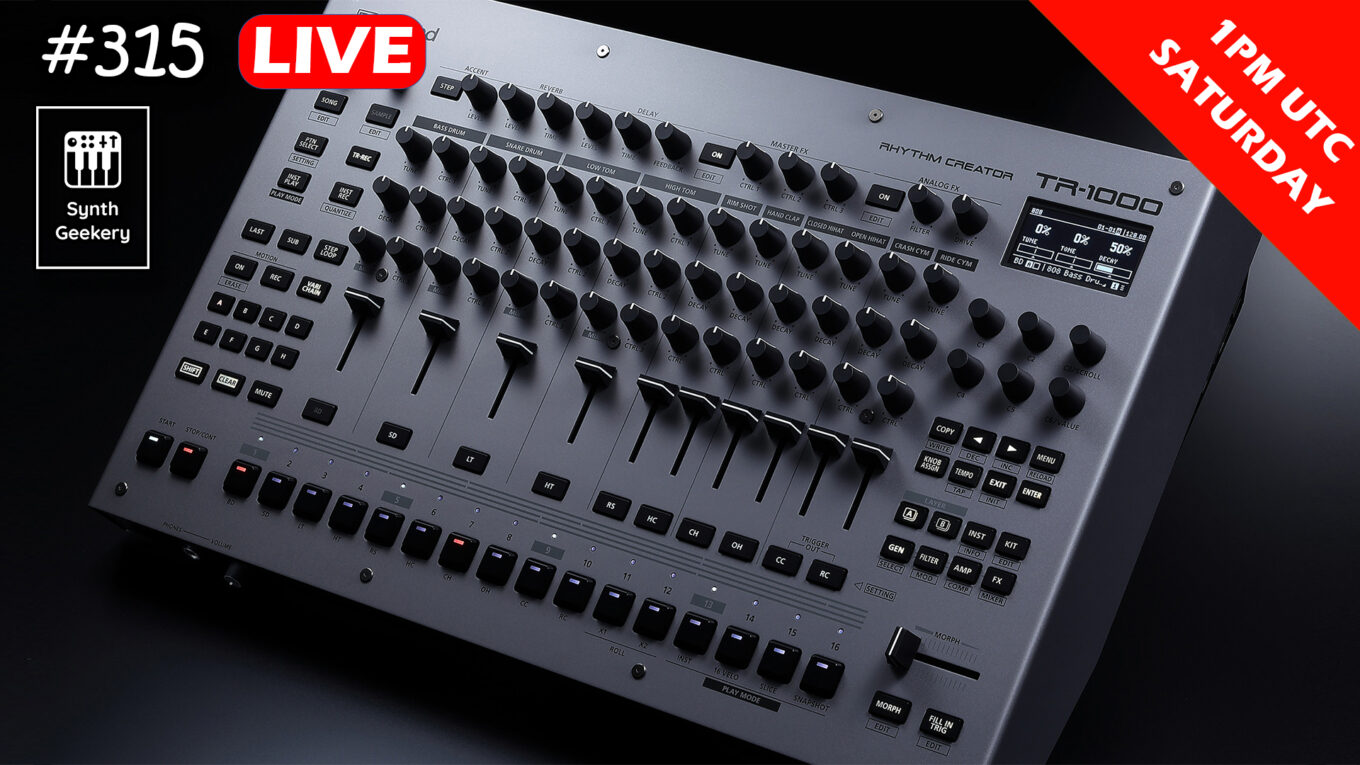
Synth Geekery 315
In episode 315 we talked about the Roland TR-1000, Akai MPC Live III and MakeNoise PoliMATHS & QXG – plus synths, eurorack, sequencers, drum machines, samplers, effects and software! Plus all the usual segments! Funny Side, News from the Geekery, Price Watch, Name that Synth …
Show contents:
- About
- Guests
- Video replay
- Funny Side
- News from The Geekery
- Price Watch
- Name that Synth
- Saturday Sonority
About the Synth Geekery Show

Synth Geekery is a weekly podcast/live stream (YouTube) show about everything synthesizers, drum machines, samplers, sequencers, eurorack and music technology. We take the “one of the masses” viewpoint, where we are also users of gear just like you (read: we’re not influenced by commercial product placement).
The show relies on the generous contributions of the synth community. You can contribute in many ways including supporting us via our YouTube Channel Membership or Patreon. We also have regular and special video guests: if you would like to take part in future shows – please contact me via email on the about page here.
Your Host
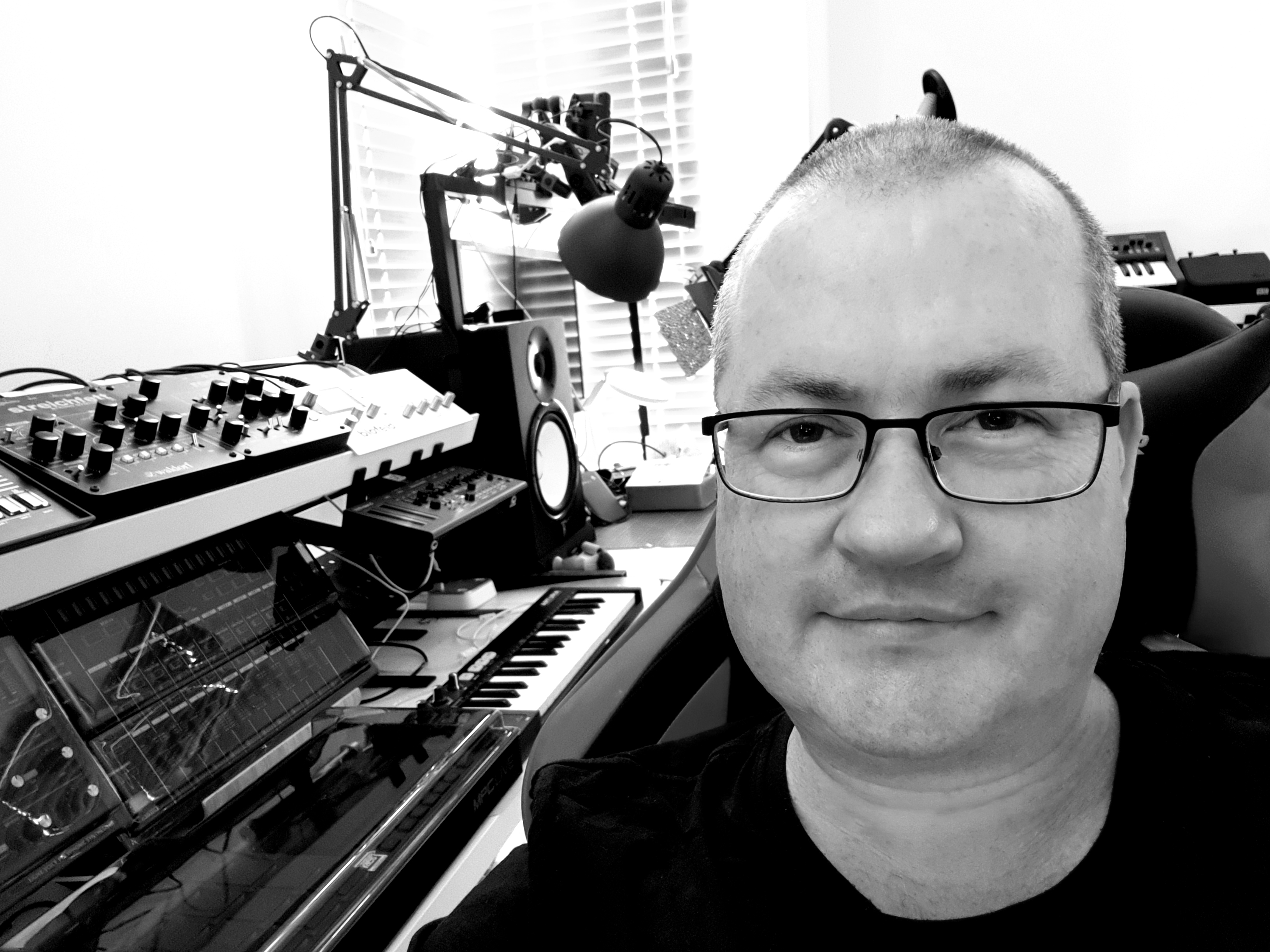
Ranzee (Ranz Adamson) is your show host. He’s based in Perth, Western Australia and has been a hobbyist musician and technologist for most of his life. More information can be found about him here.
YouTube: https://www.youtube.com/ranzee
BandCamp: https://ranzee.bandcamp.com
Guests
This week’s video guests are:
Daren T. Housse

Bandcamp Link: https://darenthousse.bandcamp.com/
Youtube: https://www.youtube.com/channel/UCLPHxpZgFKKE1wkG9ndto3A
Daren resides in the UK and is one of the first video guests on the show since 2019. He has a large amount of tracks on his youtube channel plus a great album collection over on BandCamp.
SynthAddict
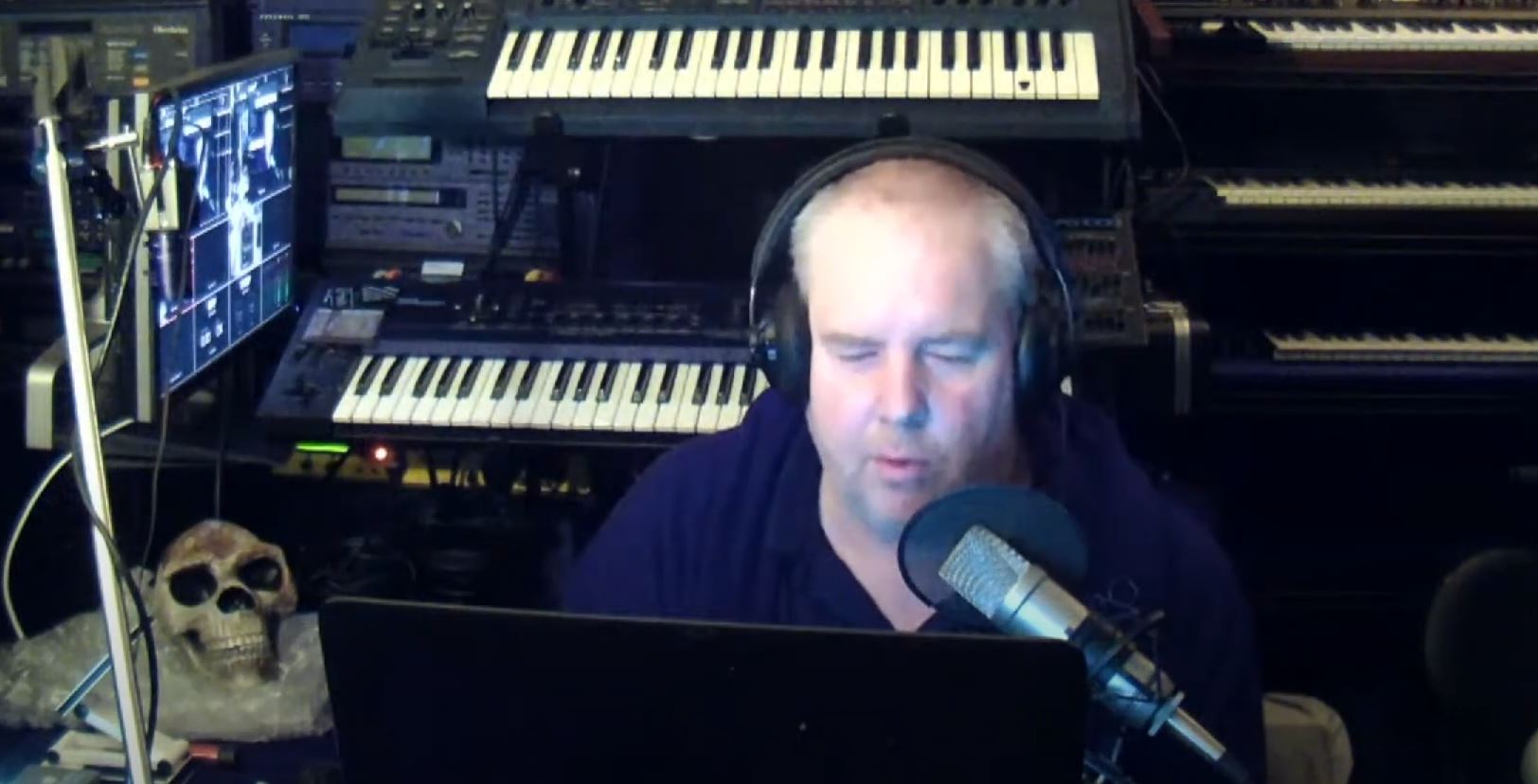
Andy is a musician and technologist from the bay area in California. He has an amazing collection of music tech gadgets and a large knowledge of synthesizers.
Youtube: https://www.youtube.com/channel/UCUtABvP7q29uvLKi73zIjFQ
Ian J. Cole

Ian is a musician, composer, sound designer and producer currently producing solo ambient electronic music. He also runs Sinners Music which is a Record Company and Online Music Retailer in East Yorkshire, England
Youtube: https://www.youtube.com/c/IanJCole
Chris – Maikshifter
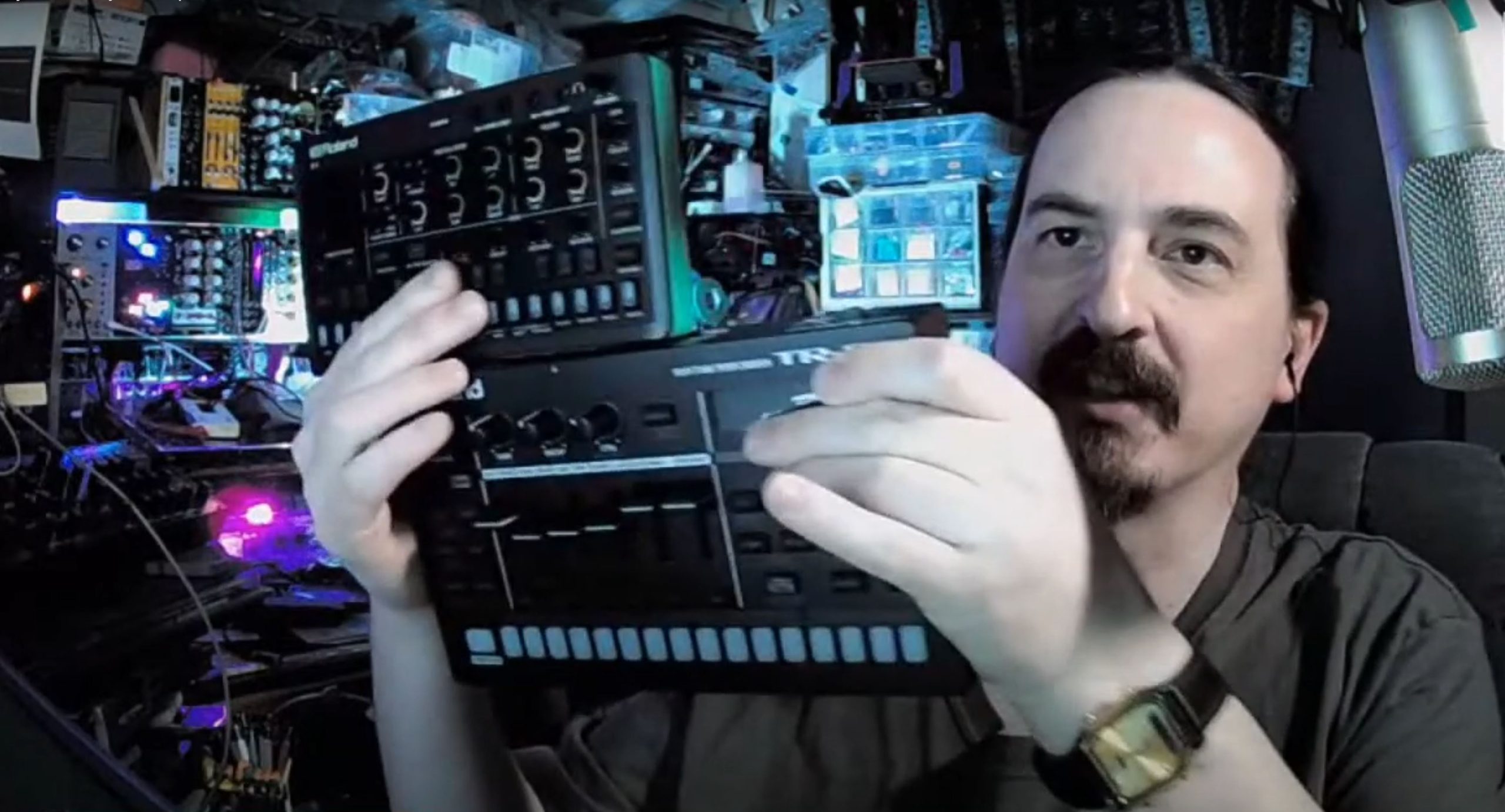
Chris is a musician and technologist from Perth, Western Australia. He’s always had a love for creating and tinkering with music electronics and has recently embarked on a new journey creating eurorack modules.
Youtube: https://www.youtube.com/@Maikshifter
Video replay
Funny Side
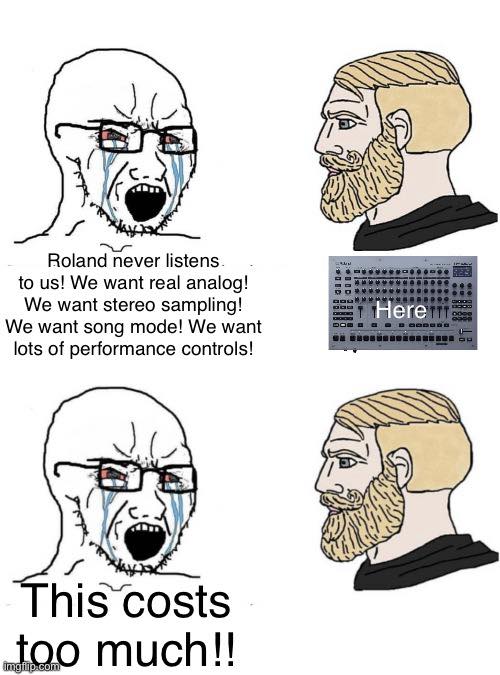
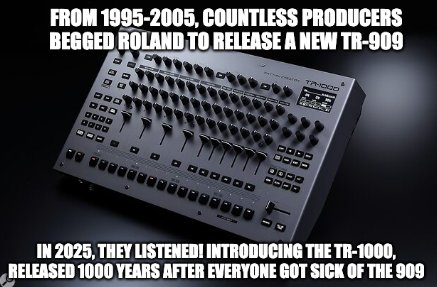
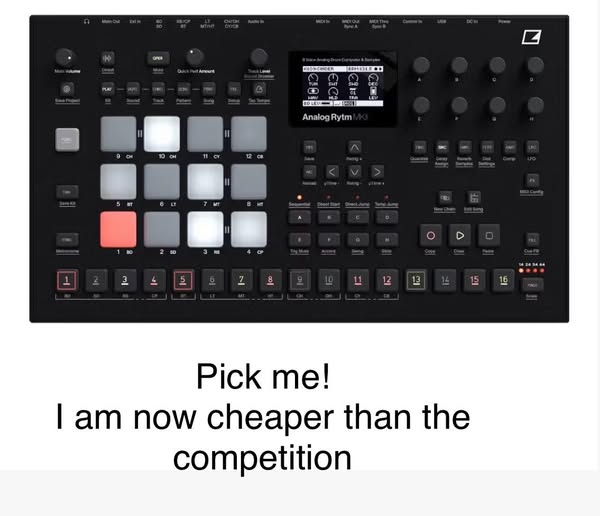
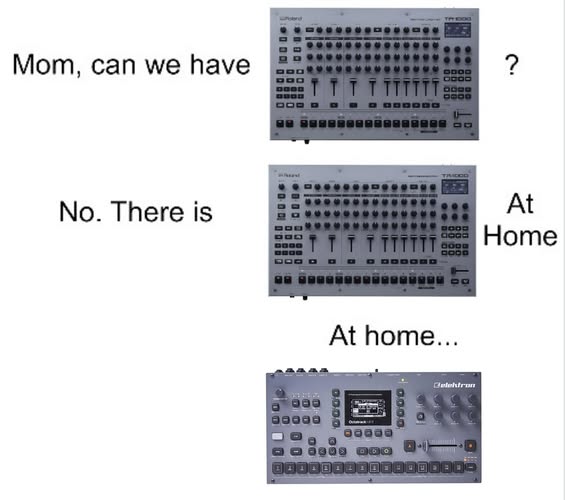
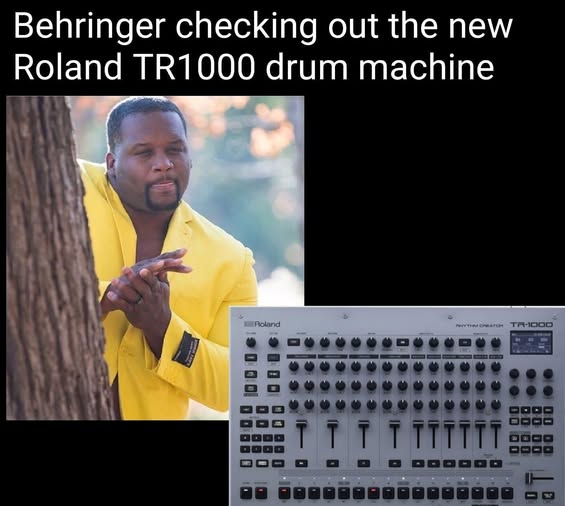
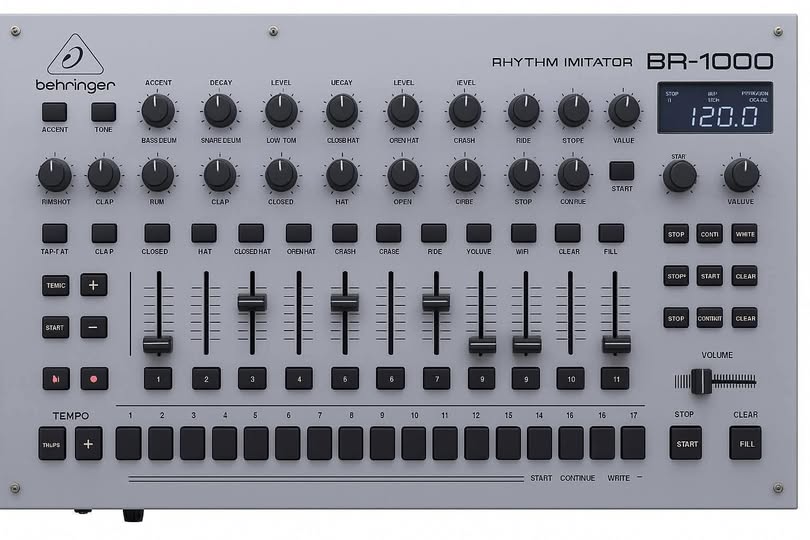
The funny side segment is a collection of memes that are somewhat relevant to the synth geekery community. Some of these images are taken from Facebook, Instagram and other social media sources. Please respect the creators. Hope you enjoy this week’s selection:

News
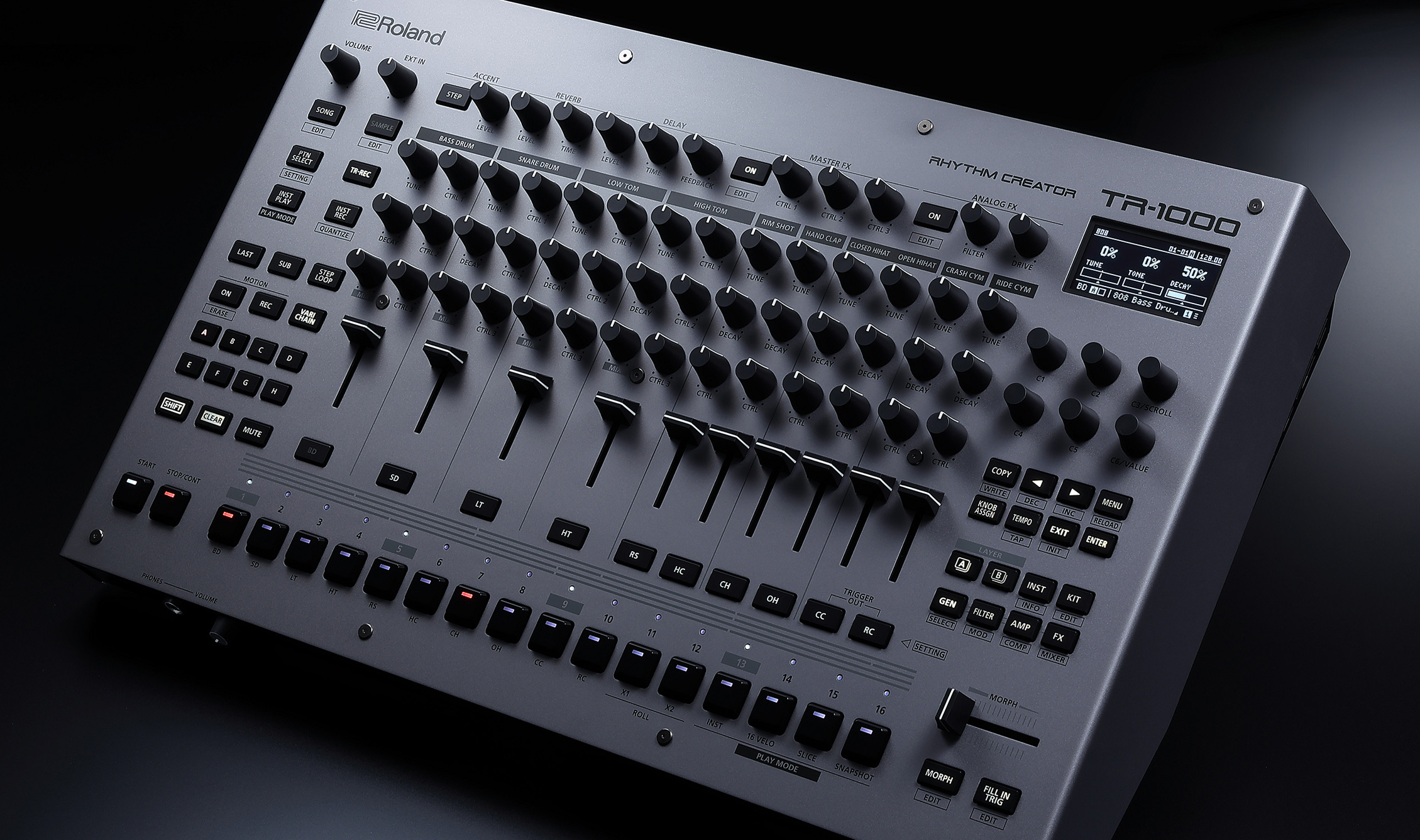
Roland TR-1000
Get your TR-1000 here (affiliate link): https://clickfi.re/E3rQ7wKr
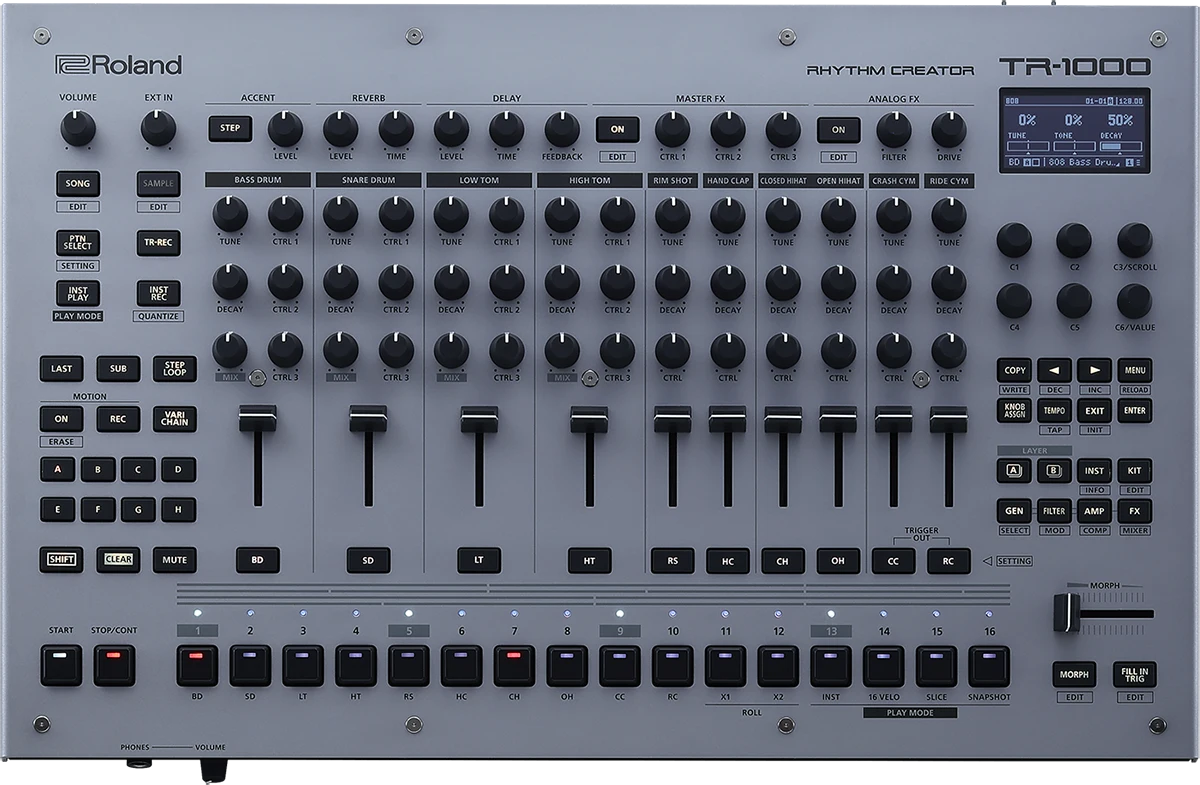
The Roland TR-1000 is a flagship rhythm-creation instrument combining genuine analog circuitry, digital modeling, and sampling in one advanced workstation. It’s the first Roland drum machine in over 40 years to include a true analog engine, recreating 16 circuits from the legendary TR-808 and TR-909 using modern components.
In addition to the analog section, it incorporates multiple digital engines—ACB modeling, FM percussion, virtual analog synthesis, and a full-featured PCM/sample engine. The TR-1000 offers an advanced sequencing system, blending the classic TR workflow with modern, flexible timing options. It’s designed for live performance and studio integration, featuring a Morph slider, snapshot recall, and deep connectivity including USB audio/MIDI, CV/trigger I/O, and individual analog outputs.
Built as a forward-looking platform, the TR-1000 supports firmware and DSP updates for expanding features and sound engines over time.
Key Features
- True analog voice engine with 16 circuits inspired by TR-808 and TR-909.
- ACB (Analog Circuit Behavior) modeling with 21 circuit-bent 8X/9X variants plus classic 808/909 models.
- FM percussion, virtual analog synth, and PCM sample playback engines.
- Stereo sampling and resampling with slicing, editing, BPM sync, and time stretching.
- 64 GB total internal memory (≈46 GB user space) for sample storage and import/export.
- Per-track processing: compressor, multimode filter or 4-band EQ, amplifier/envelope, and LFO.
- Effects: analog filter and drive, digital inserts (crusher, filter, flanger, etc.), reverb, delay, and master FX.
- Sequencing options: TR-REC step input, real-time recording, motion recording, probability, off-grid timing, and step looping.
- Performance tools: Morph slider, snapshot recall, real-time faders, and extensive hands-on controls.
- Connectivity: stereo mix out, FX out, 10 assignable outs or trigger outs, stereo external inputs, CV/trigger I/O, MIDI In/Out/Thru, DIN sync, USB-C audio/MIDI, and USB-A device port.
- Durable aluminum and steel chassis with universal internal PSU and fan-free design.
- Updatable DSP platform for future sound engines and firmware upgrades.
Rear connections
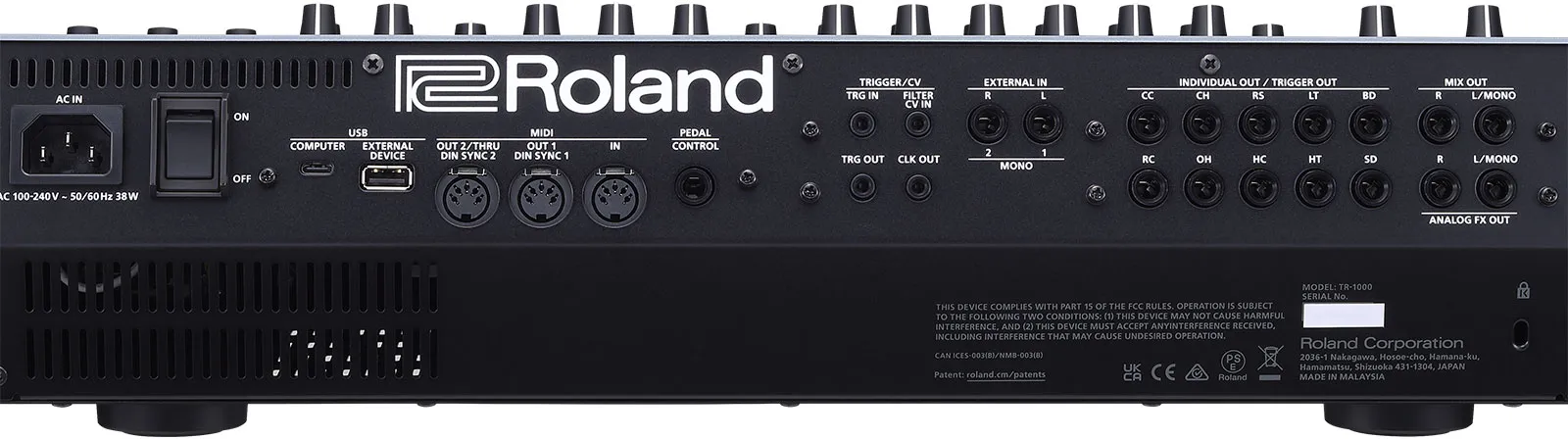
The rear panel of the TR-1000 offers professional-grade routing and integration options. It includes a main stereo mix output (L/MONO, R) plus a dedicated analog FX output pair. Ten jacks serve as either individual voice outputs or trigger outputs, labeled BD through RC, enabling flexible routing for studio mixing or modular control.
For sampling and processing, the dual mono/stereo external inputs allow external signals to be routed through the TR-1000’s filters and effects. Trigger and CV connections include TRG IN, TRG OUT, FILTER CV IN, and CLK OUT for modular or vintage synchronization.
Comprehensive MIDI support includes MIDI In, MIDI Out, and Thru/DIN Sync connections, ensuring compatibility with both modern and legacy equipment. A USB-C port handles multichannel audio and MIDI over a single cable, while a USB-A port supports flash drives and MIDI controllers. A front-panel headphone output and pedal input round out the connectivity, with power delivered via an internal universal supply.
Get the App
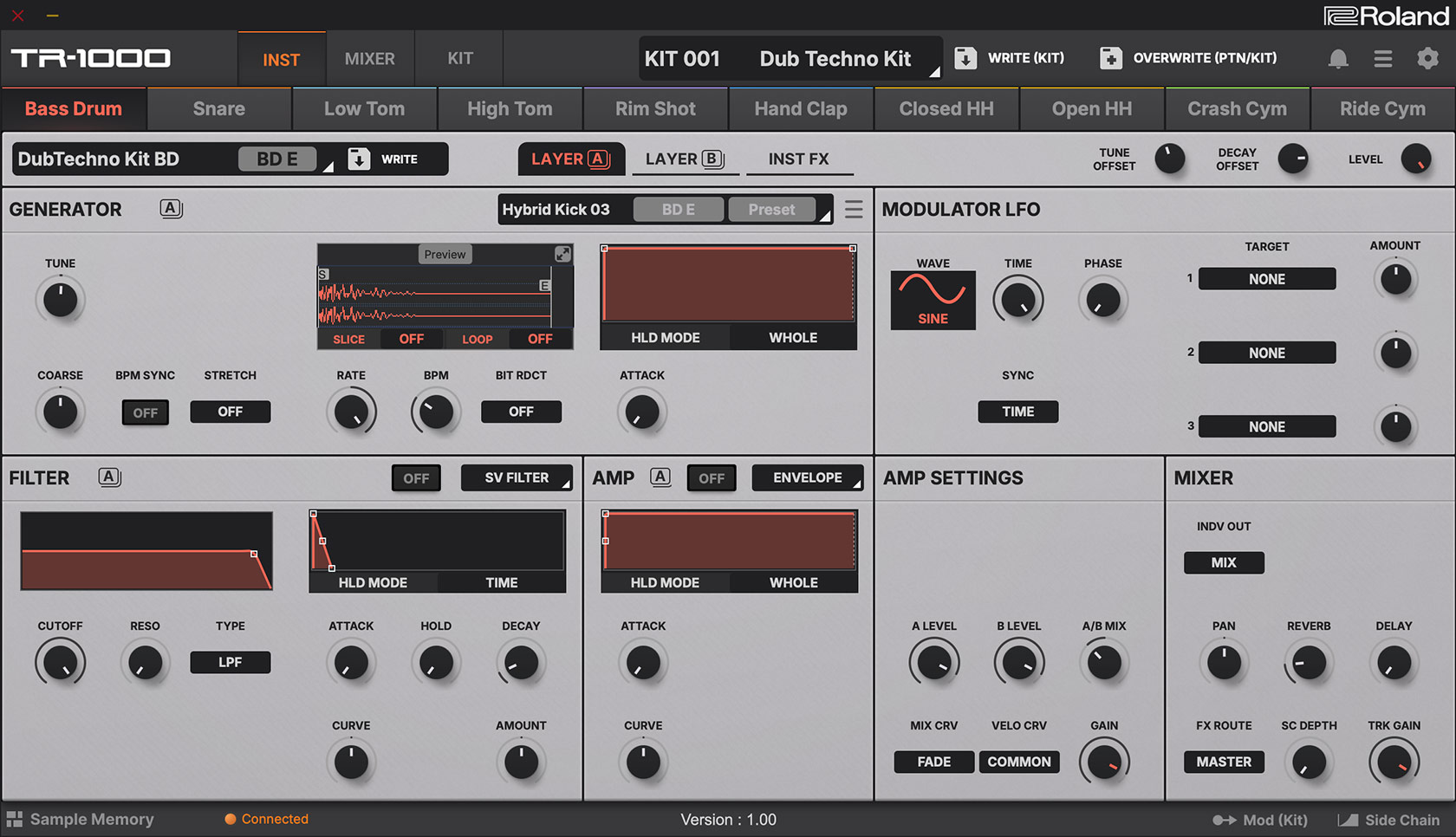
The companion TR-1000 App extends the hardware experience with a large graphical interface for deeper sound design and project management. It serves as both an editor and librarian, allowing users to visualize parameters, adjust settings, and organize sounds, kits, and samples on a computer.
The app mirrors the hardware’s layout while adding enhanced navigation and real-time visual feedback, ideal for fine-tuning, backing up projects, or performing large-scale edits. It’s designed to streamline workflow and improve efficiency without replacing the tactile feel of the physical controls.
Summary Specifications
| Category | Specification |
|---|---|
| Voice Engines | Analog (16 circuits), ACB modeling, FM, VA, PCM/Sampling |
| Memory | 64 GB internal (≈46 GB user) |
| Sequencing | 2,048 kits and 2,048 patterns with motion, probability, and off-grid sequencing |
| Effects | Analog filter/drive, digital inserts, reverb/delay sends, master FX |
| Connectivity | Stereo mix out, FX out, 10 assignable outs/trigger outs, stereo inputs, CV/trigger I/O, MIDI In/Out/Thru, DIN sync, USB-C audio/MIDI, USB-A device port |
| Controls | OLED display, knobs, faders, Morph slider, snapshot recall |
| Build | Aluminum top, steel chassis, fan-free, universal PSU |
| Power | 117–240 V AC, ~38 W consumption |
| Dimensions | 486 × 311 × 125 mm |
| Weight | ~5.5 kg |
| Accessories | Power cord, USB-C cable, manual; optional pedals and flash drive |
| Expandability | Firmware and DSP upgradable platform |
Pricing
| Currency | Price | Notes |
|---|---|---|
| USD | $2,699 | Official list price |
| EUR | €2,699 | EU retail pricing |
| GBP | £2,286 | UK retail pricing |
| AUD | $4,000–4,300 | Estimated Australian retail pricing based on conversion rates |
Link: https://www.roland.com/global/products/tr-1000/
Akai MPC Live III
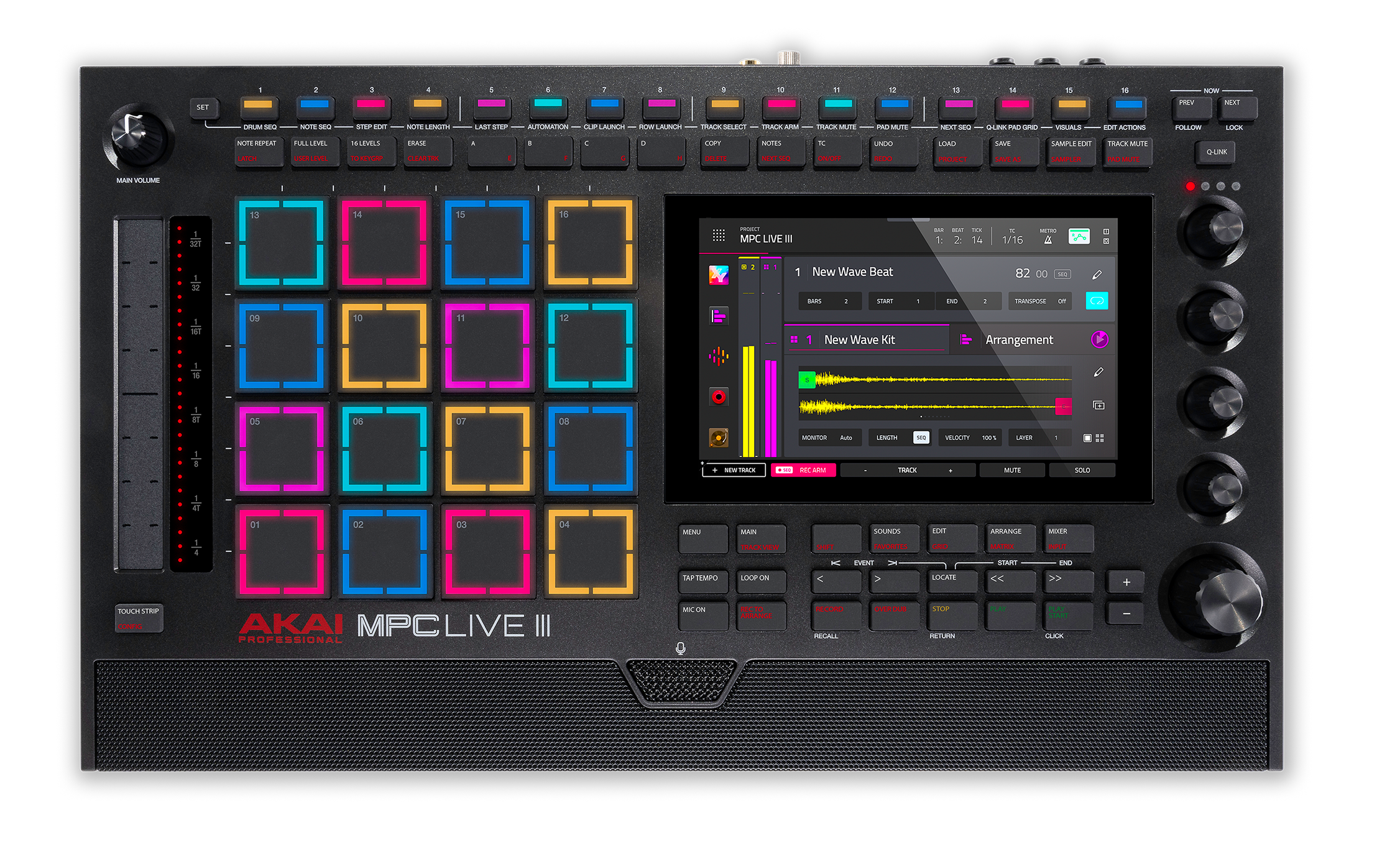
The Akai MPC Live III is the third generation of Akai’s standalone MPC workstation series, designed as a complete music production and performance hub without needing a computer. It introduces a faster processor, expanded memory, new expressive pads, dedicated step sequencer, advanced clip-launching workflow, and firmware enhancements aimed at professionals. The unit bridges studio and live performance environments, offering up to 32 instrument plugins, 16 audio tracks, and extensive connectivity options for hybrid setups.
Key Features
- 16 MPCe 3D-sensing velocity and pressure-sensitive pads
- Dedicated 16-step sequencer with physical buttons
- Integrated clip-launching matrix workflow
- Built-in microphone and stereo monitors
- USB-C audio and MIDI support
- 8-core CPU and 8 GB RAM
- 128 GB internal storage (expandable via SATA bay)
- Up to 32 plugin instrument tracks and 16 audio tracks
- CV/Gate, MIDI, USB, Wi-Fi, and Bluetooth connectivity
- 7-inch multi-touch display
- Rechargeable battery (approx. 3 hours runtime)
- Includes over 1,000 MPC-ready drum kits and instruments
New MPCe Pads (4-Position / 3D Sensing)
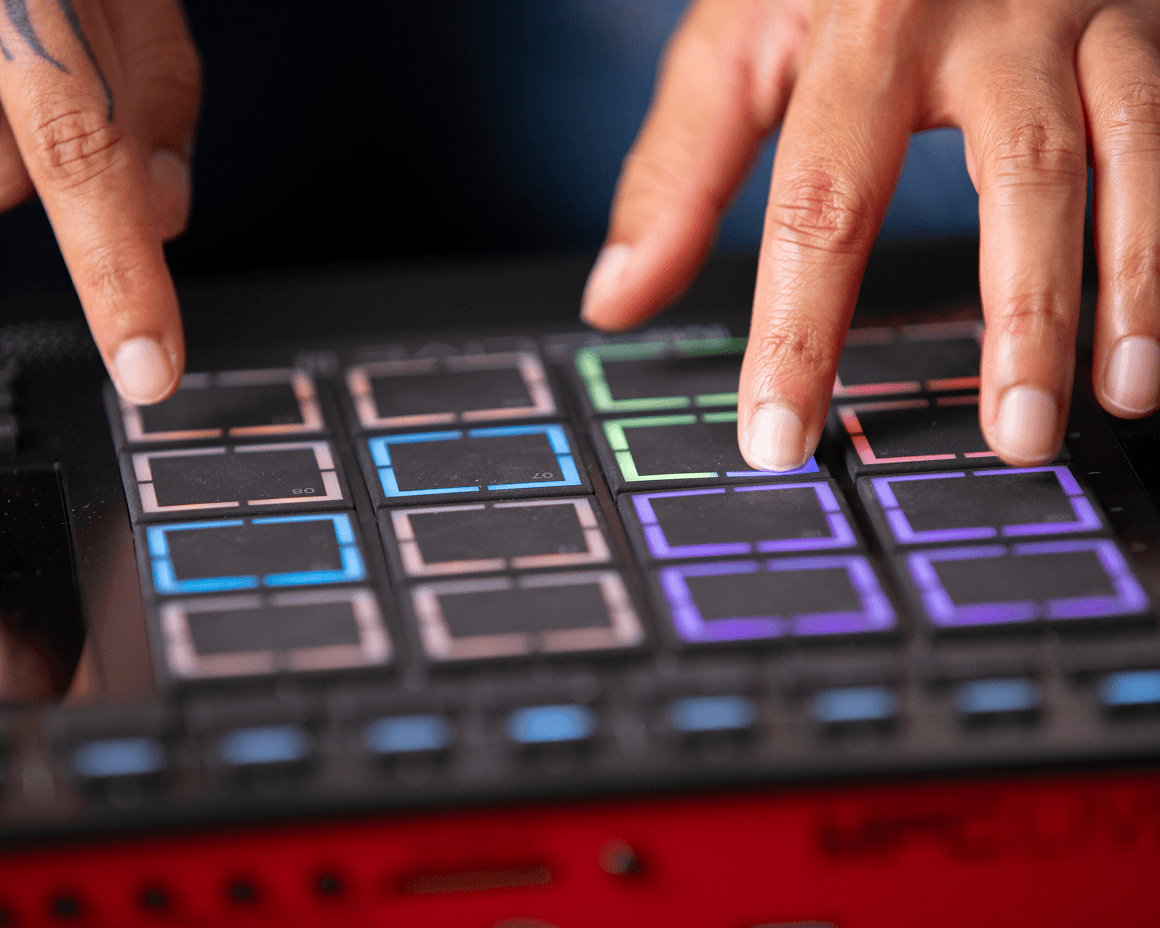
The new MPCe pads represent a major hardware upgrade. Each pad senses not just velocity and pressure but also positional movement, allowing multidimensional modulation. These 3D-sensing pads enable expressive control similar to MPE instruments, where sliding or moving across the pad surface alters tonal or modulation parameters. This provides more dynamic and performance-oriented playing, such as blending samples or controlling filters directly through finger movement.
Step Sequencer
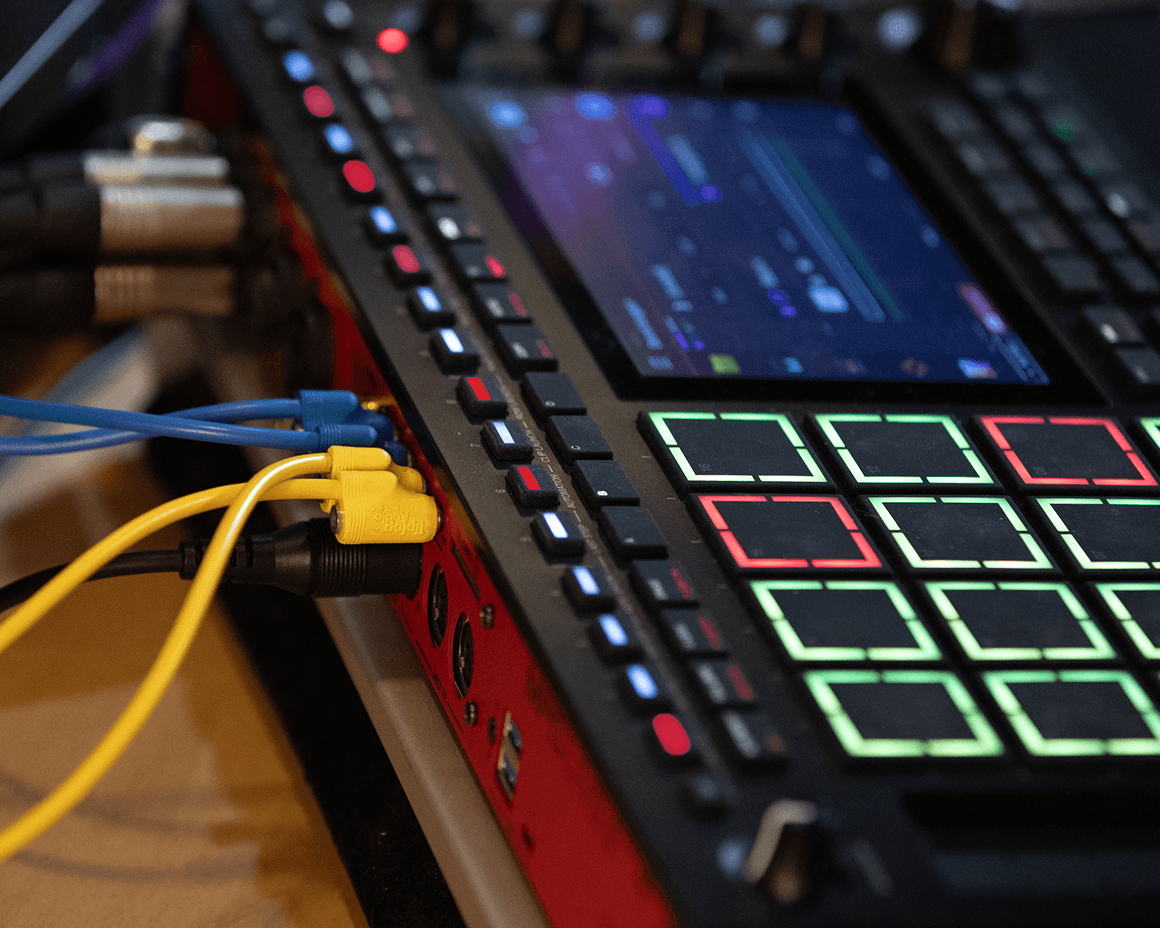
The dedicated 16-step sequencer adds a hands-on way to program beats and melodies. Each step corresponds to one part of a bar, allowing quick activation or muting of hits, setting velocity levels, and adjusting swing or probability. It blends traditional groovebox sequencing with the MPC’s pattern-based workflow, offering users the best of both real-time performance and step-based editing.
Clip Launching Features
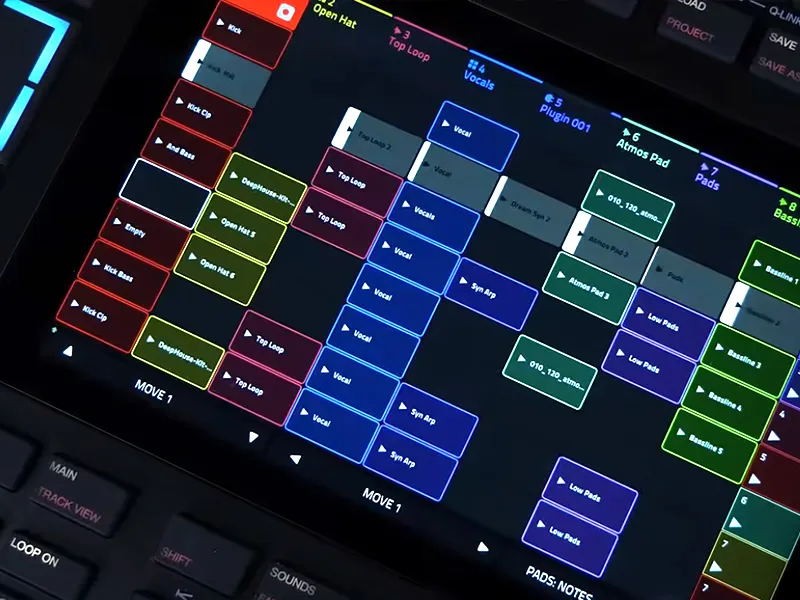
The Clip Launching Matrix brings non-linear performance workflows to the MPC platform. Users can trigger clips—whether audio loops or MIDI sequences—in sync with the master tempo. The grid layout supports launching scenes, loops, and transitions seamlessly, ideal for live sets, DJ-style performances, and improvisational arrangement building. It works in tandem with the traditional sequencer, letting users combine structured sequencing with spontaneous clip-based performance.
Direct Computer Sampling and Audio Interface
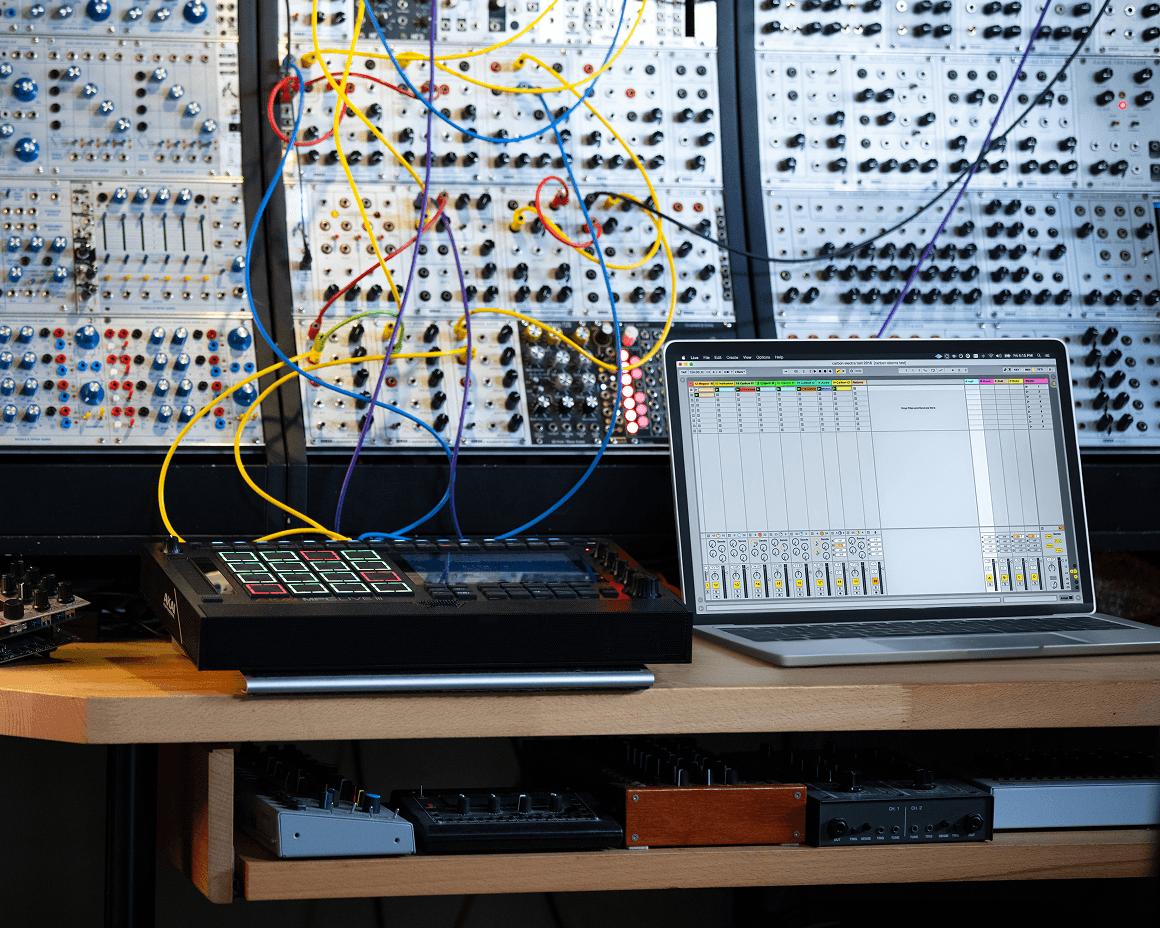
A major upgrade in the MPC Live III is its ability to function as a 24-channel USB audio interface via the USB-C connection. This allows direct, bi-directional streaming between the MPC and a computer without needing an external interface. You can record audio directly from your computer into the MPC for sampling or resampling, and send MPC tracks back into your DAW for mixing and mastering. The USB-C connection supports up to 24 channels of simultaneous I/O, providing seamless integration with modern digital workflows. This feature transforms the MPC Live III from a purely standalone unit into a fully hybrid production centerpiece capable of working effortlessly with both studio and live computer-based setups.
Rear Connections

The rear panel of the MPC Live III provides extensive analog, digital, and modular connectivity. It includes two XLR/TRS combo inputs for mic or line-level sources, dedicated RCA phono inputs for turntables, six balanced ¼-inch TRS outputs, and a stereo headphone output. There are two 5-pin MIDI inputs and two 5-pin MIDI outputs, four stereo 3.5 mm CV/Gate outputs for modular gear, and both USB-A and USB-C ports for external devices and audio interfaces. An SD card slot and SATA bay are available for storage expansion, and power is provided by a 19V DC input, supplemented by a rechargeable internal battery.
MPC 3.6 Firmware Pro Features
The MPC 3.6 firmware introduces advanced tools and premium effects under the “Pro” feature set. These include Super Timestretch for studio-grade time manipulation, Pro Stems for automatic stem separation, and Visual EQ for spectral shaping. Additional tools such as Pro Reverb and CV Playground expand production and modular integration capabilities. The update also boosts processing efficiency, offering smoother handling of complex projects with multiple tracks and plugins.
Comparison: MPC Live 1 vs Live 2 vs Live 3
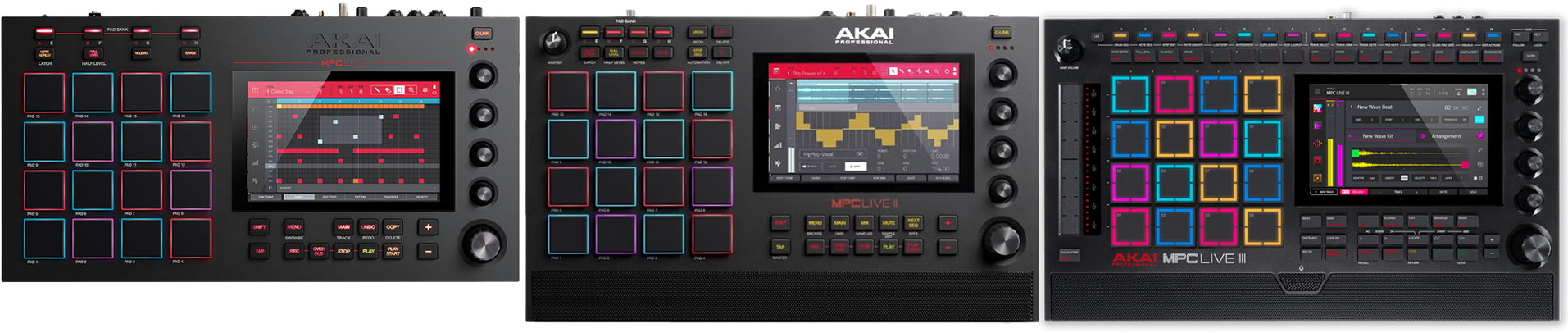
| Feature / Spec | MPC Live (1) | MPC Live II | MPC Live III |
|---|---|---|---|
| CPU | Quad-core | Quad-core | 8-core |
| RAM | 2 GB | 2 GB | 8 GB |
| Internal Storage | 16 GB | 16 GB | 128 GB |
| Pads | Standard | Standard | MPCe 3D-sensing pads |
| Step Sequencer | No | No | Yes |
| Clip Launching | No | No | Yes |
| Audio Outputs | 6 TRS | 6 TRS | 6 TRS |
| Inputs | Line/Phono | Line/Phono | Mic/Line + Phono |
| MIDI I/O | 2 In / 2 Out | 2 In / 2 Out | 2 In / 2 Out |
| CV/Gate | No | Yes (4 stereo) | Yes (4 stereo) |
| USB | USB-A/B | USB-A/B | USB-A and USB-C |
| Display | 7″ Touch | 7″ Touch | 7″ Multi-touch |
| Built-in Speakers | No | Yes | Yes |
| Battery | Yes (~4h) | Yes (~5h) | Yes (~3h) |
| Plugin Tracks | 8 | 8 | 32 |
| Audio Tracks | 8 | 8 | 16 |
| Polyphony | 64 voices | 64 voices | 256 voices |
| Advanced DSP | Standard | Standard | Super Timestretch, Pro Stems, Visual EQ |
Summary Table
| Specification | Details |
|---|---|
| Product Name | Akai MPC Live III |
| Type | Standalone Music Production Center |
| CPU / RAM | 8-core processor, 8 GB RAM |
| Storage | 128 GB internal, expandable via SATA |
| Pads | 16 MPCe 3D-sensing expressive pads |
| Step Sequencer | Dedicated 16-step hardware interface |
| Clip Launching | Integrated Clip Matrix workflow |
| Audio I/O | 2 Mic/Line combo, RCA Phono, 6 TRS outs, headphones |
| MIDI / CV / USB | 2 In, 2 Out; 4 stereo CV/Gate; USB-A x2, USB-C |
| Display | 7″ Multi-touch |
| Built-in Speakers | Yes, stereo monitors |
| Battery | Rechargeable, approx. 3 hours |
| Firmware | MPC 3.6 OS with Pro features |
| Release | Late 2025 |
| Approx. Price | USD $1,699 / EUR €1,699 / GBP £1,499–£1,699 / AUD $2,900–$3,300 |
Release Date
The Akai MPC Live III was released in late 2025, with availability and reviews surfacing in early October 2025.
Pricing (Estimated)
| Currency | Price |
|---|---|
| USD | $1,699 |
| EUR | €1,699 |
| GBP | £1,499–£1,699 |
| AUD | $2,900–$3,300 |
Link: https://www.akaipro.com/mpc-live-3.html
Make Noise PoliMaths & QXD
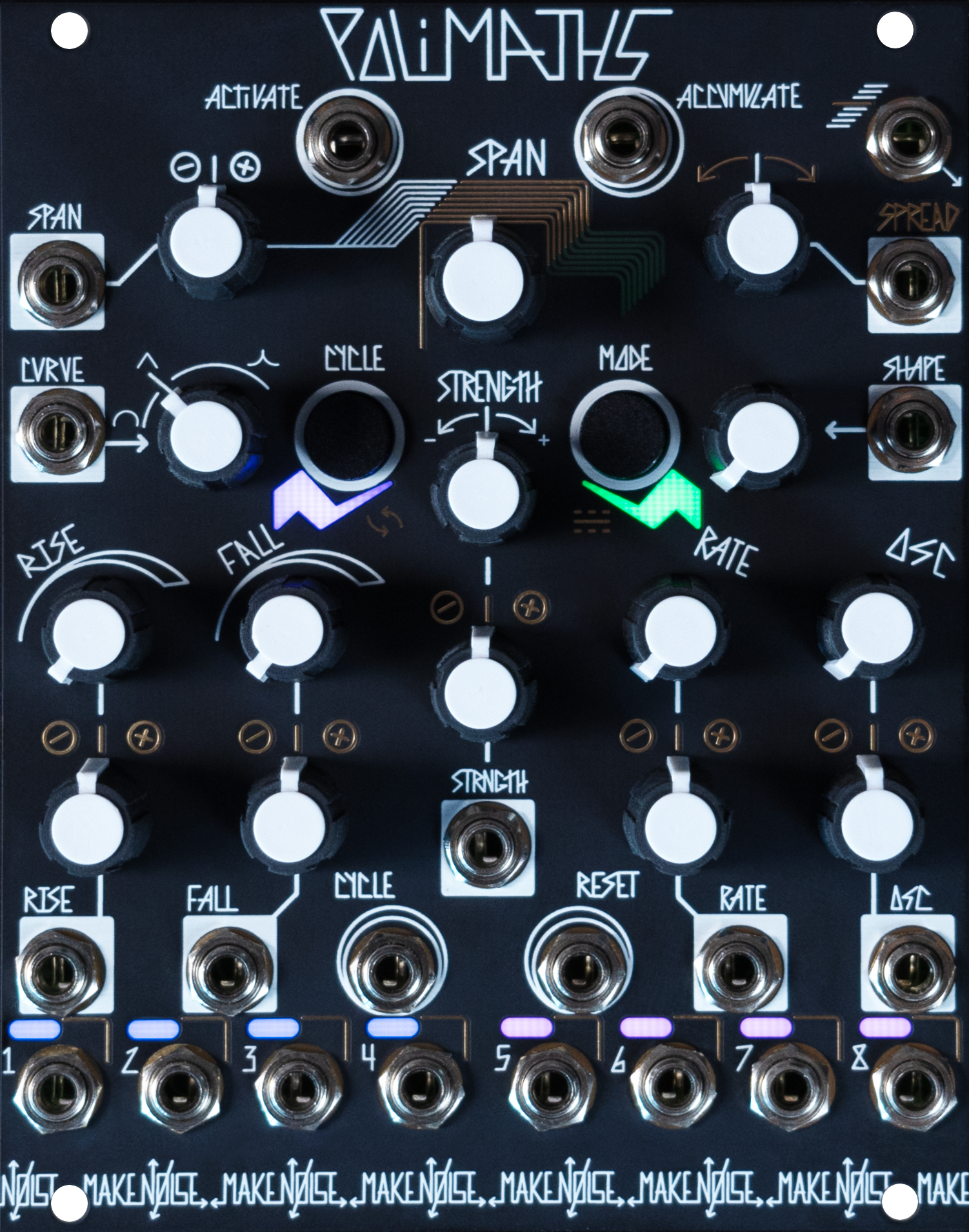
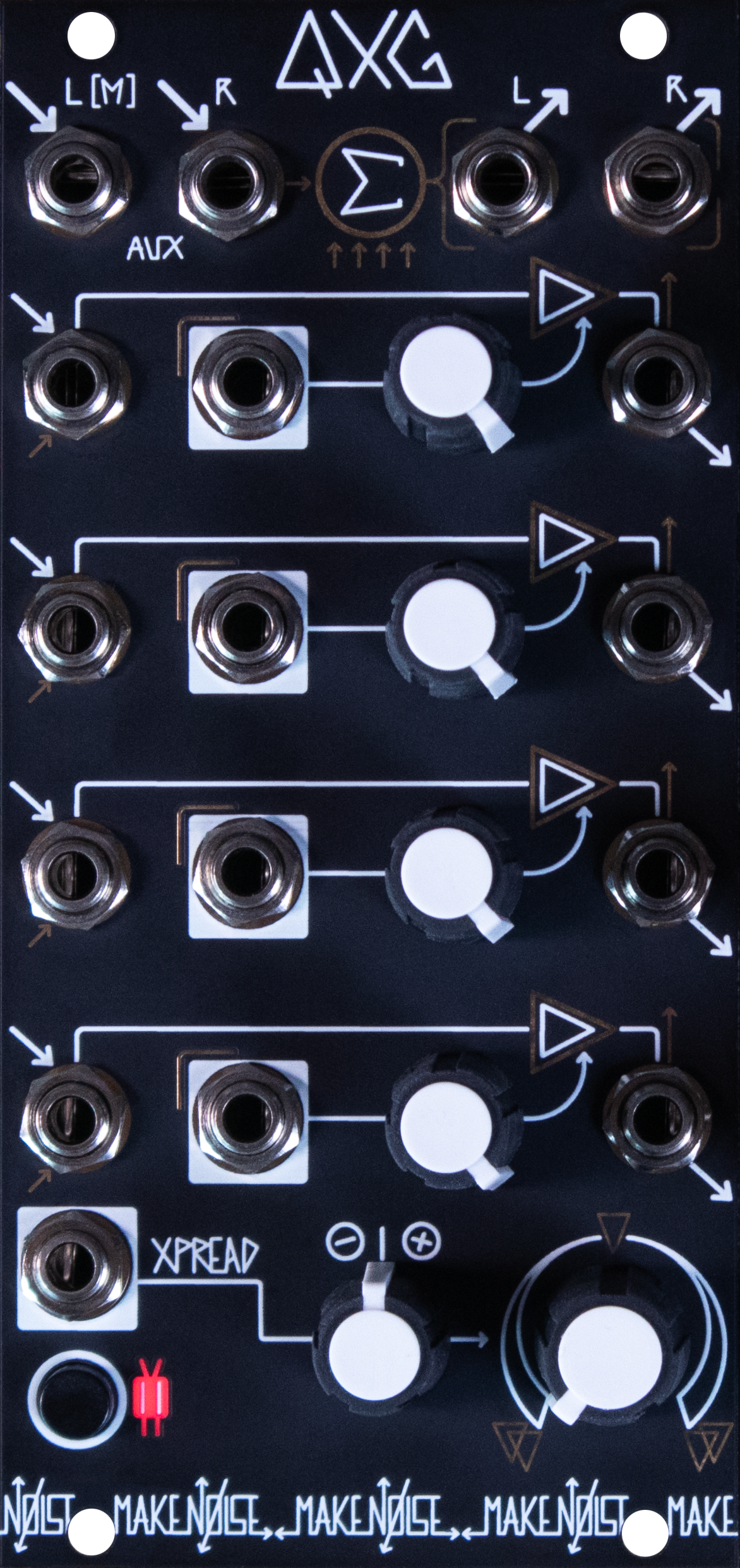
PoliMATHS
PoliMATHS is an eight-channel CV and Audio event generator for the New Universal Synthesizer System or any Eurorack modular synthesizer. It uses a single set of controls to generate complex functions at eight independent channel outputs. PoliMATHS’ functions are made up of two components: first, the well-known Rise-Fall envelope with variable Curve (familiar from the original MATHS and Function and 0-Coast Slope); and second, a variable-Shape Oscillation whose amplitude is controlled over time by the Rise-Fall envelopes. This oscillation can be either low frequency for the creation of complex control functions, or audio frequency for native generation of audio events/notes with optional tuned pitch control via 1v/oct control voltage. PoliMATHS also includes output headers for creating pre-patched connections to the control inputs of QXG.
QXG
The Quad Stereo Gate (QXG) music synthesizer module is a Four Channel Stereo Low Pass Gate and Mixer. Like the DXG before it, the QXG utilizes a new low pass gate circuit that does not use vactrols. This circuit is 100% analog and its response was arrived at after many months tailoring it to meet or exceed the expectations that have been set by all the vactrol low pass gates that Make Noise has created over the years. Additionally the QXG adds a Vactrol button to select between a Slow, low-pass-gate-like response emulating the decay time of a vactrol (Vactrol button ON), and a Fast precision response that still maintains the gentle filtering characteristic (Vactrol button OFF). Fast response can be especially useful when patching QXG with complex and quickly-changing functions such as those generated by PoliMATHS with the OSC circuit in use. The QXG also includes a Stereo Sum Output with voltage controllable Stereo Spread to quickly route all four channels across the stereo field. Each channel also has an individual output that removes the channel from the Sum when patched. In addition, QXG includes signal and control input headers for creating pre-patched connections from the outputs of PoliMATHS.
Price: $459 for PoliMATHS & $239 for QXG
Links
- QXG: https://www.makenoisemusic.com/modules/qxg/
- PoliMATHS: https://www.makenoisemusic.com/modules/polimaths/
Price Watch
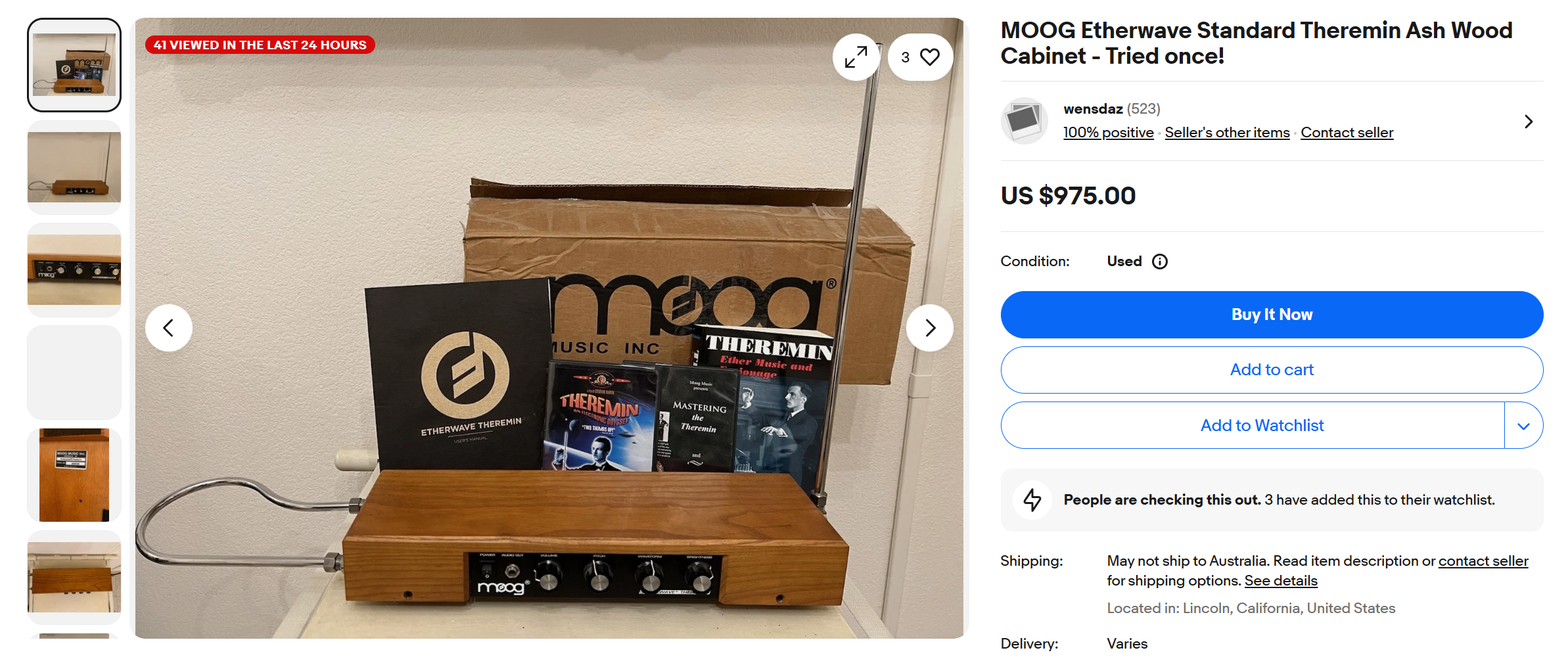
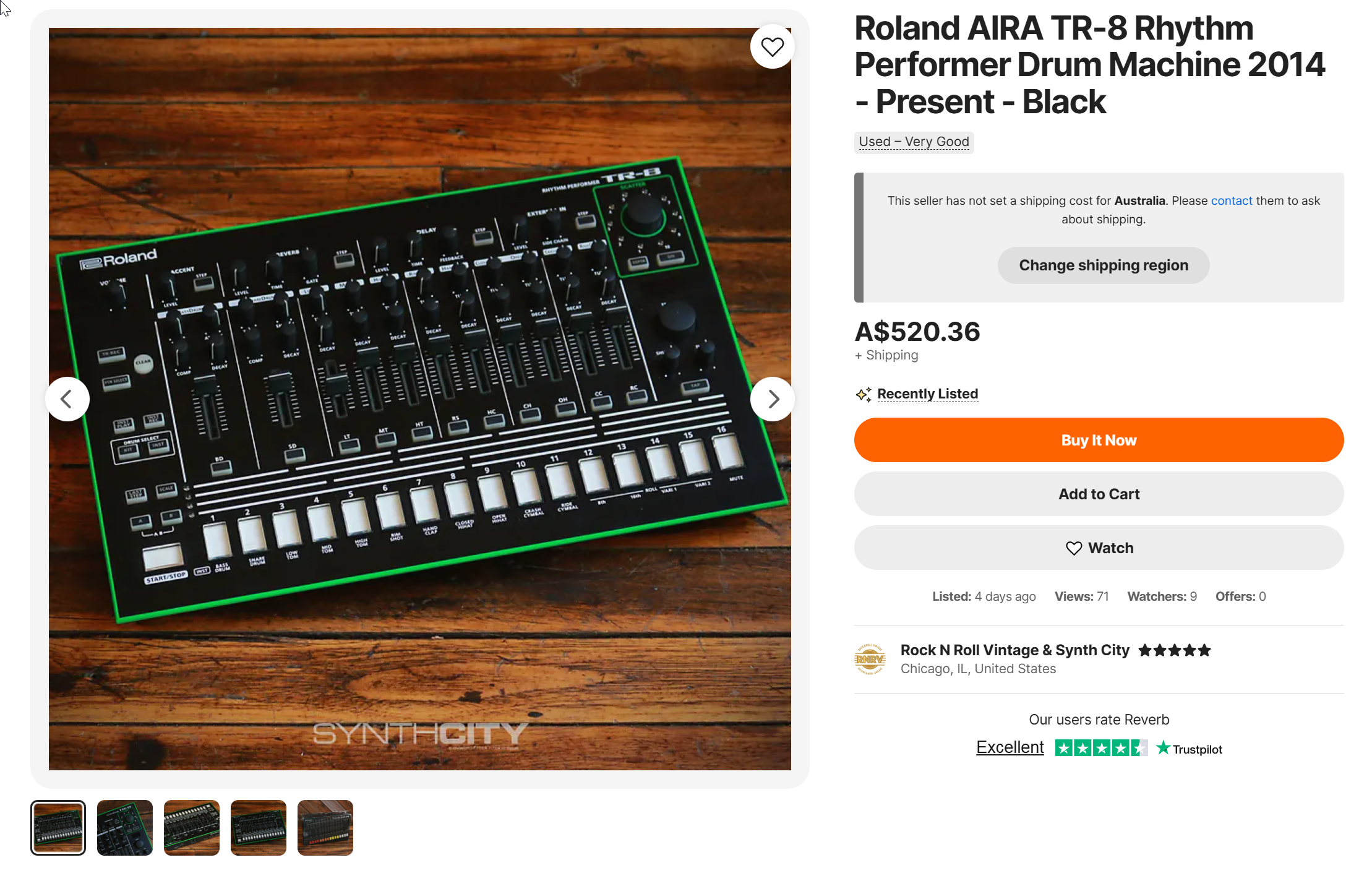
Find below images and links to the items we showed for the price watch segment.
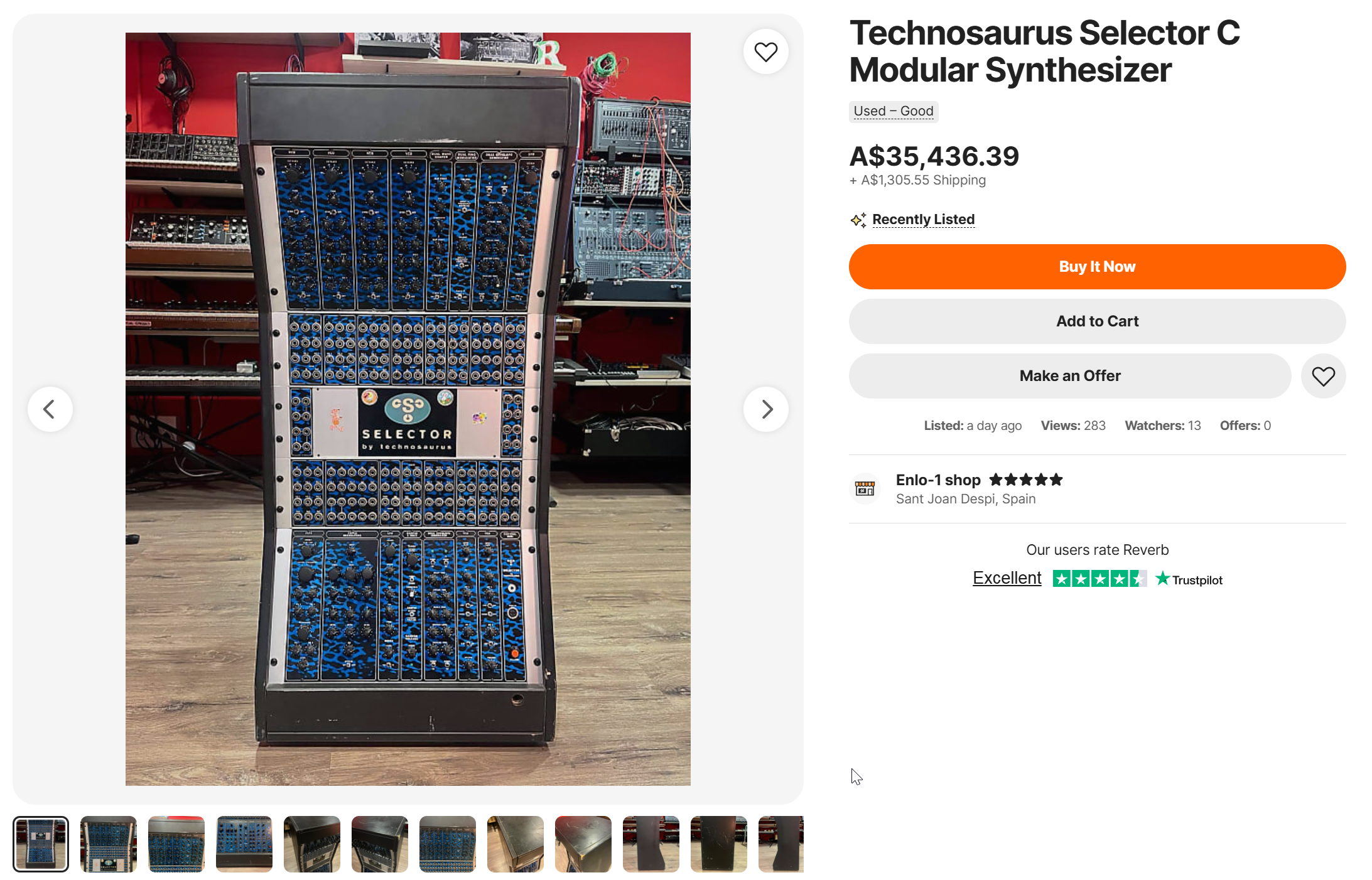
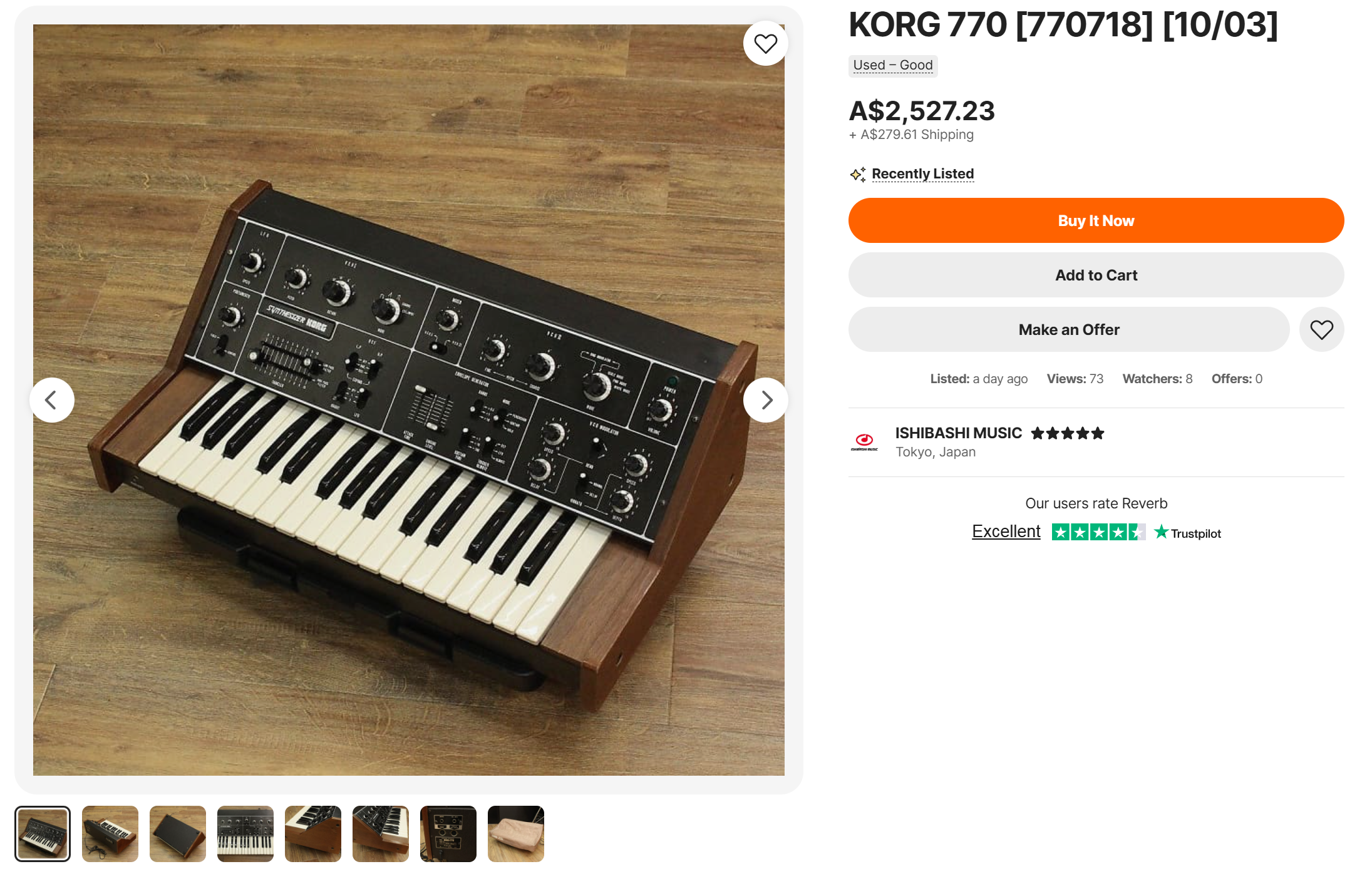
Name That Synth
No name that synth this week – send one in!
If you are after more information about Name that Synth – please check out this page here.
Saturday Sonority
This week’s Saturday Sonority we might talking about …..