
Unlocking Sonic Transformations: An Introduction to Phase Distortion Synthesis
Ever wondered how some synthesizers create those aggressive, metallic, or bell-like sounds that seem to morph and twist? Chances are, you’re hearing the magic of Phase Distortion (PD) synthesis. It’s a fascinating and powerful synthesis method that offers a unique approach to sound design, distinct from more common techniques like subtractive or FM synthesis.
A Brief History: Casio’s Digital Revolution
To understand Phase Distortion, we need to travel back to the mid-1980s, a time when digital synthesis was rapidly evolving. Yamaha had just unleashed the DX7, popularizing Frequency Modulation (FM) synthesis and its complex, often metallic tones. However, FM synthesis was notoriously difficult to program for many users.
Enter Casio. In 1984, they released the CZ-series of synthesizers (CZ-1, CZ-101, CZ-1000, CZ-5000, etc.). These instruments offered a fresh alternative to FM synthesis, introducing what Casio called “Phase Distortion” synthesis.
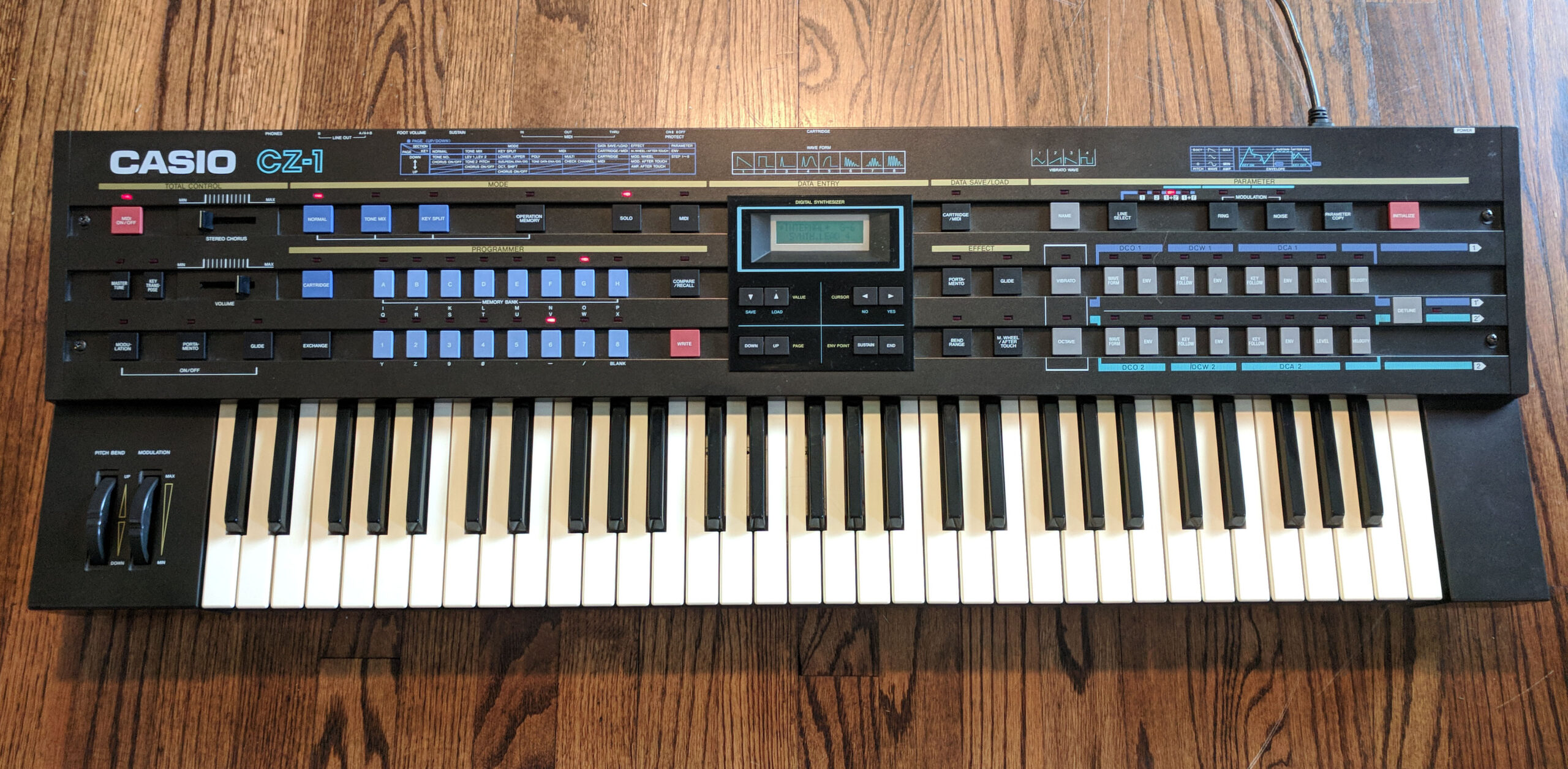
The CZ-series was designed to be more intuitive to program than its FM counterparts, while still offering a vast palette of sounds, from rich pads to punchy basses and cutting leads. It was a commercially successful line that carved out its own niche in the burgeoning digital synth market.
How Does Phase Distortion Work? The Core Concept
At its heart, Phase Distortion synthesis is a clever way to generate complex waveforms by manipulating the phase of a simple waveform, typically a sine wave. Think of a sine wave as a smooth, continuous cycle. The “phase” refers to where you are in that cycle at any given moment.
Instead of directly changing the amplitude (volume) or frequency (pitch) of a waveform, PD synthesis works by distorting the readout speed of the waveform’s phase. Imagine you have a lookup table that defines a sine wave.
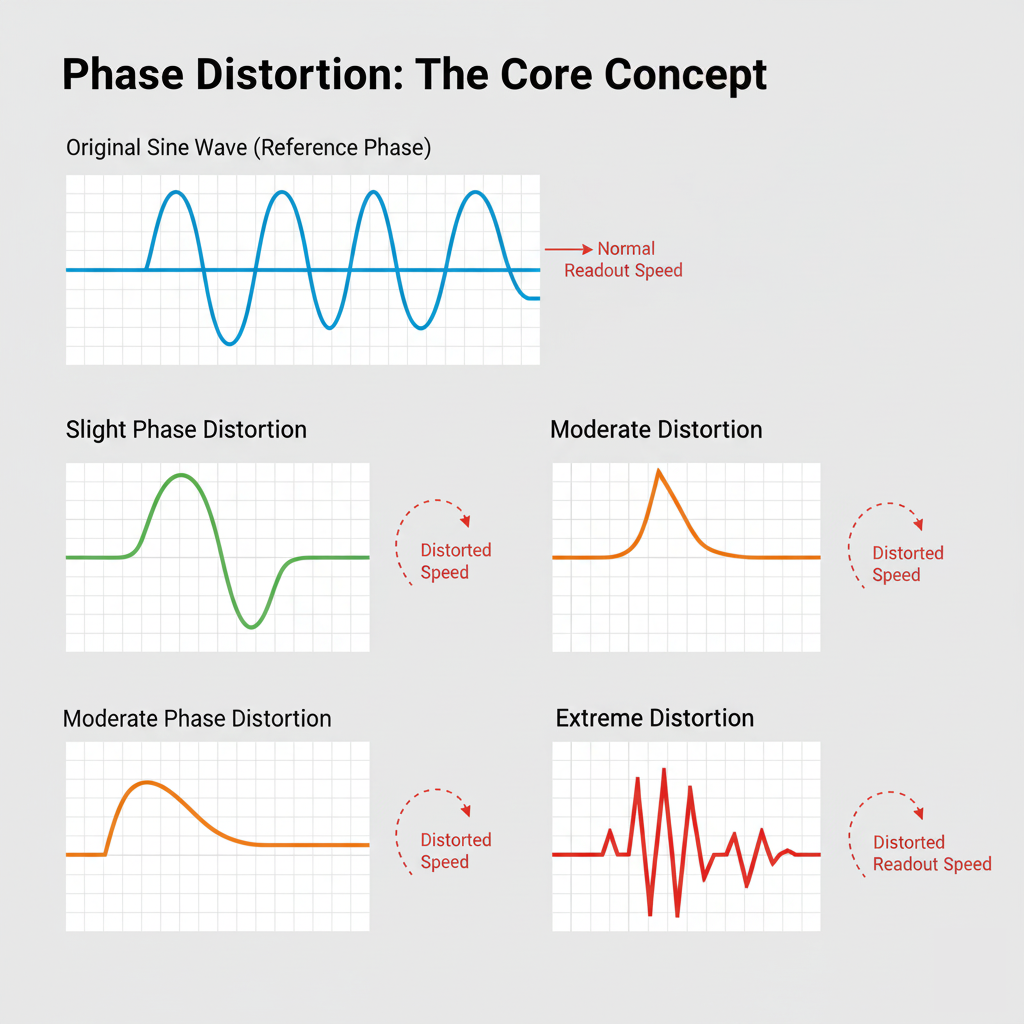
When you play a note, the synth usually reads through this table at a constant speed. Phase Distortion introduces a distortion function that changes how quickly it reads through different parts of the cycle.
This warping of the phase effectively “bends” the original waveform, creating new harmonic content and drastically altering its timbre. It’s similar in concept to how a low-pass filter removes harmonics, but PD adds or rearranges them in a very distinctive way.
Watch our discussion on Phase Distortion on the Synth Geekery Show:
Common Phase Distortion Waveforms (CZ-Style)
The Casio CZ synths offered a variety of pre-defined distortion types, often referred to as “Digital Waveforms.” These weren’t just static waveforms; they were the result of applying different phase distortion algorithms to a basic sine wave. Here are a few examples:
- Sawtooth Wave (Distortion Type 1): By distorting the phase in a specific way, a sine wave can be made to resemble a sawtooth wave, rich in harmonics.
- Square Wave (Distortion Type 2): Similarly, a square wave with its characteristic odd harmonics can be generated.
- Pulse Wave (Distortion Types 3-6): By varying the “width” of the distortion, you can create pulse waves with different duty cycles, leading to a range of timbres.
- Resonance (Distortion Types 7 & 8): These are particularly interesting. By applying a more extreme and complex phase distortion, the waveform can take on resonant, filter-like qualities, mimicking the effect of a band-pass filter even without an actual filter circuit. This is one of the most distinctive sounds of PD synthesis.
Here’s a simplified visualization of how phase distortion can transform a sine wave into a sawtooth or square-like wave:
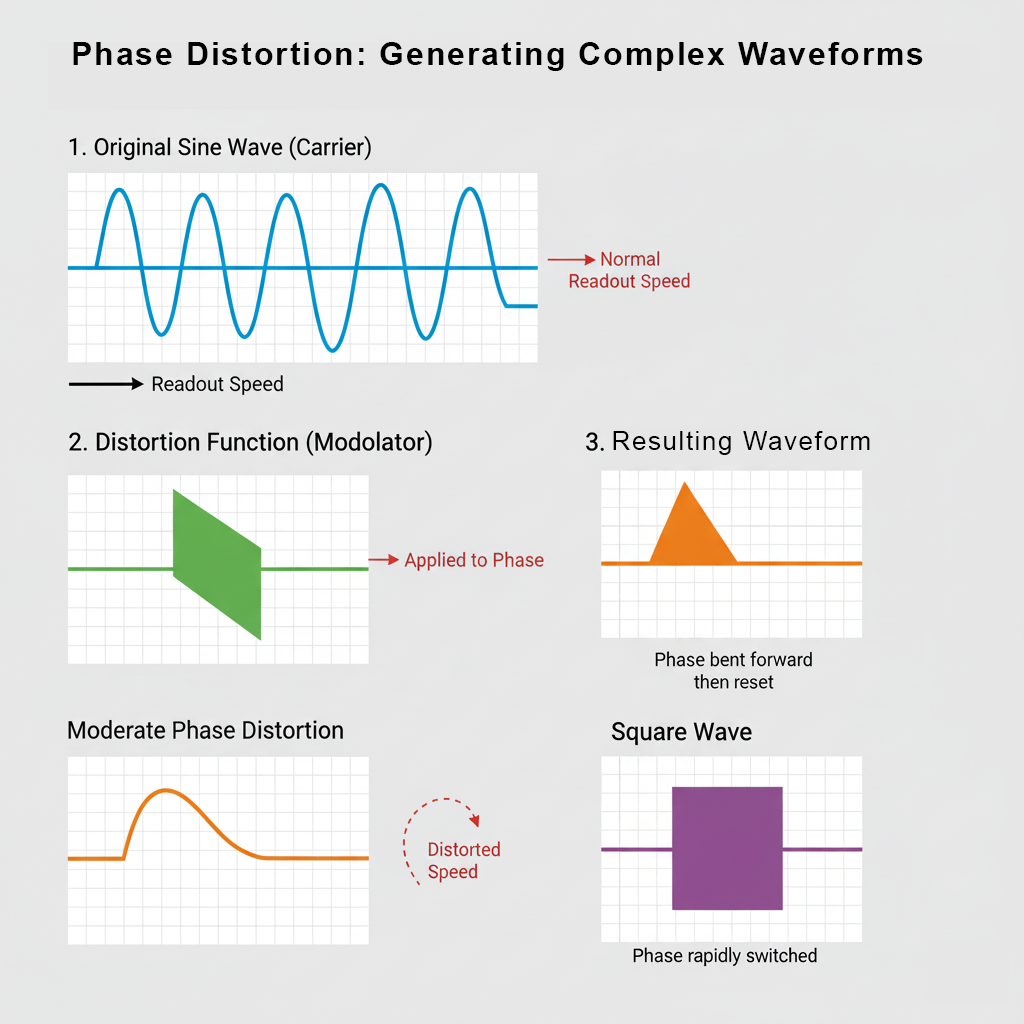
Essentially, the “distortion” is applied to the phase accumulator, which tells the oscillator where it is in its waveform cycle. By speeding up or slowing down this accumulation at different points, the waveform itself gets stretched and squashed, creating rich harmonic content.
Modern Implementations: Hardware and Software
While the Casio CZ series might be vintage, the principles of Phase Distortion synthesis live on, both in dedicated hardware and a wealth of software plugins.
Hardware Synthesizers
- Original Casio CZ-series: Many musicians still cherish these synths for their unique character. They are highly sought after in the used market.
- Modern Interpretations: While not as common as subtractive or FM synths, some modern digital hardware synths might incorporate elements of PD or offer similar phase manipulation capabilities. For example, some wavetable synthesizers can achieve similar effects by cycling through carefully designed wavetables.
Software Synthesizers and Plugins
This is where Phase Distortion truly thrives in the modern era. Software offers the flexibility to implement and expand upon the original concepts.
- Virtual Casio CZ Emulations: Many plugins faithfully recreate the architecture and sound of the original CZ series. Examples include DCO’s Digital Casio or Synth Masters CZ-3000. These are excellent for getting that authentic 80s PD sound.
- Modern Synthesizers with PD Capabilities: Some contemporary software synths integrate PD as one of their oscillator modes or offer more advanced phase modulation controls.
- Native Instruments Massive: While primarily a wavetable synth, Massive’s “phase” and “bend” modes offer powerful ways to distort waveforms in a similar vein to PD. You can manipulate the phase of the wavetable playback to create aggressive and evolving textures.
- Xfer Serum: Another popular wavetable synthesizer, Serum allows for extensive manipulation of wavetable phases, giving you a high degree of control over the harmonic content and distortion. Its “warp” modes, in particular, can achieve PD-like effects.
- Arturia Pigments: This hybrid synth combines multiple synthesis engines, including wavetable and FM. Its modulation capabilities allow for intricate phase manipulation that can produce sounds reminiscent of PD.
- Other Digital Synths: Many other digital synths, both free and paid, might offer “wave shaping” or “phase modulation” modules that are effectively implementing variations of Phase Distortion.
Here’s a look at how a modern software synth’s interface might present phase distortion parameters:
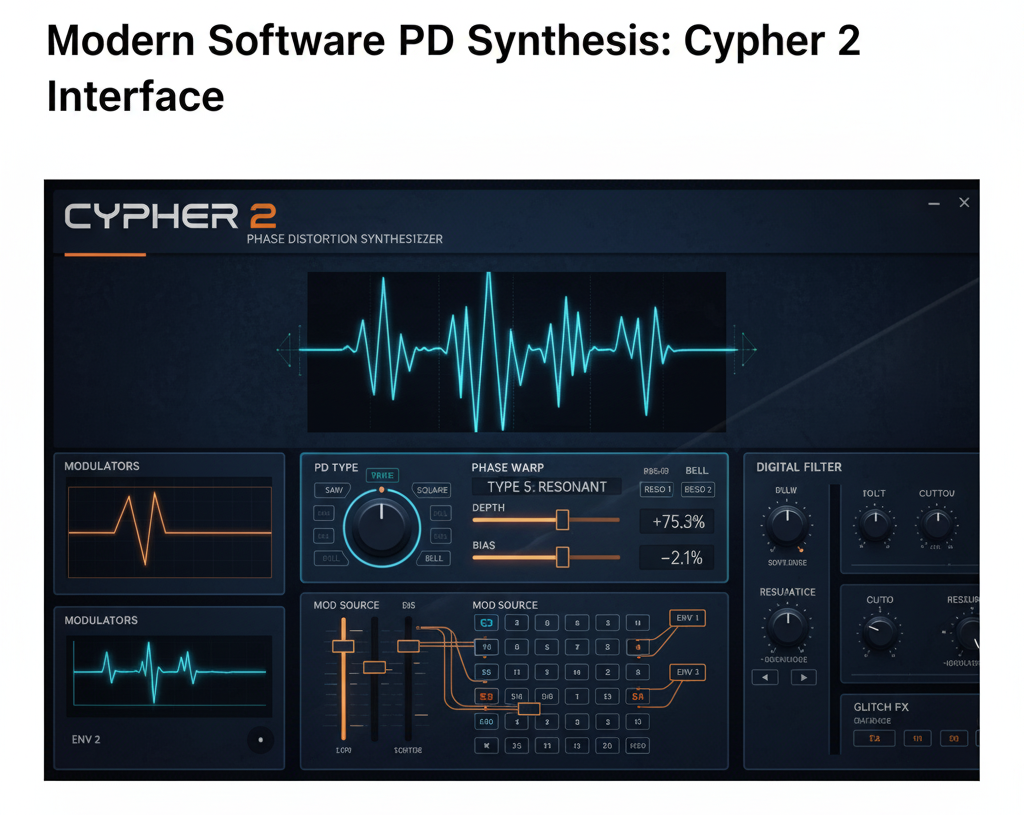
With the advent of advanced modulation systems in software, you can apply envelopes, LFOs, and other modulators to the phase distortion amount, creating incredibly dynamic and evolving timbres. Imagine a sound that starts as a pure sine wave and then slowly morphs into a harsh, resonant texture over time – that’s the power of modulating phase distortion.
Why Use Phase Distortion Today?
- Unique Timbres: PD offers a distinct sonic character that stands out from subtractive or classic FM sounds. It excels at aggressive basses, metallic leads, evolving pads, and bell-like tones.
- Harmonic Richness: By distorting the phase, you generate a wealth of harmonics that can be bright, edgy, or even dissonant, offering a wide range of sonic textures.
- Expressive Modulation: Modulating the phase distortion amount with envelopes or LFOs can lead to incredibly dynamic and evolving sounds that breathe and morph over time.
- Alternative to Filters: The resonant distortion types can mimic filter sweeps without actually using a traditional filter, adding another layer of sound-shaping potential.
Conclusion
Phase Distortion synthesis, pioneered by Casio, remains a powerful and relevant synthesis method. While its origins are rooted in the digital era of the 1980s, its principles are widely applied in modern software synthesizers, offering sound designers unique tools to craft complex, evolving, and harmonically rich sounds. If you’re looking to expand your sonic palette beyond traditional synthesis methods, diving into Phase Distortion is a rewarding journey that can unlock a whole new world of creative possibilities.
References
- Sound on Sound – Synth Secrets, Part 16: An Introduction To Phase Distortion Synthesis: https://www.soundonsound.com/techniques/synth-secrets-part-16-introduction-phase-distortion-synthesis
- Wikipedia – Phase distortion synthesis: https://en.wikipedia.org/wiki/Phase_distortion_synthesis
- The Casio CZ-101 Synthesizer – A Review and Guide: (Various articles and videos available through a web search)
- Cypher2 by FXpansion/Roli: https://roli.com/products/software/cypher2 (Example of a modern synth utilizing Phase Distortion)