
Synth Geekery 343
In episode 343 we talked about synths, eurorack, sequencers, drum machines, samplers, effects and software! Plus all the usual segments! Funny Side, News from the Geekery, Price Watch, Name that Synth …
Show contents:
- About
- Guests
- Video replay
- Funny Side
- News from The Geekery
- Price Watch
- Name that Synth
- Saturday Sonority
About the Synth Geekery Show

Synth Geekery is a weekly podcast/live stream (YouTube) show about everything synthesizers, drum machines, samplers, sequencers, eurorack and music technology. We take the “one of the masses” viewpoint, where we are also users of gear just like you (read: we’re not influenced by commercial product placement).
The show relies on the generous contributions of the synth community. You can contribute in many ways including supporting us via our YouTube Channel Membership or Patreon. We also have regular and special video guests: if you would like to take part in future shows – please contact me via email on the about page here.
Your Host
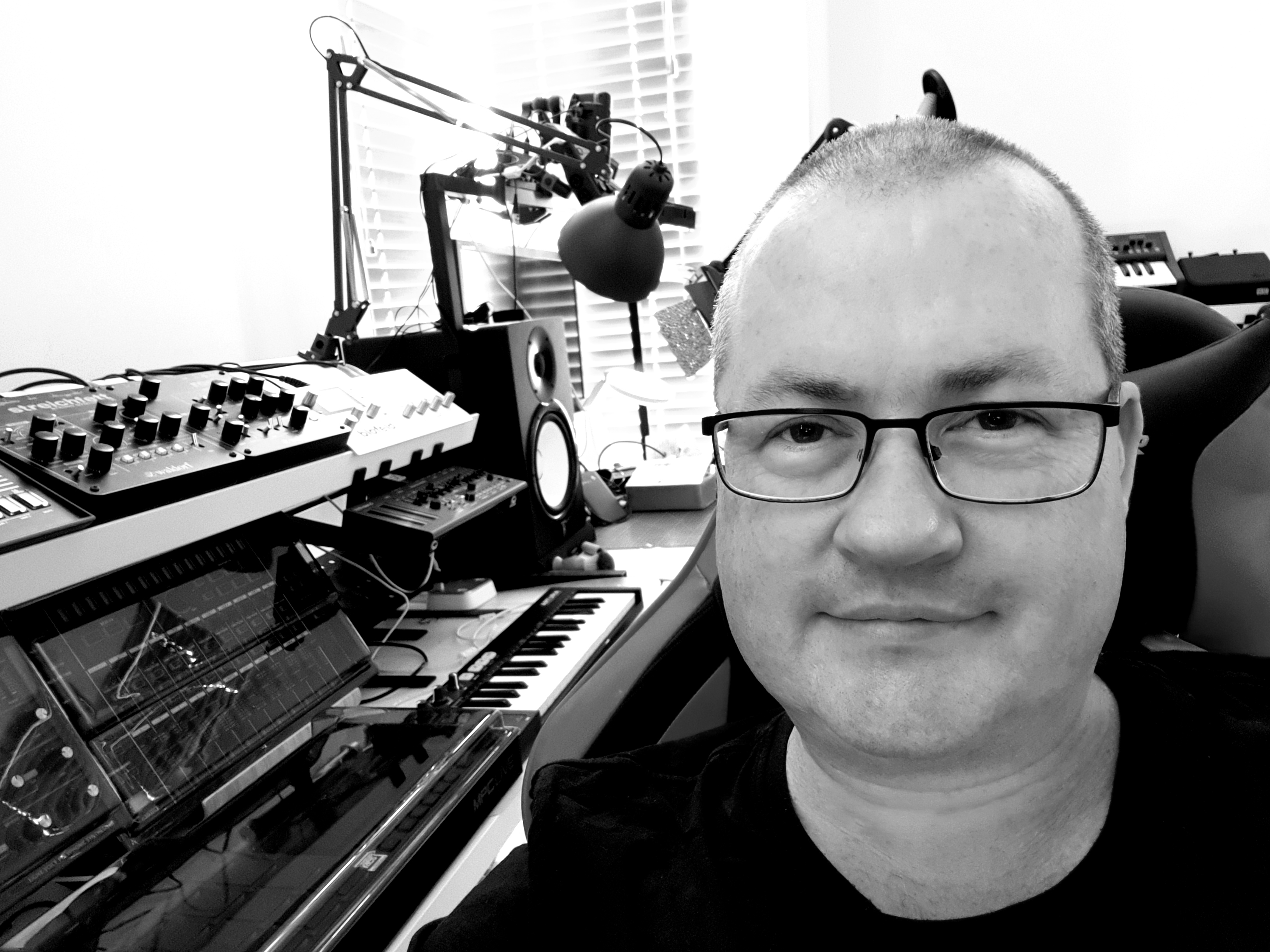
Ranzee (Ranz Adamson) is your show host. He’s based in Perth, Western Australia and has been a hobbyist musician and technologist for most of his life. More information can be found about him here.
YouTube: https://www.youtube.com/ranzee
BandCamp: https://ranzee.bandcamp.com
Guests
This week’s video guests are:
Daren T. Housse

Bandcamp Link: https://darenthousse.bandcamp.com/
Youtube: https://www.youtube.com/channel/UCLPHxpZgFKKE1wkG9ndto3A
Daren resides in the UK and is one of the first video guests on the show since 2019. He has a large amount of tracks on his youtube channel plus a great album collection over on BandCamp.
SynthAddict
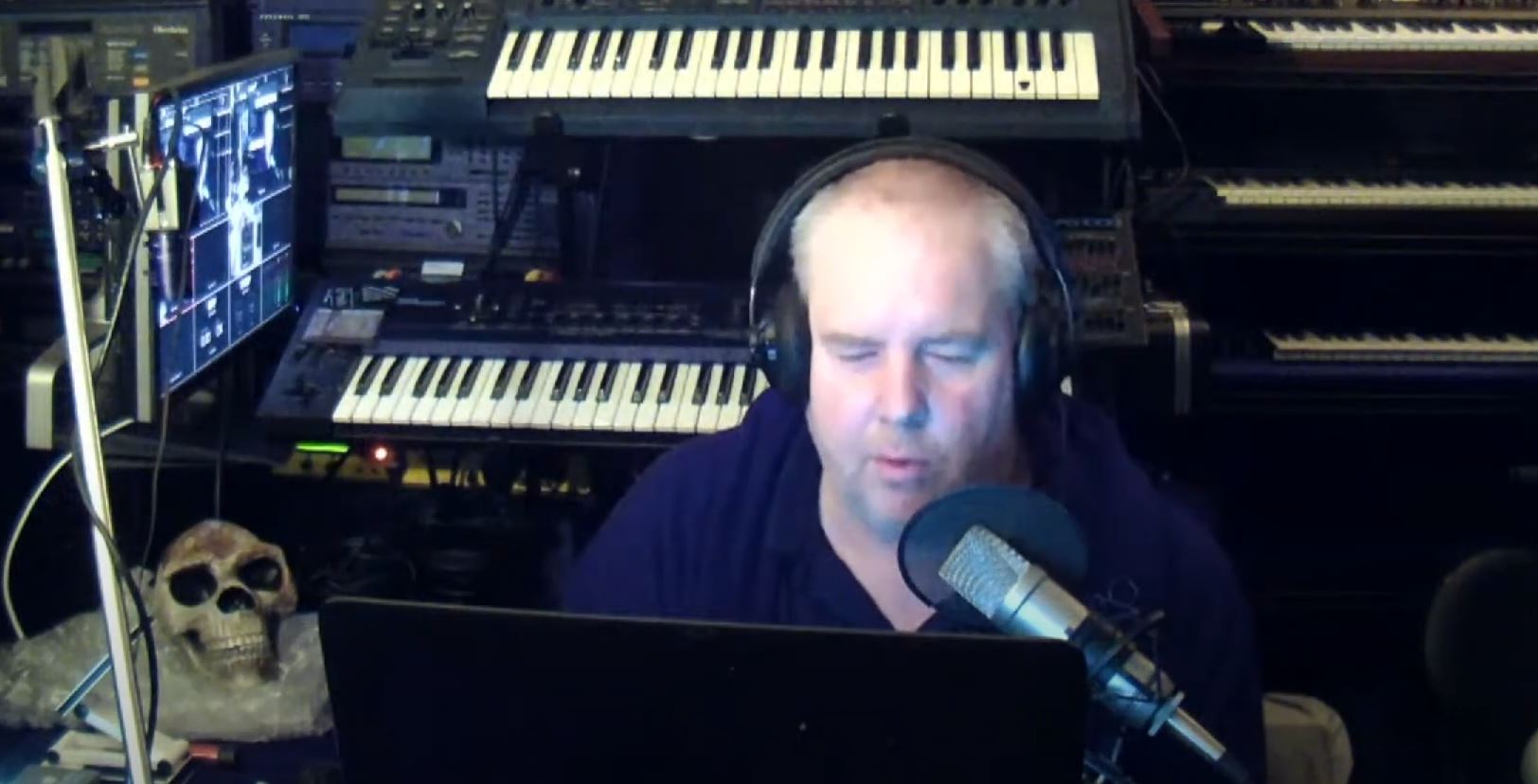
Andy is a musician and technologist from the bay area in California. He has an amazing collection of music tech gadgets and a large knowledge of synthesizers.
Youtube: https://www.youtube.com/channel/UCUtABvP7q29uvLKi73zIjFQ
Ian J. Cole

Ian is a musician, composer, sound designer and producer currently producing solo ambient electronic music. He also runs Sinners Music which is a Record Company and Online Music Retailer in East Yorkshire, England
Youtube: https://www.youtube.com/c/IanJCole
Chris – Maikshifter
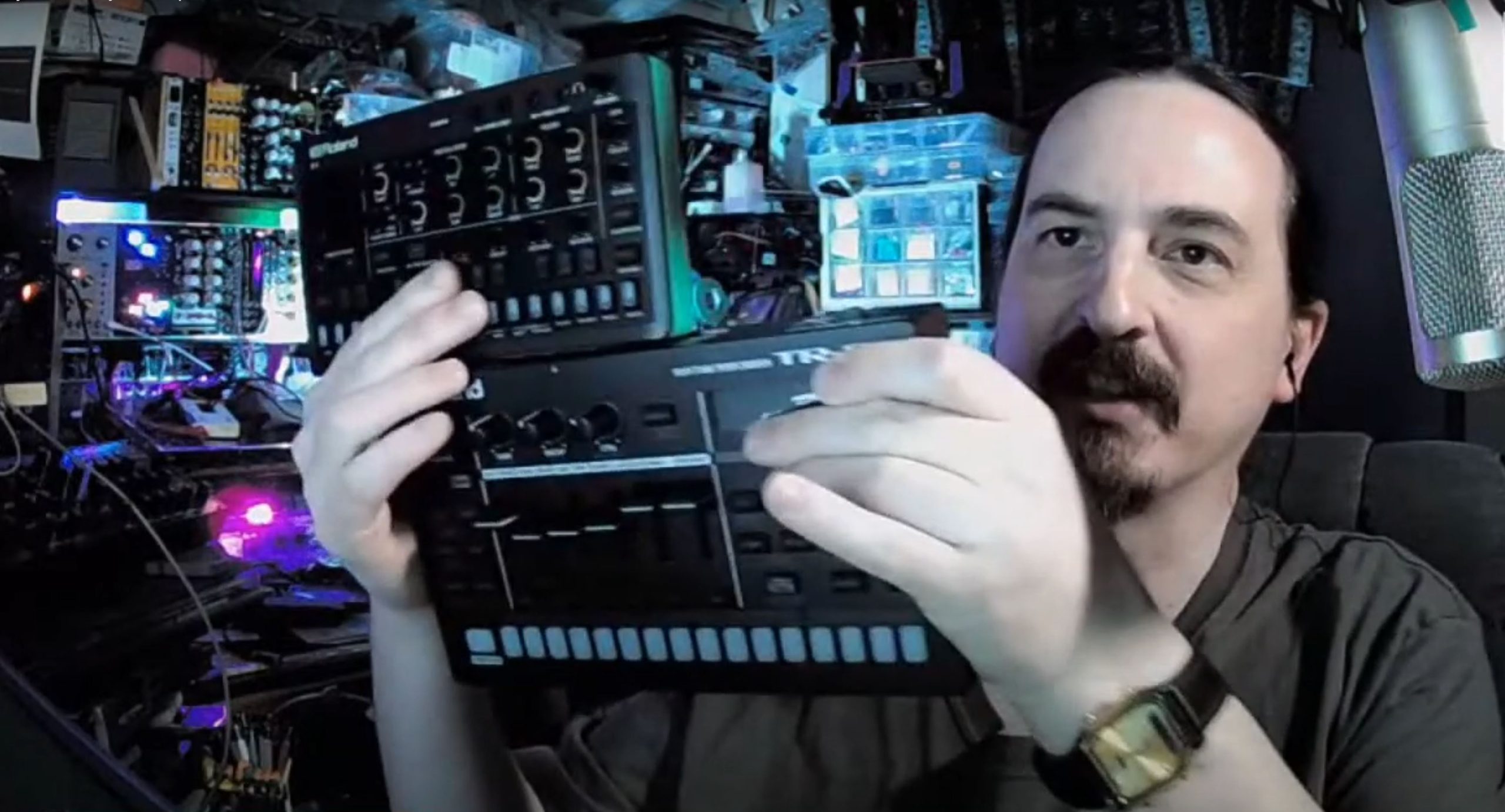
Chris is a musician and technologist from Perth, Western Australia. He’s always had a love for creating and tinkering with music electronics and has recently embarked on a new journey creating eurorack modules.
Youtube: https://www.youtube.com/@Maikshifter
Video replay
Funny Side
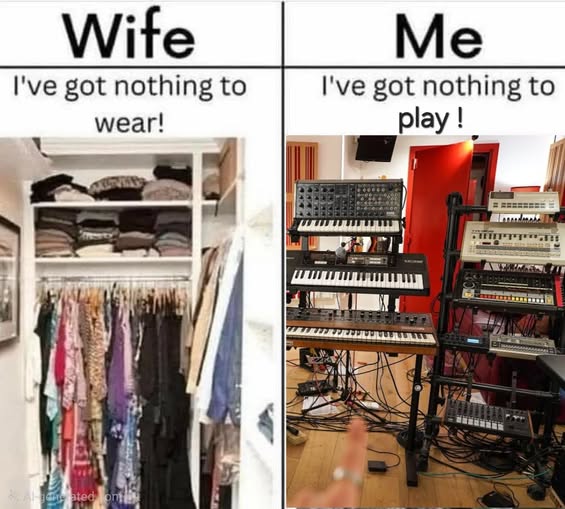
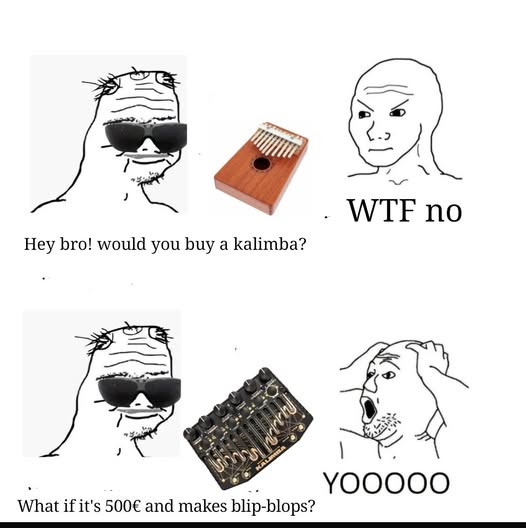
The funny side segment is a collection of memes that are somewhat relevant to the synth geekery community. Some of these images are taken from Facebook, Instagram and other social media sources. Please respect the creators. Hope you enjoy this week’s selection:

News
Erica Synths Resonant Filterbank
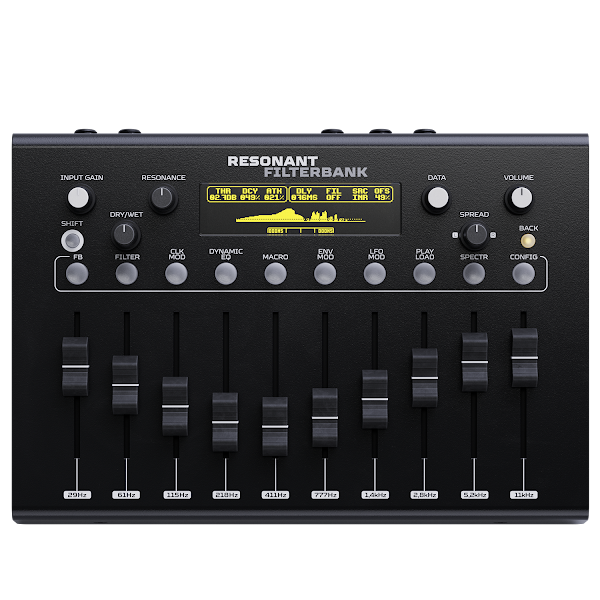
The Erica Synths Resonant Filterbank is a high-end, 10-band analog stereo filterbank designed for both studio production and live performance. While it functions as a traditional spectral shaper, its deep digital control system and configurable feedback loops allow it to morph into a multimode filter, a spectral compressor, or even a standalone experimental instrument.
Sculpting Sound with Analog Precision
At its core, the Resonant Filterbank features ten fixed-frequency bandpass filters ranging from 29Hz to 11kHz. Each band is equipped with high-quality film capacitors to ensure a rich, organic analog tone. Unlike basic equalizers, this unit offers integrated resonance control across all bands, allowing you to create sharp, whistling peaks or aggressive “squelched” textures.
Beyond the Equalizer: Performance Modes
What sets this device apart is its versatility. Beyond standard filtering, it includes several advanced operating modes:
- Multimode Filter: Emulates classic filter types with variable cutoff, width, and slope.
- Dynamic EQ: Functions as a spectral compressor, dynamically adjusting bands based on the input signal.
- Clocked Modulation: Synchronizes band updates to a MIDI clock for rhythmic, “sample & hold” style spectral movements.
- Self-Oscillation: With resonance pushed past 3 o’clock, the filters begin to self-oscillate, turning the unit into a no-input sound generator.
Connectivity and Integration
Designed to fit into any setup, the unit features an analog gain stage with up to +24dB boost, making it compatible with everything from line-level synths to low-output electric guitars. It provides full MIDI CC control over every parameter, 128 user presets (snapshots), and balanced 6.3mm stereo I/O.
Key Features
- 10-Band Stereo Analog Architecture: Precision filtering with manual and MIDI control.
- Configurable Feedback Loops: Create unique resonant textures and self-oscillation.
- 20 Independent LFOs & Envelope Followers: Deep internal modulation for movement.
- Snapshot Memory: 128 slots for saving and morphing between presets.
- Balanced I/O: Professional-grade 6.3mm stereo inputs and outputs.
Pricing Overview
- USD: Approximately $859.00
- EUR: Approximately €660.00 – €769.00 (depending on VAT and retailer)
- GBP: Approximately £675.00 – £749.00
- AUD: Approximately $1,350.00 – $1,450.00 (Estimated based on currency conversion and regional pricing)
Product Summary Table
| Feature | Specification |
| Filter Type | 10-Band Analog Bandpass |
| Frequencies | 29Hz, 61Hz, 115Hz, 218Hz, 411Hz, 777Hz, 1.5kHz, 2.8kHz, 5.2kHz, 11kHz |
| Input Gain | Up to +24dB (Analog Stage) |
| Presets | 128 Snapshot Slots with Morphing |
| Modulation | 20 LFOs / 20 Envelope Followers |
| Connectivity | MIDI (DIN/USB), Footswitch, 1/4″ Balanced Stereo I/O |
| Dimensions | 258 x 176 x 70 mm |
1010music Blackbox 2: The Next-Gen Portable Sampler Has Arrived
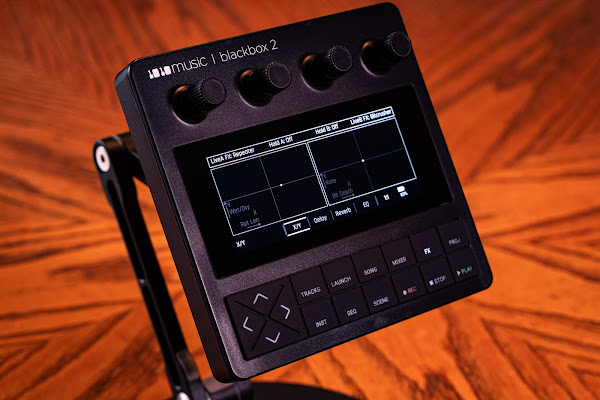
Seven years after the original Blackbox redefined what a compact sampler could do, 1010music has finally unveiled its successor: the Blackbox 2. Debuted at Superbooth 2026, this new iteration keeps the iconic “DAWless” soul of the original but upgrades nearly every piece of hardware and software under the hood.
Whether you are a live performer, a studio head, or a mobile producer, the Blackbox 2 aims to be the centerpiece of your setup, offering double the processing power and a much-requested internal battery for true portability.
The Evolution of the Blackbox
The original Blackbox was loved for its ability to handle massive multisamples and long WAV files directly from an SD card. Blackbox 2 takes this further by borrowing the high-resolution 4-inch touchscreen and refined workflow from 1010music’s flagship “Bento” workstation.
The biggest game-changer? The internal battery. You no longer need to be tethered to a USB power bank to jam on the go. With roughly 3 hours of battery life, it’s now a truly standalone instrument. Additionally, the move to USB-C for multichannel audio and MIDI means it integrates seamlessly with modern tablets and computers.
Key Features
- Next-Gen Engine: Double the processing power of the original for smoother performance and more complex projects.
- Integrated Power: Internal rechargeable battery providing up to 3 hours of portable use.
- High-Res Touch: A 4-inch color touchscreen for precise sample editing, sequencing, and mixing.
- New “Shredder” Instrument: A hybrid granular and slicing engine for creating evolving, fragmented textures.
- Advanced Sequencing: Supports Step Mode, Grid Mode, and Piano Roll with built-in probability and swing.
- Multichannel USB-C: Send 3 channels of stereo audio out and receive 1 channel in over a single USB cable.
- Automated Multisampling: Easily sample external synths by sending MIDI notes and recording the responses automatically.
- DJ-Style FX: XY pad control for filters, delays, flangers, and a new 4-band EQ for every track.
Pricing and Availability
The Blackbox 2 is currently available for pre-order and is scheduled to begin shipping in July 2026.
| Currency | Price (RRP) |
| USD | $649.00 |
| EURO | €759.00 |
| UK (GBP) | £595.00 |
| AUD | $999.00 (Estimated) |
Product Summary Table
| Feature | Specification |
| Display | 4-inch High-Resolution Color Touchscreen |
| Polyphony | Up to 16 tracks (with up to 4 instruments per track) |
| Storage | MicroSD slot (for samples and projects) |
| I/O | 3x Stereo Out (3.5mm), 1x Stereo In, Headphones, MIDI In/Out (TRS) |
| Connectivity | USB-C (Host & Device), Multichannel USB Audio |
| Battery Life | Approx. 3 Hours (Internal) |
| Dimensions | 8.75″ × 6.5″ × 2.75″ |
| Weight | 1.25 lbs (approx. 0.57 kg) |
Exploring the Buchla Ziggy: West Coast Synthesis Reimagined
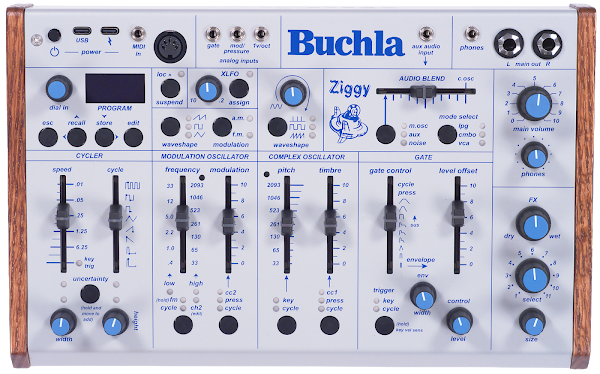
For decades, the name Buchla has been synonymous with the “West Coast” style of synthesis—an experimental, modular approach focused on complex timbres, wavefolding, and organic modulation. Historically, entering this world required either a massive budget or a deep patience for complex patching.
Enter the Buchla Ziggy.
Announced at Superbooth 2026, Ziggy is a desktop analog synthesizer that distills the legendary Buchla sound into a compact, patch-free, and surprisingly affordable instrument. It represents a “modernization” of the Buchla tradition, blending a 100% analog signal path with clever digital control to create what the company calls an “instrument” rather than just a “synthesizer.”
The “Unpatched” Experience
The most striking feature of Ziggy is the absence of patch cables. While traditional Buchla systems like the 200e or the Music Easel rely on a web of cables, Ziggy uses a gestural modulation system. By holding buttons and moving sliders, you can route modulation internally, with glowing LEDs providing instant visual feedback.
Under the hood, the sound is pure analog. It features the iconic Complex Oscillator (starting as a sine wave that can be warped into spikes, squares, or saws) and a Modulation Oscillator capable of reaching audio rates for FM and AM synthesis. To shape these sounds, Buchla has included a Low Pass Gate (LPG)—the secret sauce behind those famous “Buchla bongo” percussive tones—using a Sallen-Key filter architecture.
Innovation: The Cycler
Ziggy introduces the Cycler, a multi-purpose modulation source that acts as a hybrid of a clock, envelope generator, LFO, and random source. It includes an “Uncertainty” parameter, allowing for generative, evolving patterns that keep your sequences “living and breathing.”
Modern Connectivity
Despite its boutique roots, Ziggy is built for the modern studio. It features USB-C power and MIDI, 5-pin DIN MIDI, and even 1V/Oct CV inputs for integration with Eurorack systems. For those who want to dive deeper, a web-based editor (via WebMIDI) allows for easy patch management and firmware updates.
Key Features
- Dual Analog Oscillators: A Complex Oscillator for timbre-shaping and a Modulation Oscillator for FM/AM effects.
- Patch-Free Workflow: Digital routing of analog signals—no patch cables required for internal modulation.
- The Cycler: A unique modulation engine for envelopes, LFOs, and generative “Uncertainty.”
- Low Pass Gate (LPG): Classic Sallen-Key design that functions as a filter, a VCA, or both.
- Digital Effects: Built-in stereo effects including Reverb, Delay, Chorus, Pitch Shift, and Distortion.
- Preset Memory: Save and recall over 100 factory and user programs instantly.
- Premium Build: Housed in a durable steel chassis with solid oak side panels.
- Connectivity: USB-C (power/MIDI), 5-pin MIDI, 3.5mm Headphone, Dual 1/4″ Stereo Outs, and CV/Gate inputs.
Pricing Guide
Estimated retail pricing based on initial launch announcements:
| Currency | Price (Approx.) |
| USD | $999.00 |
| EURO | €915.00 – €999.00 |
| GBP | £850.00 – £915.00 |
| AUD | $1,779.00 |
Product Summary Table
| Feature | Specification |
| Type | Analog Desktop Synthesizer |
| Synthesis Style | West Coast (Complex Oscillator / Wavefolding) |
| Oscillators | 2x Analog (Complex & Modulation) |
| Filter/Amp | Analog Low Pass Gate (Sallen-Key) |
| Modulation | Cycler (Env/LFO/Random), XLFO, MIDI CC |
| Effects | Digital Stereo FX (Reverb, Delay, Chorus, etc.) |
| Presets | 100+ slots with WebMIDI support |
| I/O | MIDI (USB/DIN), CV/Gate In, Stereo Out, Headphone, Aux In |
| Power | USB-C (5V) |
| Dimensions | Compact Desktop |
Polyend Drums: The New Heavyweight Hybrid Drum Machine
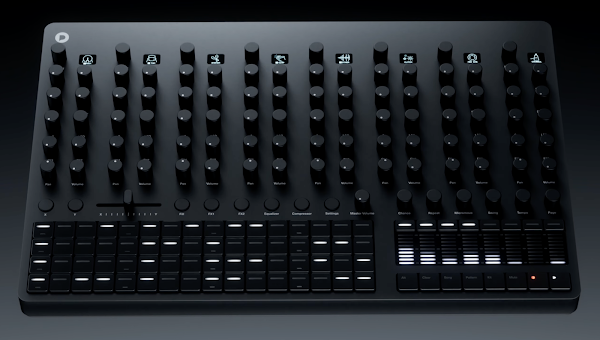
Polyend has officially raised the bar for hardware drum machines with the announcement of Drums, a high-end hybrid instrument that debuted at Superbooth 2026. Housed in a stunning, CNC-machined aluminum chassis, this 8-track powerhouse combines the warmth of analog circuitry with the precision of digital synthesis and sampling.
The Best of Both Worlds
At its heart, Polyend Drums features four dedicated analog voices built on modern SSI chips. Each voice is a sound designer’s dream, featuring dual VCOs, a noise source, and—interestingly—an additional digital oscillator for FM or hybrid layering. This is all fed through a multimode analog filter and VCA, allowing for everything from classic punchy kicks to evolving, tonal textures.
The digital side is equally impressive, offering over 40 instrument models with “sub-mode mutations,” effectively providing hundreds of sonic starting points. With its 32-bit floating-point internal processing at 96kHz, the audio quality is aimed squarely at professional studio standards.
Performance and Sequencing
Polyend has long been known for its sequencing prowess, and “Drums” introduces their most advanced engine yet. Beyond standard step sequencing, the device includes generative tools, “X0Y” fader morphing (which allows you to transition between kit states in real-time), and per-step sequenceable insert effects.
Whether you are looking for a studio centerpiece or a rugged live performance tool, the Polyend Drums appears built to handle both with ease, offering eight individual outputs for flexible mixing and a robust, “built-to-last” metal construction.
Key Features
- 8 Hybrid Tracks: Independently assignable to analog, digital, or sample-based engines.
- 4 Advanced Analog Voices: Dual SSI VCOs, noise, digital oscillator, and analog multimode filters per voice.
- Digital Engine: 40+ synthesis models with mutations and 8 independent LFOs.
- High-End Audio: 32-bit/96kHz internal processing with 24-bit/96kHz DAC/ADC.
- X0Y Morph Fader: Seamlessly morph between kits and trigger performance fills.
- Advanced Sequencer: Includes probability, micro-timing, parameter locks, and generative “fill” modes.
- Comprehensive I/O: 8 individual 1/4″ outputs, stereo input for FX processing, MIDI In/Out/Thru, and USB-C.
- Premium Build: CNC-machined aluminum body with custom metal knobs (available in Black or Silver).
Pricing Guide
Prices are based on the official list price of $2,699 USD. Local currency conversions are estimated based on current market rates (approx. 0.85 EUR / 0.72 GBP / 1.51 AUD per USD).
| Region | Estimated Price |
| United States (USD) | $2,699.00 |
| Europe (EUR) | €2,699.00 |
| United Kingdom (GBP) | £2,145.00 |
| Australia (AUD) | $4,085.00 |
Note: Pre-orders typically require a $500 refundable deposit with shipping estimated for late 2026.
Product Summary Table
| Feature | Specification |
| Architecture | Hybrid (Analog + Digital + Samples) |
| Voice Count | 8 Tracks (4 Analog / 4 Digital-Sample) |
| Analog Components | Dual VCO, SSI Chips, Multimode Filter, VCA |
| Digital Library | 40+ Instruments with Sub-mode Mutations |
| Sequencer | 64 Steps per Pattern, 64 Patterns per Project |
| Storage | 32 GB Internal Storage |
| Connectivity | 8 Individual Outs, Stereo In, MIDI T/I/O, USB-C |
| Dimensions | 446 x 292 x 43 mm (17.56″ x 11.50″ x 1.69″) |
| Build Material | CNC-Machined Single-Piece Aluminum |
Trade Control for Inspiration: An Overview of the Cyma Forma RND Synth
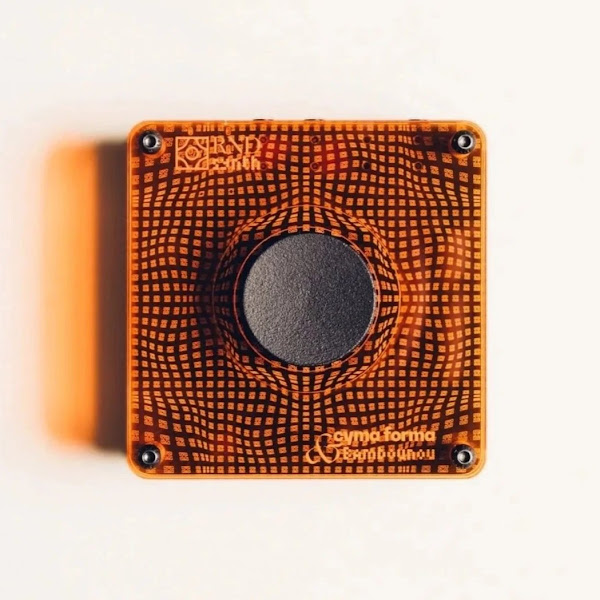
In a world of complex menu-diving and endless parameters, Parisian boutique hardware maker Cyma Forma—in collaboration with French electronic artist Bambounou—has released a device that challenges the very nature of sound design. Meet the RND synth, a compact, minimalist hardware synthesizer that features exactly one button and an infinite universe of sound.
The philosophy behind the RND (pronounced “Random”) is simple: Stop playing, start listening. By removing the ability to “tweak” in the traditional sense, the RND forces the user to interact with music through discovery rather than meticulous planning. Press the button, and a unique musical idea is born. Press it again, and that sound is gone forever, replaced by one of over 4 billion possible combinations.
Beyond the Button: What’s Under the Hood?
Despite its single-button interface, the internal architecture of the RND is surprisingly sophisticated. It isn’t just a simple noise maker; it’s a multi-timbral digital powerhouse. Each time the button is pressed, the synth generates a patch consisting of four simultaneous instrument tracks.
Each track is assigned its own synthesis engine, chosen from eight distinct types:
- Subtractive & FM for classic tones.
- Acid & Supersaw for high-energy textures.
- Speech & Noise for experimental soundscapes.
- Karplus-Strong & Additive for physical modeling and complex harmonics.
These sounds are then driven by four independent Euclidean sequencers, quantized to one of 20 musical scales. The result is often melodic, rhythmic, and highly usable, rather than chaotic noise.
Integration and Connectivity
While the RND is designed for spontaneity, it is built to live in a professional studio environment. Through its USB-C port, the RND can output four individual tracks of audio directly to your DAW, allowing you to record and process each instrument layer separately. It also features robust MIDI implementation, allowing users to take over sequences or transpose the “random” ideas using external keyboards or controllers.
Key Features at a Glance
- One-Button Interface: Generates complete musical ideas instantly from 4.29 billion seeds.
- 8 Synthesis Engines: Subtractive, FM, Acid, Noise, Speech, Karplus-Strong, Supersaw, and Additive.
- 4-Track Multitimbrality: Four instruments and four Euclidean sequences run simultaneously.
- Advanced Audio over USB: Stream 4 individual tracks (pre-reverb) to your computer via USB-C.
- Musical Intelligence: 20 scales and 5 filter types ensure results remain musical.
- Extensive MIDI: 9 MIDI modes including global transpose and sequence takeover.
- Sync Capabilities: MIDI clock and analog sync (In/Out) via 3.5mm jacks.
- Stereo Output: Dedicated 3.5mm stereo mix output with post-reverb sound.
Pricing
The RND synth is currently available for pre-order, with the first units expected to ship in late June 2026.
| Currency | Price (Approx.) |
| EUR | €125.00 (+ VAT) |
| USD | ~$150.00 |
| GBP | ~£110.00 |
| AUD | ~$225.00 |
Note: Prices in USD/GBP/AUD are estimates based on current exchange rates and may vary depending on local taxes and shipping.
Product Summary Table
| Feature | Specification |
| Product Name | Cyma Forma RND synth |
| Interface | Single trigger button |
| Synthesis Engines | 8 (Digital) |
| Simultaneous Tracks | 4 Instruments / 4 Sequences |
| Total Combinations | 4,294,967,296 |
| Connectivity | USB-C (Audio/MIDI), 3.5mm Stereo Out, 3.5mm Sync I/O |
| Audio Output | 4-track discrete (USB) / Stereo Mix (Jack) |
| Dimensions | Ultra-compact / Portable |
| Target Use | Inspiration generator, studio sound source, live performance |
Teenage Engineering K.O. Sidekick: The Ultimate Portable Companion for Your EP Setup
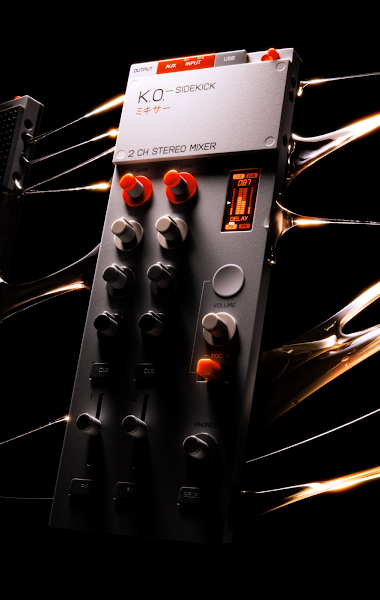
Teenage Engineering has once again expanded its popular EP (Electronic Production) series with the official launch of the EP-136 K.O. Sidekick. Originally envisioned as a simple utility mixer for the K.O. II, the Sidekick evolved during development into a feature-rich “sidecar” that combines a stereo mixer, an effects processor, and a high-end USB audio interface into one ultra-slim package.
The EP-136 is designed to sit perfectly alongside the EP-133 K.O. II, the EP-1320 Medieval, or the EP-40 Riddim. With its pressure-sensitive force pads and “Motion Control” effects sequencing, it feels less like a piece of utility gear and more like a performance instrument for live remixing and beat manipulation.
Key Features and Capabilities
The Sidekick packs an impressive amount of hardware into its 16mm-thin chassis. Whether you are using it to glue your EP devices together or as a standalone desktop interface, here are the highlights:
- Dual Channel Stereo Mixing: Two dedicated stereo channel strips with faders, plus a third stereo AUX input for session sources or daisy-chaining multiple units.
- Performance FX & Sequencing: Features 6 “Knock-Out” performance effects that can be automated using Teenage Engineering’s signature Motion Control™ 2-bar looping sequencer.
- Professional Audio Processing: 3 selectable EQ styles (DJ, Studio, and Parametric) and per-channel compressors with three distinct flavors (ranging from clean to saturated).
- USB Audio Interface: Functions as an 8-in / 4-out USB audio interface and MIDI controller, supporting 48kHz/24-bit audio.
- Expressive Controls: Equipped with a high-resolution custom color LCD, a pressure-sensitive force pad for FX, and a high-resolution multi-function mod stick.
- Ultra-Portable Power: Runs on 2x AAA batteries for on-the-go sets or via USB-C for studio use.
Pricing Details
The EP-136 K.O. Sidekick is positioned as an accessible entry point into the Teenage Engineering ecosystem, significantly more affordable than their premium “Field” line.
| Currency | Price |
| USD ($) | $179.00 |
| EURO (€) | €189.00 |
| GBP (£) | £159.00* |
| AUD ($) | $299.00 |
*Note: GBP pricing is estimated based on current EU/US retail listings.
Product Summary Table
| Specification | Details |
| Model | EP-136 K.O. Sidekick |
| Inputs | 2x 3.5mm Stereo, 1x 3.5mm Stereo Aux |
| Outputs | 1x 3.5mm Main, 1x 3.5mm Cue (Headphones) |
| Audio Quality | 48kHz / 24-bit (105dBA SNR Input / 108dBA SNR Output) |
| Interface | 8-in / 4-out USB-C Audio & MIDI |
| Power | 2x AAA batteries or USB-C |
| Dimensions | 240 x 88 x 16 mm (9.45″ x 3.46″ x 0.63″) |
| Weight | 300g (without batteries) |
Tasty Chips GR-2: The Next Generation of Hardware Granular Synthesis
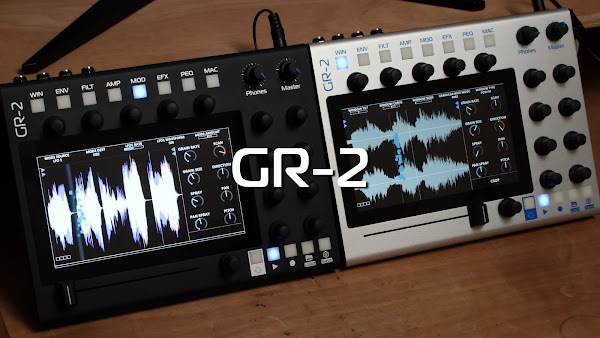
The landscape of hardware granular synthesis is about to shift. Following the massive success of the original GR-1 and the high-end GR-Mega, Dutch innovators Tasty Chips Electronics have officially unveiled the GR-2.
Debuting at Superbooth 2026, the GR-2 isn’t just a minor update; it is a ground-up reimagining of what a compact granular sampler can be. By inheriting the powerful firmware of its “big brother,” the GR-Mega, the GR-2 bridges the gap between portability and professional sound design power.
A New Era of Granular Power
The GR-2 moves away from the sliders and potentiometers of the original, opting for a sleek interface driven by high-resolution encoders and a vibrant new color display. But the real magic happens under the hood. Unlike the GR-1, which was purely granular, the GR-2 is a multi-engine beast.
Users can now toggle between four distinct creative engines:
- Granular Sampler: Offering up to 128 grains per voice (4000 system-wide).
- Spectral Sampler: Utilizing the legendary Paulstretch algorithm for ethereal time-stretching.
- Tape Sampler: For classic tape-style scratching and pitching.
- Traditional Sampler: An AKAI S-style engine for classic sampling workflows.
Perhaps the most requested feature finally arrives: Live Sampling. With new 1/4″ stereo inputs, you can now record audio directly into the hardware and transform it instantly, a feature notably absent from its predecessor.
Key Features at a Glance
- Polyphony: 4-layer multi-timbral with 16 voices per layer.
- Audio I/O: 1/4″ Stereo Inputs (for live sampling) and 1/4″ Stereo Outputs.
- Digital Connectivity: USB-C port acting as an 8-in/10-out audio interface.
- Modulation Matrix: 120+ destinations with LFOs, Envelopes, Random Generators, and MPE support.
- Onboard FX: A full suite including Reverb, Delay, Chorus, Distortion, and more.
- Hardware: Encoders instead of pots, new color display, and 2x USB 3.0 ports for external storage/MIDI.
- CV Integration: 2x CV inputs for modular synth integration.
Pricing and Availability
The Tasty Chips GR-2 is currently launching via Kickstarter. While final retail prices may vary, the early bird tiers provide a clear picture of the expected market positioning.
| Currency | Estimated Price (Early Bird) |
| EURO (EUR) | €849 |
| USD (Converted) | ~$915 |
| GBP (Converted) | ~£715 |
| AUD (Converted) | ~$1,385 |
Note: Conversions are based on current market rates at the time of the announcement and may fluctuate.
Summary Table
| Feature | Specification |
| Product | Tasty Chips GR-2 |
| Type | Multi-engine Hardware Granular Sampler |
| Engines | Granular, Spectral (Paulstretch), Tape, AKAI S-style |
| Layers | 4 Layers |
| Voices | 16 per layer (64 total) |
| Inputs | 2x 1/4″ Balanced Jack, 2x CV, MIDI DIN In |
| Outputs | 2x 1/4″ Balanced Jack, MIDI DIN Out/Thru |
| USB | 1x USB-C (Audio Interface), 2x USB-A (Host) |
| Release Date | Shipping starts September 2026 |
The GR-2 represents a significant leap forward, offering the professional-grade OS of the GR-Mega in a form factor that fits into any studio or live rig. Whether you are looking for lush ambient textures or gritty spectral manipulations, the GR-2 is shaping up to be the new gold standard for hardware samplers.
Sonicware deconstruct Minimal
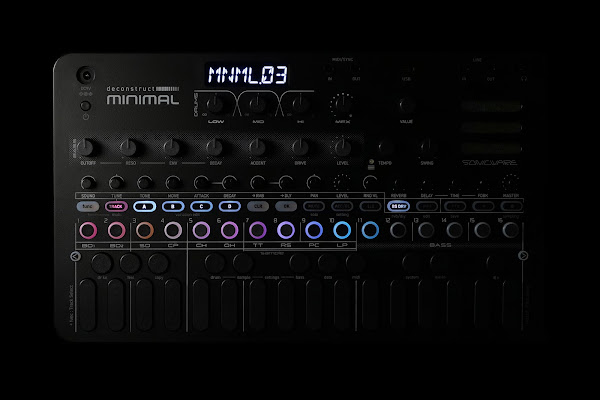
As the “less is more” philosophy continues to dominate modern electronic music production, Sonicware has unveiled its latest precision tool: the deconstruct MINIMAL. Stepping away from the feature-heavy bloat of modern workstations, this “Hypnotic Groove Machine” is a laser-focused hardware sequencer designed specifically for the nuanced world of minimal techno and house.
Here is an in-depth look at this sleek new addition to the Sonicware lineup.
The Art of Subtlety: An Overview
The deconstruct MINIMAL isn’t just another drum machine; it is a dedicated environment for building “living” rhythms. By focusing on the rhythmic and pitch drift characteristic of legendary analog drum machines, Sonicware has crafted an instrument that excels at the micro-details.
The unit combines a 10-track drum machine, a specialized sampler, and a dedicated analog-modeling bass synthesizer into a single, portable chassis. It’s designed for the “dawless” performer who needs immediate, tactile control over evolving loops without getting lost in deep menus.
Core Features
- 11-Track Performance Engine: * 9 Drum Tracks: Featuring a sample-based engine with 130 sounds. Dedicated synthesis for Kick (BD1) and Snare (SD), plus an analog-style Hi-Hat engine for organic variations.
- 1 Bass Track: A newly developed analog-modeling synth with four waveforms (Saw, Square, Triangle, Rectangle) and a gritty 4-pole low-pass ladder filter for those essential “acid” lines.
- 1 Loop/Sampler Track: Dedicated to stereo loops with time-stretching capabilities.
- Deep Sequencing: Go beyond standard 4/4 beats with per-track accents, random velocity, swing, and “Phrase Rotation”—a unique feature that lets you shift patterns and phrases on the fly.
- Integrated Sampling: Tracks 7-9 function as mono samplers (2-4 seconds), while Track 10 handles 8-second stereo loops with crossfades and “Repitch To Tempo” logic.
- Performance FX: Built-in Isolator for frequency sculpting, alongside five master effects (Sweep Filter, Phaser, Distortion, Snip Loop, Ducking Compressor) and dedicated send effects like Tape-echo and Reverb.
- Portability: Like the LIVEN series, it runs on 6 AA batteries or a 9V DC adapter and features built-in speakers.
Pricing & Availability
The deconstruct MINIMAL is currently available for pre-order, with the first production runs often selling out quickly due to high demand.
| Currency | Price (Approx. Street) | Notes |
| USD | $299.00 | Direct/Perfect Circuit |
| EURO | €315.00 | Via Thomann/European retailers |
| UK (GBP) | £268.99 | Juno Records (MSRP £359.00) |
| AUD | $465.00 – $495.00 | Based on current exchange/import |
Product Summary Table
| Feature | Specification |
| Type | Groovebox (Drum Machine + Sampler + Bass Synth) |
| Tracks | 11 Total (9 Drums, 1 Bass, 1 Stereo Loop) |
| Polyphony | Monophonic Bass, Multi-track PCM Drums |
| Sequencer | 64 steps per pattern, 128 patterns, Parameter Locking |
| Effects | 5 Master FX, 3 Reverbs, 1 Delay, 3-band Isolator |
| I/O | MIDI In/Out, Sync In/Out, Line In, Headphones, USB |
| Power | 9V DC or 6x AA Batteries |
| Weight | 840g (1.85 lbs) |
Korg Sneaks Out the NTS-4: The DIY Performance Mixer We’ve Been Waiting For
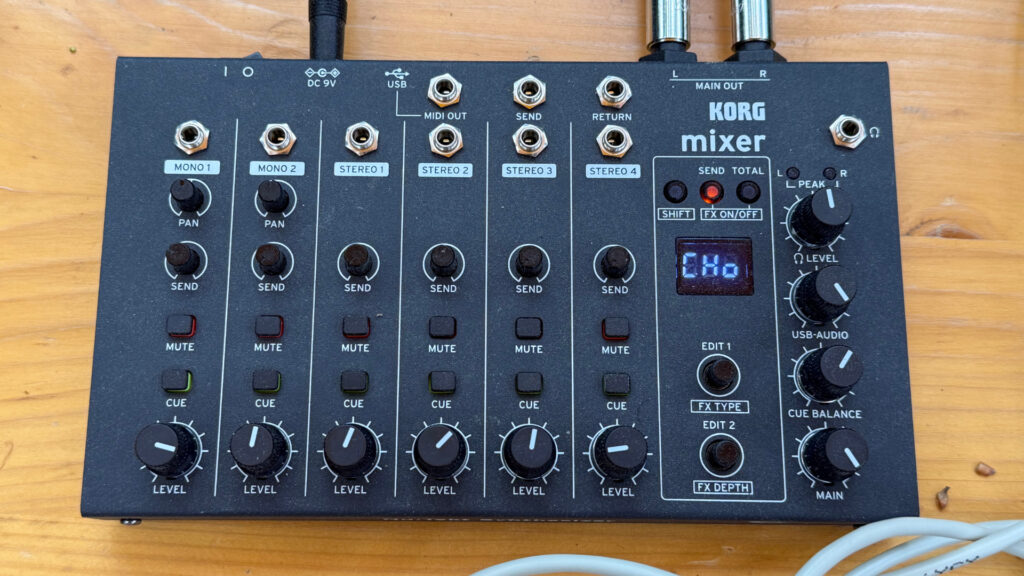
While most of the eyes at Superbooth 2026 were glued to the mysterious “plastic-wrapped” synthesizer at the Korg booth, a small but mighty addition to the Nu:Tekt family was quietly making waves: the Korg NTS-4 Mixer.
Following in the footsteps of the NTS-1 MKII and the NTS-3 Kaoss pad, the NTS-4 is a 10-channel (6-input) performance-oriented analog mixer that fits right in your pocket. It’s designed as a DIY kit—no soldering required—making it an accessible project for hobbyists and a powerhouse for mobile “dawless” performers. With built-in digital effects and USB audio interface capabilities, it effectively solves the “too many Volcas, not enough inputs” problem that has plagued desktop musicians for years.
Key Features and Workflow
The NTS-4 is more than just a simple summing box. It features a unique input configuration tailored for modern mini-rigs:
- Flexible Inputs: Four stereo 3.5mm minijack inputs and two mono inputs (which are Eurorack signal level compatible).
- Dual Stereo Effects: Unlike the SDK-based effects of its predecessors, the NTS-4 uses a fixed dual-processor architecture. You can dial in types and depths for per-channel sends and a master “Total FX” slot.
- Full Connectivity: It doubles as a USB-Audio and MIDI interface, allowing you to route your final mix directly into a DAW or mobile device while providing MIDI sync to your external gear via a TRS MIDI output.
- Performance Ready: Each channel includes dedicated Mute and Cue buttons, alongside Level and Send knobs, allowing for real-time arrangement and transitions.
Specifications at a Glance
| Feature | Details |
| Model | Korg Nu:Tekt NTS-4 Mixer |
| Channels | 10 total (4 Stereo, 2 Mono) |
| Inputs | 6 x 3.5mm TRS/TS Minijacks |
| Outputs | 2 x 1/4″ Main Outs, Headphone Out (Minijack) |
| Effects | Dual Stereo Digital FX (Send & Master) |
| Interface | USB-C Audio/MIDI, TRS MIDI Out |
| Build Type | DIY Kit (Tool-less assembly) |
Pricing and Availability
As of the Superbooth 2026 preview, Korg has not set a concrete shipping date, but historical NTS pricing suggests a very aggressive entry point. Estimated prices based on the current Nu:Tekt lineup are as follows:
- Estimated Price (USD): $169.00
- Estimated Price (EURO): €159.00
- Estimated Price (UK): £139.00
- Estimated Price (AUD): $259.00
Note: Final retail prices may vary depending on regional taxes and distributor shipping.
Price Watch
Find below images and links to the items we showed for the price watch segment.
* As an eBay Partner Network Affiliate, I earn from qualifying purchases.
Name That Synth
No name that synth this week – send one in!
If you are after more information about Name that Synth – please check out this page here.
Saturday Sonority
This week’s Saturday Sonority we might talking about …..


Recent Comments