
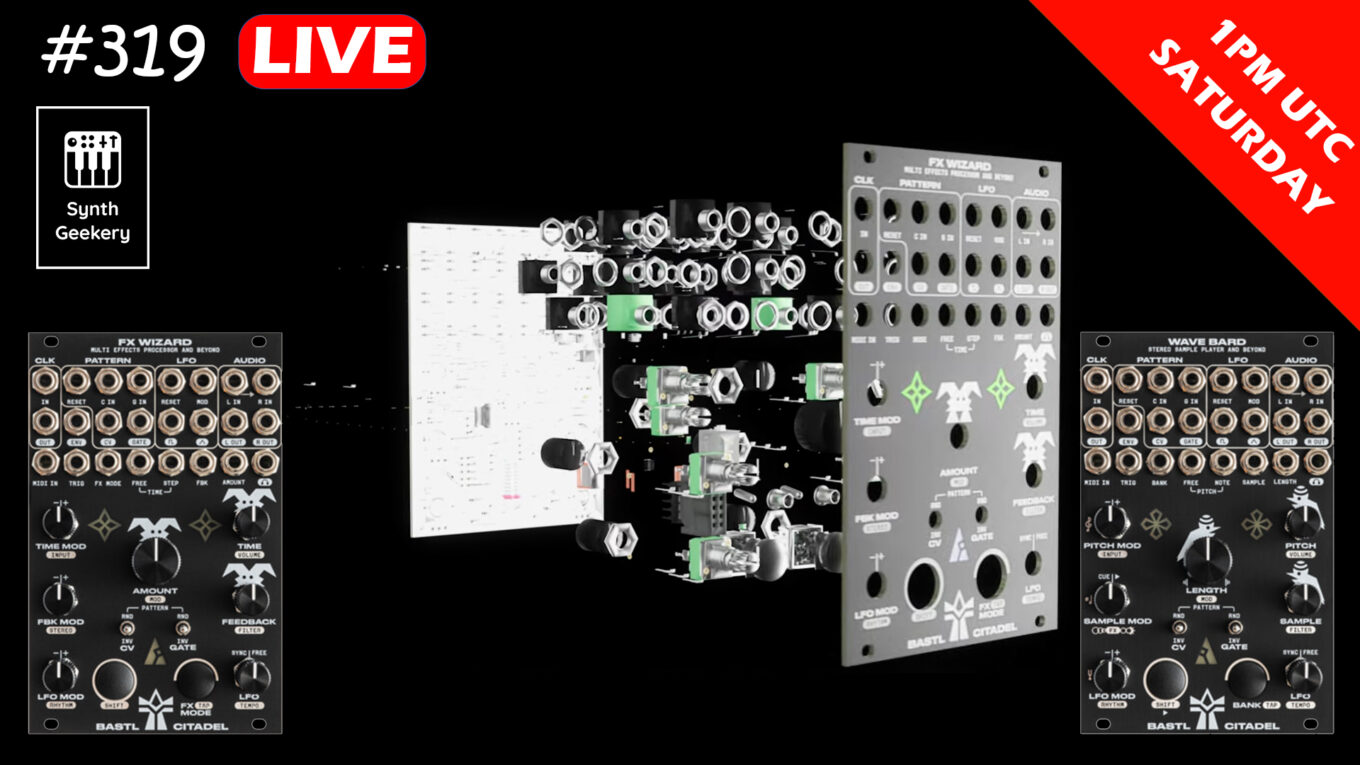
Synth Geekery 319
In episode 319 we talked about synths, eurorack, sequencers, drum machines, samplers, effects and software! Plus all the usual segments! Funny Side, News from the Geekery, Price Watch, Name that Synth …
Show contents:
- About
- Guests
- Video replay
- Funny Side
- News from The Geekery
- Price Watch
- Name that Synth
- Saturday Sonority
About the Synth Geekery Show

Synth Geekery is a weekly podcast/live stream (YouTube) show about everything synthesizers, drum machines, samplers, sequencers, eurorack and music technology. We take the “one of the masses” viewpoint, where we are also users of gear just like you (read: we’re not influenced by commercial product placement).
The show relies on the generous contributions of the synth community. You can contribute in many ways including supporting us via our YouTube Channel Membership or Patreon. We also have regular and special video guests: if you would like to take part in future shows – please contact me via email on the about page here.
Your Host
Ranzee (Ranz Adamson) is your show host. He’s based in Perth, Western Australia and has been a hobbyist musician and technologist for most of his life. More information can be found about him here.
YouTube: https://www.youtube.com/ranzee
BandCamp: https://ranzee.bandcamp.com
Guests
This week’s video guests are:
Daren T. Housse

Bandcamp Link: https://darenthousse.bandcamp.com/
Youtube: https://www.youtube.com/channel/UCLPHxpZgFKKE1wkG9ndto3A
Daren resides in the UK and is one of the first video guests on the show since 2019. He has a large amount of tracks on his youtube channel plus a great album collection over on BandCamp.
SynthAddict
Andy is a musician and technologist from the bay area in California. He has an amazing collection of music tech gadgets and a large knowledge of synthesizers.
Youtube: https://www.youtube.com/channel/UCUtABvP7q29uvLKi73zIjFQ
Ian J. Cole

Ian is a musician, composer, sound designer and producer currently producing solo ambient electronic music. He also runs Sinners Music which is a Record Company and Online Music Retailer in East Yorkshire, England
Youtube: https://www.youtube.com/c/IanJCole
Chris – Maikshifter
Chris is a musician and technologist from Perth, Western Australia. He’s always had a love for creating and tinkering with music electronics and has recently embarked on a new journey creating eurorack modules.
Youtube: https://www.youtube.com/@Maikshifter
Video replay
Funny Side
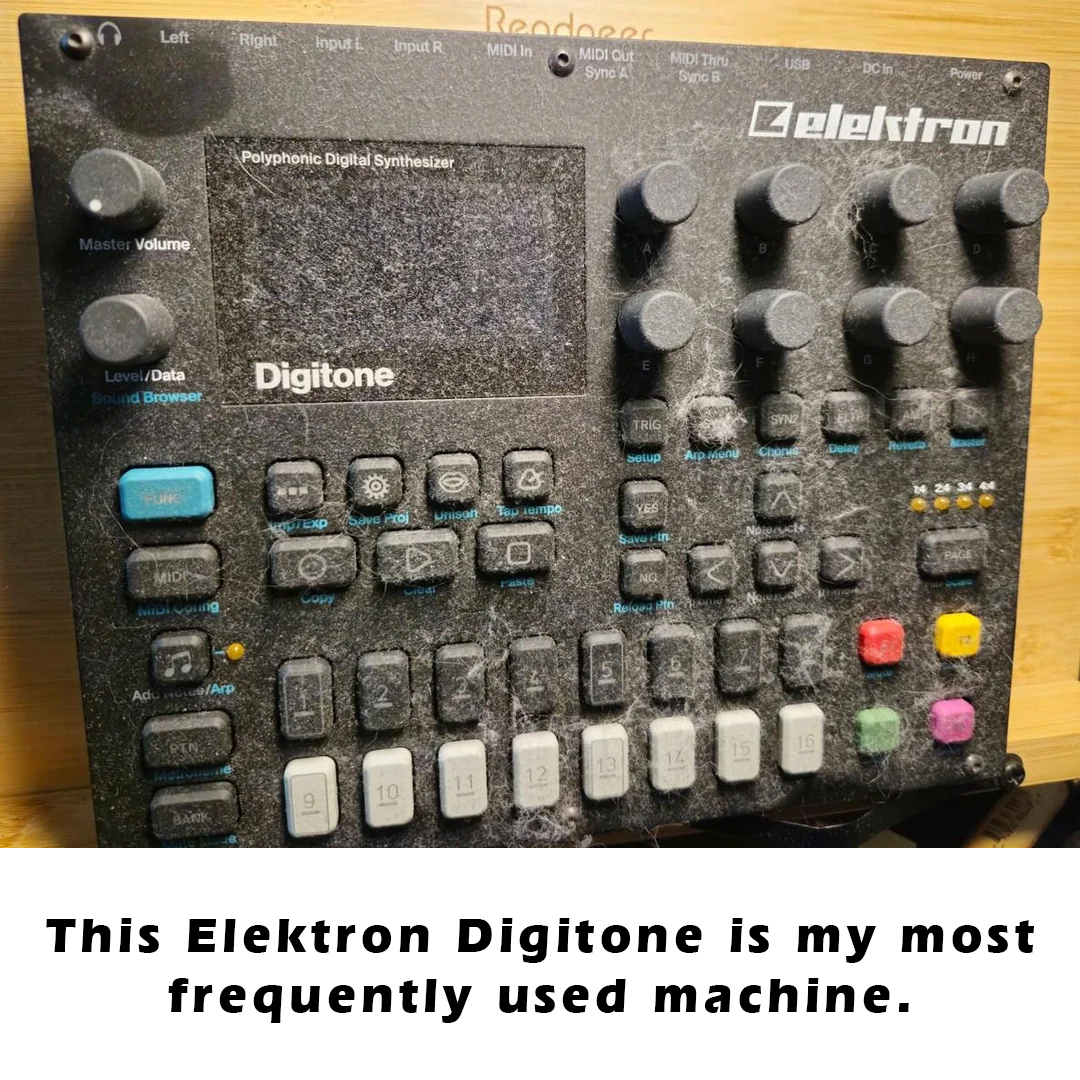
The funny side segment is a collection of memes that are somewhat relevant to the synth geekery community. Some of these images are taken from Facebook, Instagram and other social media sources. Please respect the creators. Hope you enjoy this week’s selection:




News
Atrium by Whimsicalraps
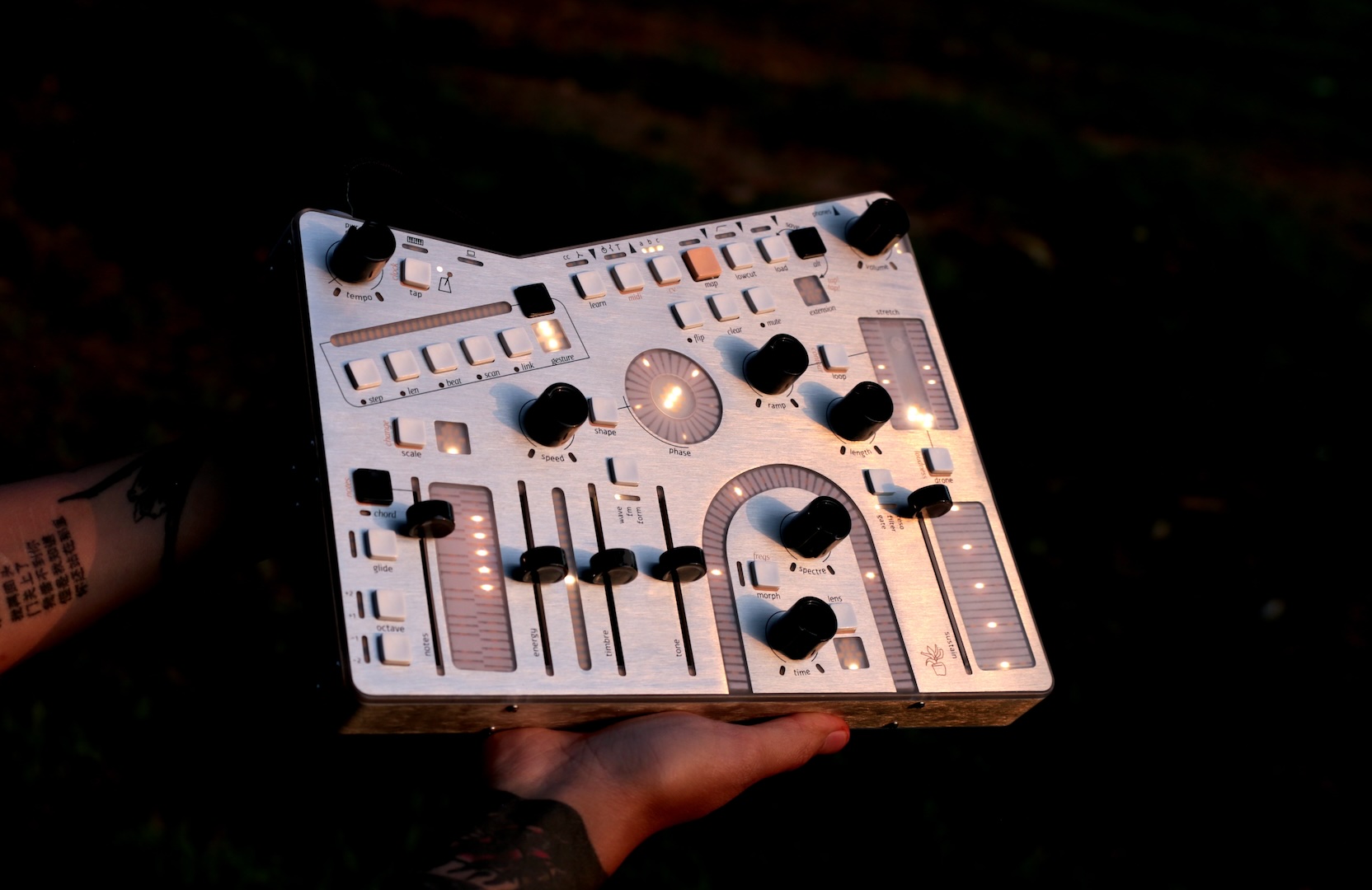
The instrument is described as a new kind of synthesizer where playful gestures meet dynamic systems. It offers:
- Five voices of analogue synthesis, each shaped by harmonic energy, with three core timbre modes (sub-octaves + noise, frequency modulation, formant synthesis).
- A “spectre” resonant tone-shaper: three analog band-pass filters + two BBD delays in feedback.
- Deep modulation system: everything mappable to everything else; polyphonic LFOs and contours; external MIDI & CV input.
- Gesture recording: 5 recorders which capture any interaction, variable playback, quantise length/start/stop, linked timing.
- Patch storage: 5 onboard patch slots plus software companion for management.
- Hardware connectivity: MIDI in/out (3.5mm), USB-C power, USB-A host, USB-C device (MIDI & serial), CV inputs (+/-5 V protected to +/-12 V).
- Build & form-factor: Polycarbonate & aluminium enclosure, mechanical keyswitches, capacitive multi-touch plates; dimensions ~ 286 × 222 × 48 mm, weight ~1.06 kg.
- Warranty: 3 year warranty.
In short: Atrium is a high-end, performance-oriented polyphonic analogue/digital hybrid synthesizer with very deep modulation, gesture capture and rich sound-shaping, designed for advanced users and live performance.
Features
Here’s a more structured breakdown of features:
- Voices & Synthesis
- 5 x analogue oscillators with waveshaping.
- 3 Timbre Modes: sub-octaves + noise, FM (frequency modulation), formant synthesis.
- 5 x low-pass/gates with 3 modes (amp+filter, filter, resonant filter).
- Sound-Shaping / Filters / Delay
- “Spectre” resonant tone shaper: 3 x analog bandpass filters.
- 2 x BBD (bucket brigade device) delays in feedback loop.
- Variable high-pass filter (6 dB).
- Gesture & Sequencing
- 5 x recorders capturing any user interaction.
- Multiple parameters per recording, variable playback rate, timing link between recorders.
- Embedded sequencer.
- Modulation & Routing
- Fully mappable modulation: any source to any parameter, continuous depth & polarity.
- Clock: continuous time or tap-tempo with musical division/multiplication.
- LFO: polyphonic, 11 default shapes, phase-offset between voices.
- Contour: polyphonic envelope, loopable, with voice-timing stretch.
- 6 additional sources generated from synth state + external MIDI & CV sources.
- Patch Memory & Workflow
- 5 onboard patch slots.
- Instant recallability, and companion software for patch management.
- Hardware Connectivity & Construction
- MIDI In (3.5mm, types A & B), MIDI Out (3.5mm type A).
- 3 x CV inputs (3.5mm, ±5 V range, protected to ±12 V).
- Stereo output (3.5mm): dual mono Left/Right, headphones/stereo TRS (Left), mono mix (Right).
- USB-C power (5V, 3A), USB-A host (900mA) for MIDI/serial devices, USB-C device for MIDI & serial (DAW connection).
- Physical build: Polycarbonate & aluminium enclosure, mechanical keyswitches, capacitive multi-touch plates.
- Size: 11.25” x 8.75” x 1 7/8” (approx 286 x 222 x 48 mm), weight approx 1.06 kg.
- Warranty
- 3 year warranty.
Price Summary
The list price from the site is US $1,600 USD.
| Currency | Price |
|---|---|
| USD | $1,600 USD |
| EUR | €1,440 EUR (approx.) |
| GBP | £1,250 GBP (approx.) |
| AUD | A$2,400 AUD (approx.) |
Price: $1,600.00
Link: https://atrium.whimsicalraps.com/
Tubbutec Drummertime
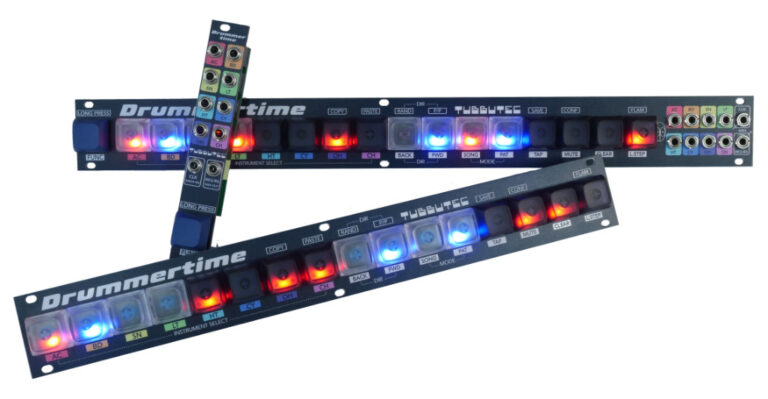
Summary Table
| Property | Details |
|---|---|
| Product Name | Tubbutec Drummertime |
| Type | Eurorack drum step sequencer |
| Channels/Instruments | 8 |
| Patterns | 16 |
| Song Mode | Chain up to 32 patterns |
| Play Directions | Forward, Backward, Ping-Pong, Smart Random |
| Step Features | Probability, Flam, Ratchet |
| Swing Range | 1/32 to 16/32 |
| Outputs | 8 trigger/gate outputs with adjustable length |
| MIDI | MIDI In/Out |
| Clock Options | Analog or MIDI; internal generator with tap tempo |
| Chaining | Up to 4 linked units |
| Format Options | 1U 74HP or 1U 60HP + 3U 4HP |
| Button Options | Tactile or Clicky |
Full article here: https://ranzee.com/drummertime/
Price: $260.00
Link: https://tubbutec.de/drummertime/
Modular Grid: https://modulargrid.net/e/tubbutec-drummertime-4hp
Bastl Instruments Citadel Series
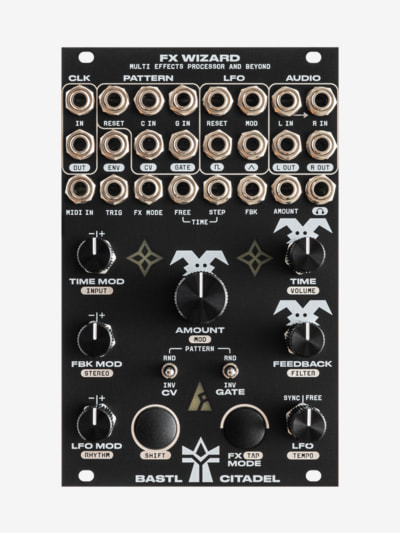
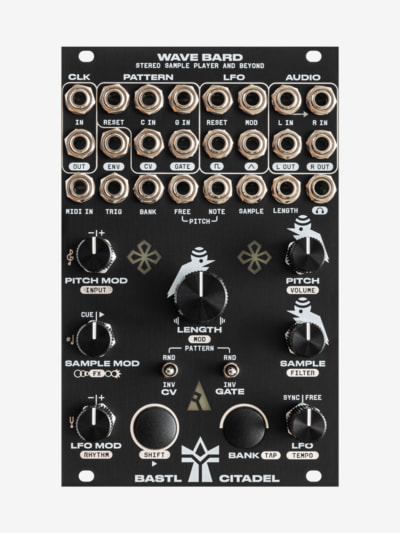
Modules: Wave Bard & FX Wizard
Interchangeable Operation Summary
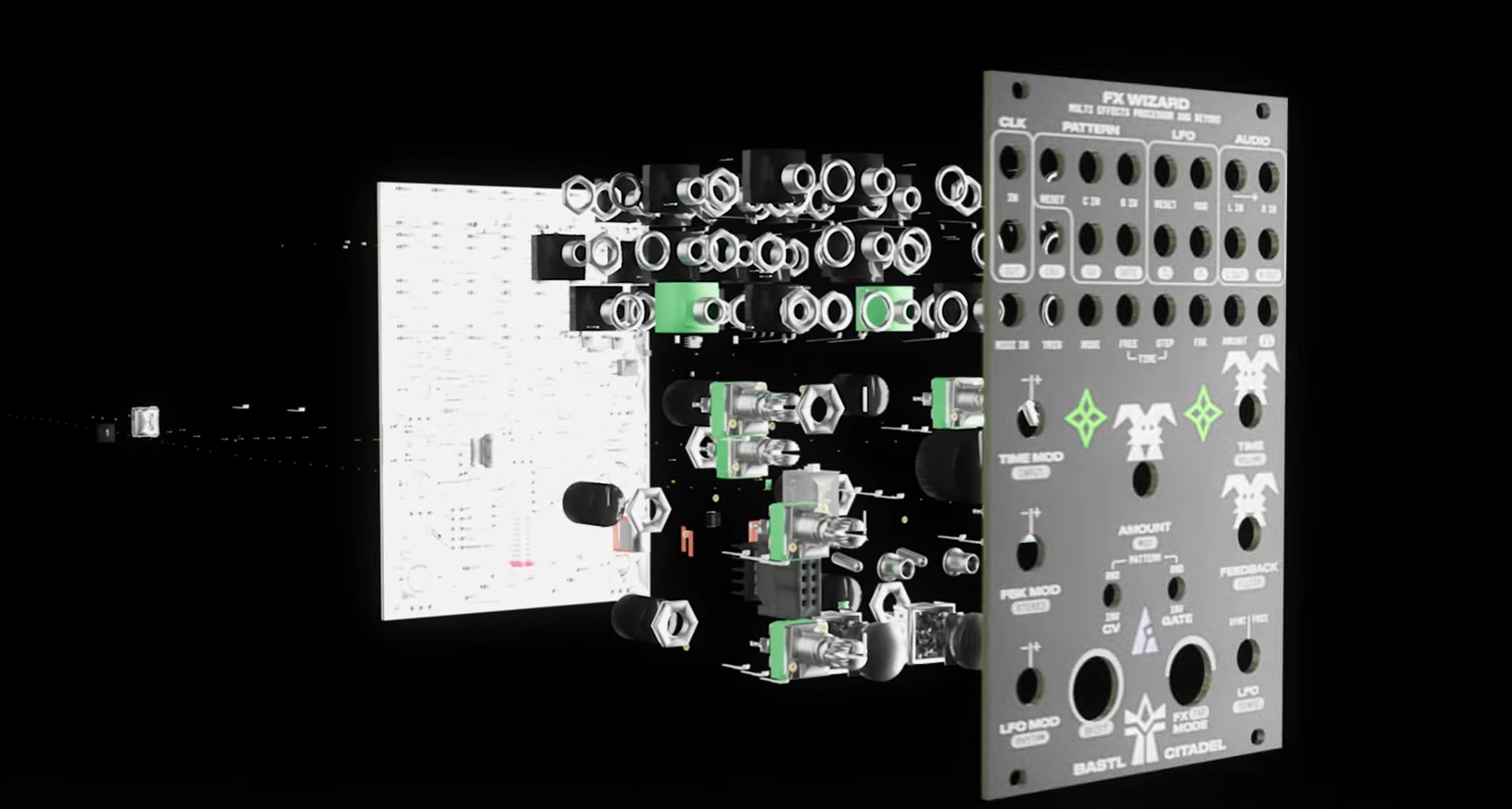
| Aspect | Wave Bard | FX Wizard | Shared Hardware |
|---|---|---|---|
| Core Function | Stereo sample player / sequencer | Stereo multi-effects processor | Common Citadel hardware |
| Firmware | Wave Bard firmware | FX Wizard firmware | Interchangeable |
| Front Panel | “Wave Bard” side | “FX Wizard” side | Reversible panel |
| Audio Engine | 44 kHz / 16-bit stereo | 44 kHz / 16-bit stereo | Shared DAC/ADC system |
| Built-in Effects | Delay / Chorus / Flanger | 9 creative FX modes | Shared DSP |
| Modulation Tools | LFO, Pattern, CV control | LFO, Pattern, Envelope follower | Common modulation sources |
| MIDI / USB | Full MIDI + USB-C | Full MIDI + USB-C | Shared connectivity |
| Inputs / Outputs | Stereo DC-coupled + headphones | Stereo DC-coupled + headphones | Identical |
| Power Draw | +12 V < 60 mA / –12 V < 20 mA | +12 V < 60 mA / –12 V < 20 mA | Same specs |
| Panel Width | 16 HP | 16 HP | Shared format |
Summary
The Citadel series by Bastl Instruments is a modular powerhouse concept — a single platform that can be re-imagined as either a sample-driven sound engine (Wave Bard) or a multi-effects unit (FX Wizard).
Both offer rich modulation, stereo architecture, pattern sequencing, and full MIDI/USB integration in an exceptionally compact format. The reversible hardware design and interchangeable firmware make it an adaptable and future-proof choice for any Eurorack system.
Two for One! The Citadel has a reversible front panel with FX WIZARD on one side and WAVE BARD on the other side.
Full article: https://ranzee.com/bastl-instruments-citadel-series/
Pricing (Approximate)
| Currency | Citadel Wave Bard | Citadel FX Wizard |
|---|---|---|
| USD | $319 USD | $319 USD |
| EUR | €279 EUR | €279 EUR |
| GBP | £219 GBP | £253 GBP |
| AUD | $450 – $500 AUD | $450 – $500 AUD |
(Prices may vary by region, taxes, and retailer.)
Link: https://bastl-instruments.com/eurorack/modules/citadel-fx-wizard and https://bastl-instruments.com/eurorack/modules/citadel-wave-bard
Modular Grid: https://modulargrid.net/e/bastl-instruments-citadel-fx-wizard and https://modulargrid.net/e/bastl-instruments-citadel-wave-bard
Arcaico Matrioska: The Compact Stereo Mixer Your Rack Needs 🎛️
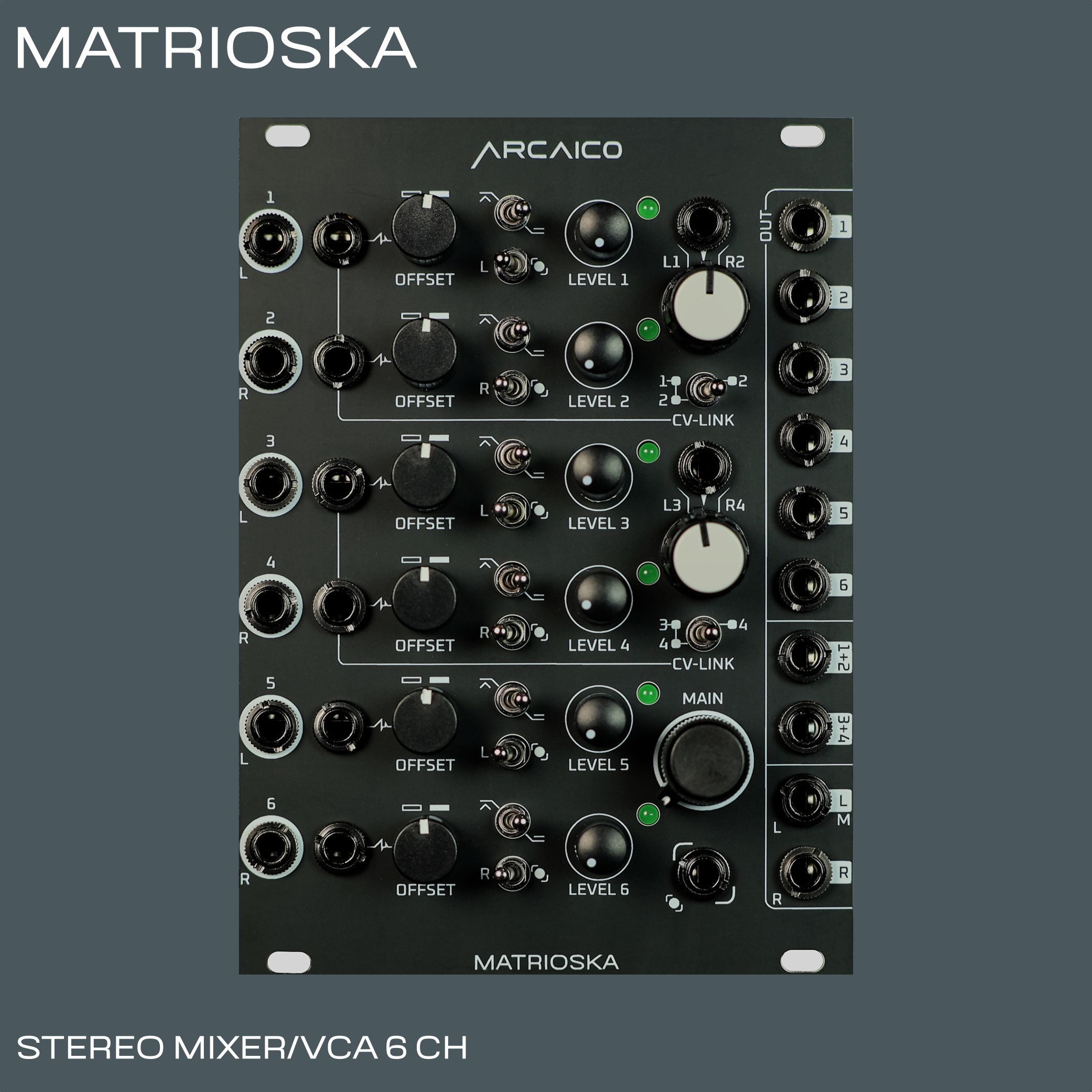
Finding the perfect mixer for a Eurorack system can be tough. You need something compact, flexible, and powerful. Enter the Matrioska Stereo Mixer + VCA by Arcaico, a feature-packed module that might just be the central hub your stereo setup has been missing.
Matrioska is a 4-channel stereo mixer designed to elegantly handle your stereo signals. But it doesn’t stop there; it also includes a stereo auxiliary input, giving you a total of 10 inputs (5 stereo pairs). Each of the four main channels is equipped with its own high-quality VCA, complete with a dedicated CV input and attenuator. This turns a simple mixer into a dynamic sound-shaping tool, allowing you to create complex, evolving stereo patches with ease.
Key Features
Here’s a quick rundown of what the Matrioska brings to your rack:
- 4 Stereo Channels: Each with a dedicated level knob.
- VCA on Each Channel: All four main channels feature an integrated VCA.
- CV Control: Each VCA has a CV input with an attenuator, allowing for external modulation of your channel levels.
- Stereo Auxiliary Input: A dedicated stereo input (L/R) for summing an additional stereo source, perfect for sub-mixers or external gear.
- Stereo Output: A final stereo output (L/R) to send your mix to your monitors, interface, or next module in the chain.
Technical Summary
For the spec-heads, here is the essential information at a glance:
| Feature | Specification |
| Width | 18 HP |
| Depth | 25mm |
| Power | +12V: 45mA |
| -12V: 40mA |
Pricing
The Matrioska is available directly from Arcaico. Please note that prices in currencies other than EURO are estimates based on exchange rates at the time of writing and do not include shipping or import taxes.
| USD | EURO | GBP | AUD | |
|---|---|---|---|---|
| Price | $196.90 | €169.00 | £148.40 | $298.60 |
For a compact 10HP module, the ability to mix four stereo VCA-controlled channels plus an auxiliary input makes the Matrioska a powerful and space-efficient solution for any stereo-focused Eurorack system.
References
¹ Arcaico Official Product Page: https://www.arcaico.eu/prodotto/matrioska-stereo-mixer-vca/
² ModularGrid Page: https://modulargrid.net/e/arcaico-matrioska
Full article here: https://ranzee.com/arcaico-matrioska/
Behringer BM-18M Cluster Box
For musicians and sound designers seeking to add rich, swirling analog textures to their sound, Behringer has unveiled its latest creation: the BM-18M Cluster Box. This pedal is a versatile and powerful modulation unit that takes its inspiration from one of the most iconic and sought-after analog effect pedals, the Moog Moogerfooger MF-108M Cluster Flux.
Let’s dive in and see what this new box of tricks has to offer.
An Overview of the BM-18M
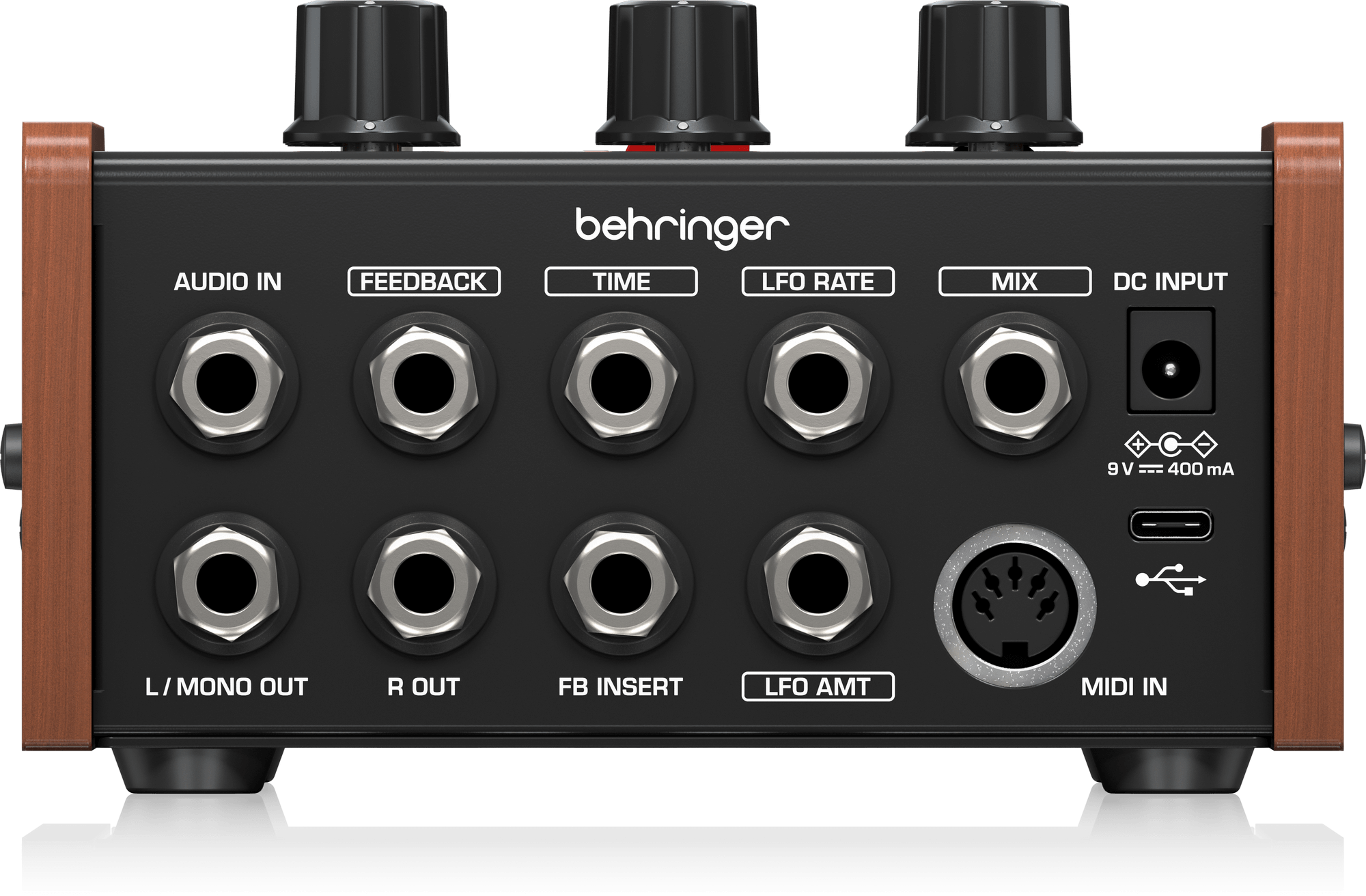
The BM-18M Cluster Box is an all-analog modulation pedal that combines three classic effects—chorus, flanger, and vibrato—into a single, robust unit. At its heart is a genuine Bucket Brigade Device (BBD) delay line, the secret sauce behind the warm, lush, and sometimes-wild sounds of classic analog modulation.
Designed to be equally at home on a guitarist’s pedalboard, a synth enthusiast’s desk, or even as a studio outboard effect, the BM-18M is built for hands-on control and deep sonic exploration. It sports the classic Behringer “clone” aesthetic, complete with wooden side panels, giving it a vintage vibe that matches its sound.
From subtle, shimmering movement to deep, detuned vibrato and all-out jet-engine flanging, this pedal aims to deliver a massive range of tonal possibilities.
Key Features
The BM-18M is packed with controls and connectivity, moving it beyond a simple stompbox into a true sound-shaping tool.
- Triple-Threat Modulation: Seamlessly switch between lush Chorus, sweeping Flanger, and classic Vibrato effects.
- True Analog BBD Core: Delivers the authentic, warm, and rich character that digital emulations often chase.
- Advanced LFO: Features a six-shape LFO (Sine, Triangle, Square, Ramp, Sawtooth, and “Staircase” Random) to create a wide variety of modulation patterns.
- Total Control: Dedicated knobs for LFO Rate, LFO Amount, Delay Time, and a bipolar Feedback control (which can highlight even or odd harmonics) allow for deep sound sculpting.
- Tap Tempo: A dedicated footswitch lets you sync the modulation rate to your music’s tempo on the fly.
- Drive and Mix: An onboard Drive circuit adds analog grit and saturation, while a vital Mix knob lets you blend your dry (unaffected) signal with the wet (effected) signal for perfect integration.
- Full Connectivity: This is where the BM-18M truly shines. It includes:
- Stereo (Left/Mono and Right) outputs.
- 5-pin MIDI In for syncing LFO and other parameters to your DAW or sequencer.
- USB-C for MIDI control and integration with Behringer’s Guitar Tribe App.
- Five (5) CV/Expression pedal inputs to control Feedback, Delay Time, LFO Rate, LFO Amount, and Mix, allowing for full integration with modular synths or expressive foot control.
BM-18M vs. The Original: Moogerfooger Cluster Flux
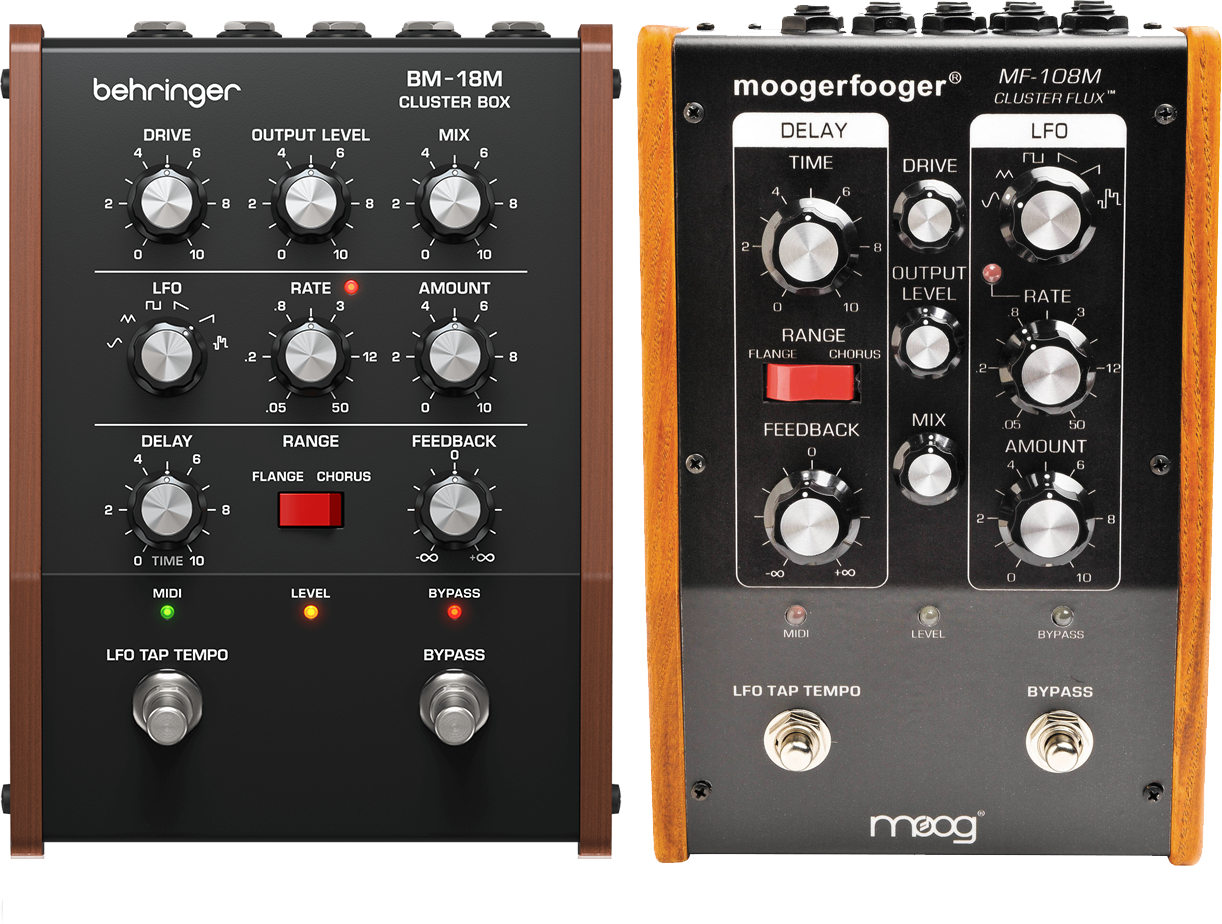
The BM-18M is a direct homage to the legendary (and long-discontinued) Moog Moogerfooger MF-108M Cluster Flux. How do they stack up?
| Feature | Behringer BM-18M Cluster Box | Moog Moogerfooger MF-108M Cluster Flux |
| Product Status | New (Announced Oct 2025) | Discontinued (High-value on used market) |
| Circuitry | Analog BBD | Analog BBD |
| LFO Shapes | 6 (Sine, Triangle, Square, Ramp, Saw, Random) | 6 (Sine, Triangle, Square, Ramp, Reverse Ramp, S&H) |
| Controls | Drive, Output, Mix, Rate, Amount, Time, Feedback | Drive, Output, Mix, Rate, Amount, Time, Feedback |
| MIDI | 5-pin MIDI In + USB-C (MIDI) | 5-pin MIDI In |
| CV / Expression | 5x 1/4″ CV Inputs | 5x 1/4″ CV Inputs |
| Key Difference | Includes USB-C for app integration. | Includes Feedback Loop Insert (1/4″ TRS) |
| Build | Metal housing, wood-style sides | Rugged steel case, solid hardwood sides |
| Dimensions | ~298 x 127 x 47 mm (11.7″ x 5″ x 1.85″) | ~229 x 152 x 64 mm (9″ x 6″ x 2.5″) |
| Weight | ~0.8 kg (1.76 lbs) | ~1.81 kg (4 lbs) |
| Price | $179 USD (New) | ~$800 – $2000+ USD (Used) |
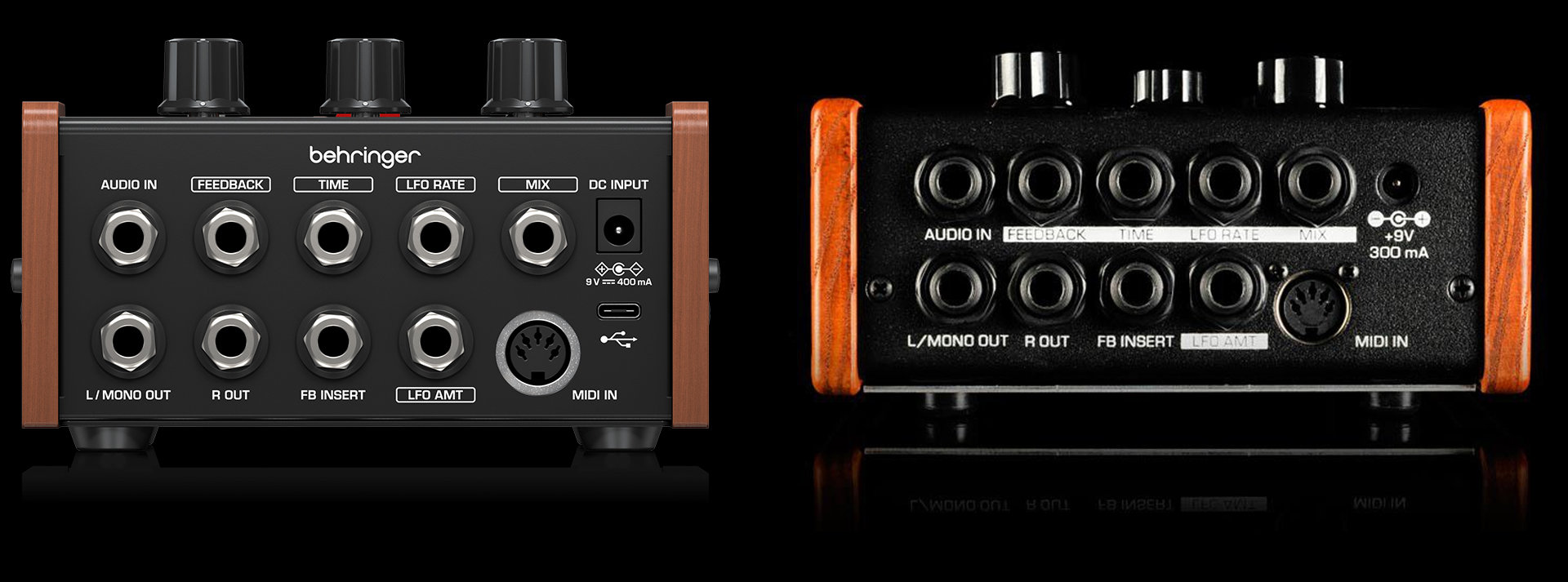
BM-18M Cluster Box: At a Glance
Here is a quick summary of the technical specifications for the pedal.
| Feature | Specification |
| Effect Types | Chorus, Flanger, Vibrato |
| Circuitry | Analog Bucket Brigade Device (BBD) |
| LFO Shapes | 6 (Sine, Triangle, Square, Ramp, Saw, Random) |
| Controls | Drive, Output Level, Mix, LFO Rate, LFO Amount, Delay Time, Feedback |
| Inputs | 1/4″ Audio In, 5-pin MIDI In, USB-C, 5x 1/4″ CV/Expression In |
| Outputs | 1/4″ Left (Mono) Out, 1/4″ Right Out |
| Power | 9V DC, 400 mA (Adapter Not Included) |
| Dimensions | 298 x 127 x 47 mm (11.7 x 5 x 1.85 in) |
| Weight | 0.8 kg (1.76 lbs) |
Pricing, Release Date & Availability
This is the information every musician is waiting for. As the BM-18M Cluster Box is a very recent announcement (October 2025), availability is just beginning to roll out.
Release Date
The Behringer BM-18M Cluster Box was announced in late October 2025. Retailer listings in the USA show an expected pre-order shipping date of January 2026.
Availability
- USA: Available for pre-order from major retailers like Sweetwater and Alto Music.
- UK: Listed as “available to order” from retailers such as Gear4music, suggesting stock is imminent or on its way.
- Europe: Expected to be available for pre-order through major Behringer dealers across the EU.
- Australia: Availability through Australian dealers is expected to follow the US and European release.
Pricing
Official pricing for all regions has not been fully announced, but the initial US price gives a strong indication.
| Currency | Price |
| USD | $179.00 |
| EURO | To Be Confirmed (TBC) |
| GBP | To Be Confirmed (TBC) |
| AUD | To Be Confirmed (TBC) |
Sources:
[1] Behringer Product Page (https://www.behringer.com/behringer/product?modelCode=0709-ALR)
Tandy Trip by NoysToise
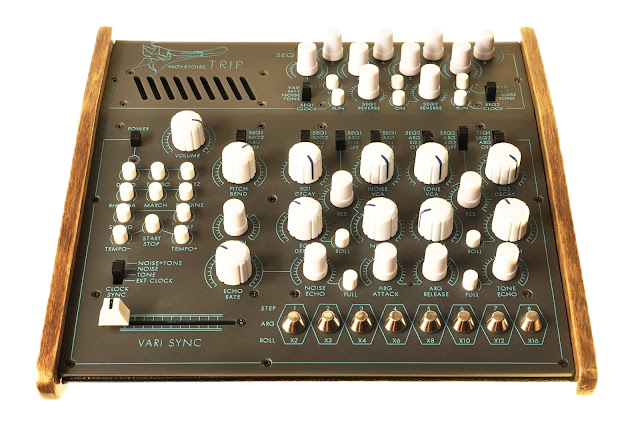
The TRIP is an experimental drum machine built around a dual-voice drum chip, which originally provided 8 pre-programmed rhythms. Noystoise used only the sound chip, building the rest of the circuit and a custom enclosure from scratch.
The goal was to create an experimental drum machine to accompany the PAL. While its creator notes it lacks the full programmability of a traditional drum machine, it excels as a “Rhythmic Drone-Machine,” perfect for nostalgic IDM. Its name comes from its ability to create “stumbling rhythms” and the capacity to get lost in its sounds for hours.
Features
The TRIP is packed with a surprising number of sound-shaping tools:
- Global Pitch modulation
- 8 preprogrammed rhythms with start/stop and tempo controls
- Two drum voices: “TONE” (basic square-wave) and “NOISE” (pseudo-noise square-wave)
- Two independent Envelope generators (one per voice) with Decay and Depth controls
- Two independent resonant 12db Lowpass Filters (one per voice) with Cutoff and Resonance
- Two independent VCAs (one per voice)
- PT2399 Echo circuit with independent mix knobs for each voice
- Dual 8-step analog Sequencer with reversing clock inputs
- VARI SYNC variable Sequencer Clock
- ARG (Attack Release Generator)
- 8 Roll/Flam EG trigger inputs
- 8-input multi-use capacitive-touch keys
PT2399 Delay Chip
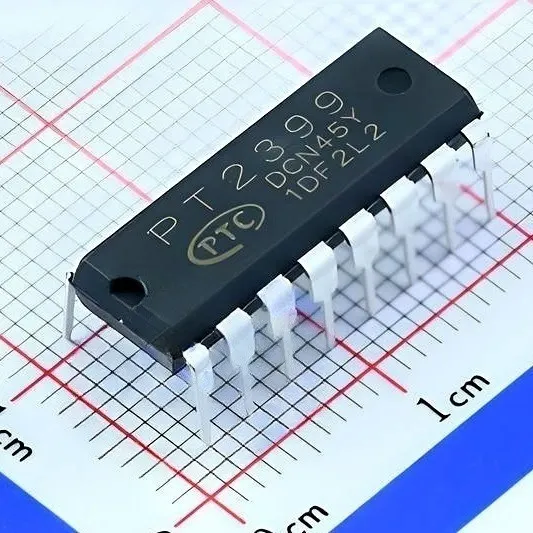
The PT2399 is a CMOS single-chip echo processor developed by Princeton Technology Corporation, originally designed for use in karaoke machines and consumer audio devices to add simple echo effects.
It functions by converting analog audio signals into digital data via an integrated analog-to-digital converter (ADC), storing the data in 44Kb of internal RAM, and then converting it back to an analog signal using a digital-to-analog converter (DAC) and a low-pass filter.
The delay time is determined by an internal voltage-controlled oscillator (VCO) clock frequency, which can be adjusted by changing an external resistor, allowing for a delay range from a minimum of 30ms to a maximum of 340ms.
This chip is widely used in guitar effect pedals, DIY audio projects, and even in some commercial synthesizers and multi-effects units due to its low cost, ease of use, and distinctive lo-fi character.
We touched on the PT2399 chip with the following:
- Tre Modular Liminal Space: https://ranzee.com/tre-modular-liminal-space/ and Synth Geekery 296: https://ranzee.com/synth-geekery-296/
- Daydreamer Synth: https://ranzee.com/daydreamer-synth/ and Synth Geekery 302: https://ranzee.com/synth-geekery-302/
- Synth Geekery 233 (Stylophone CPM DS-2): https://ranzee.com/synth-geekery-233/
Link to full article: https://ranzee.com/tandy-trip/
Price: DIY
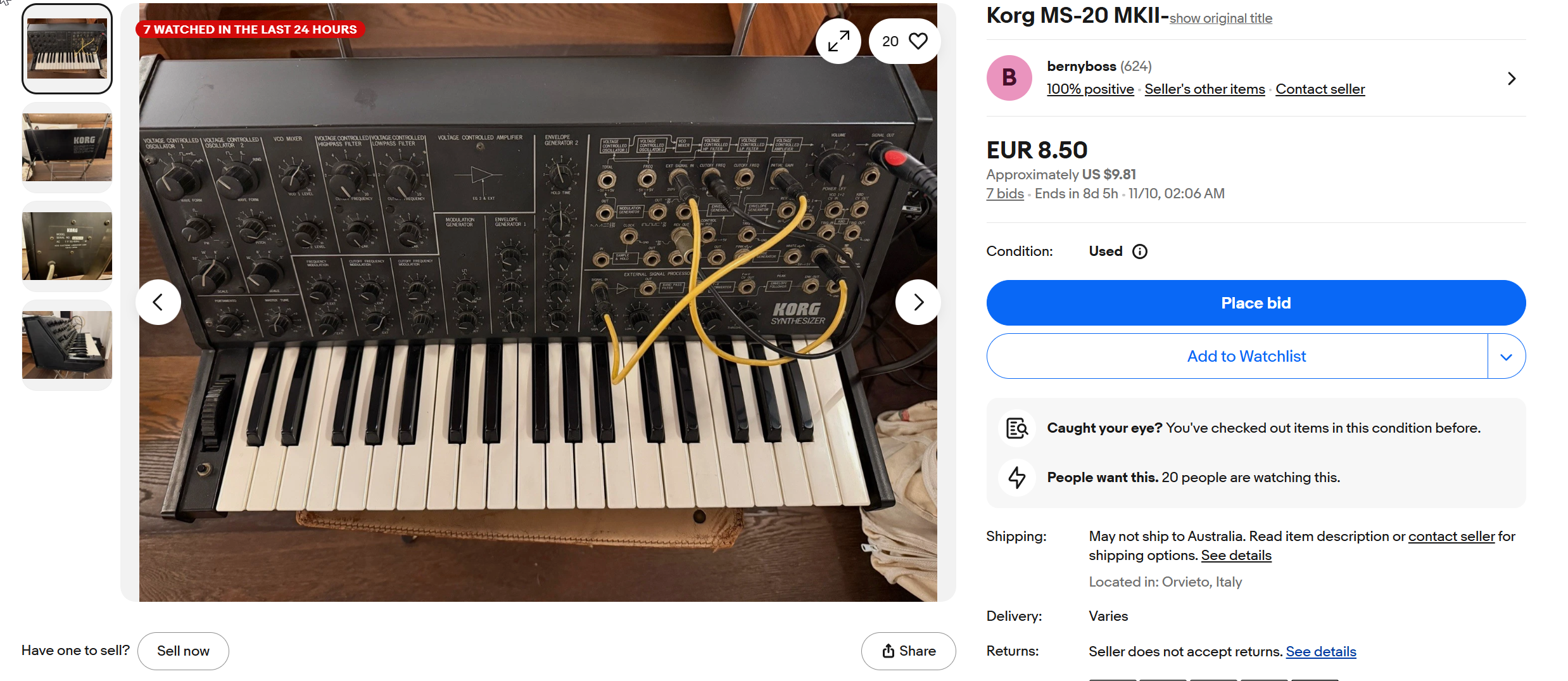
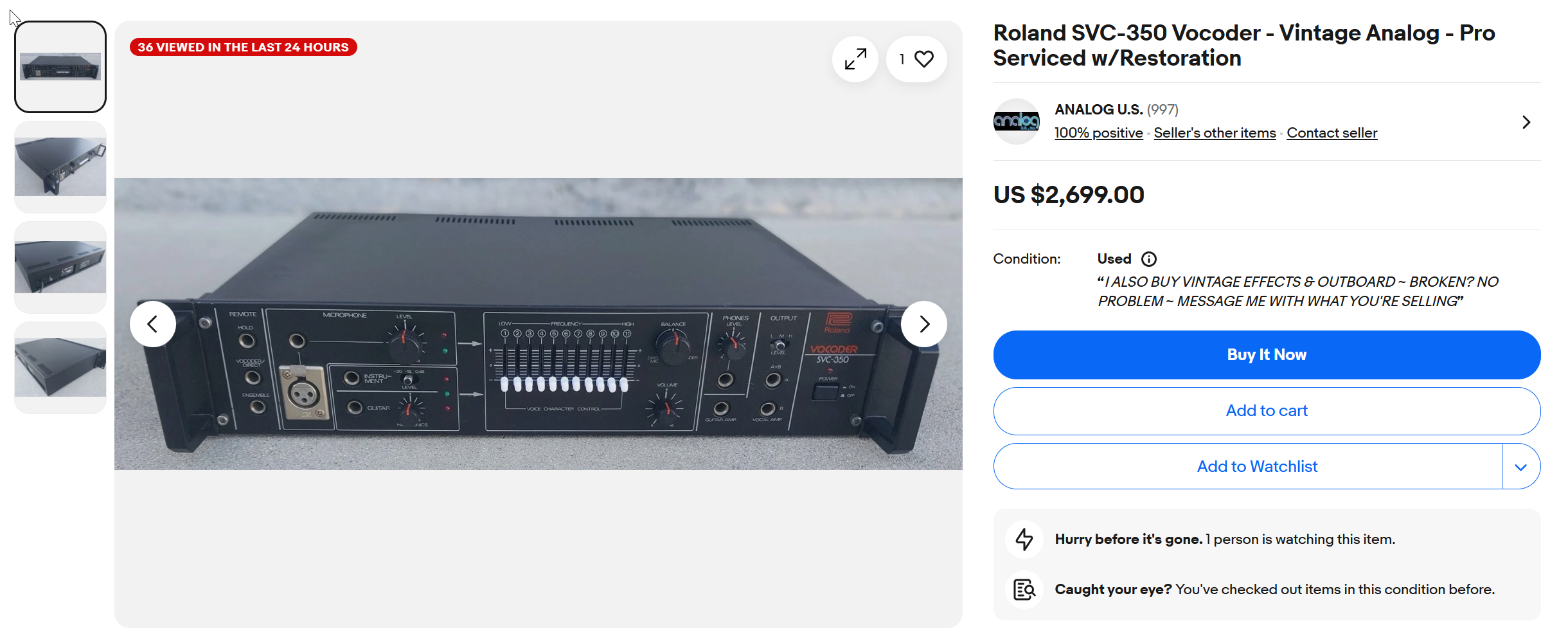
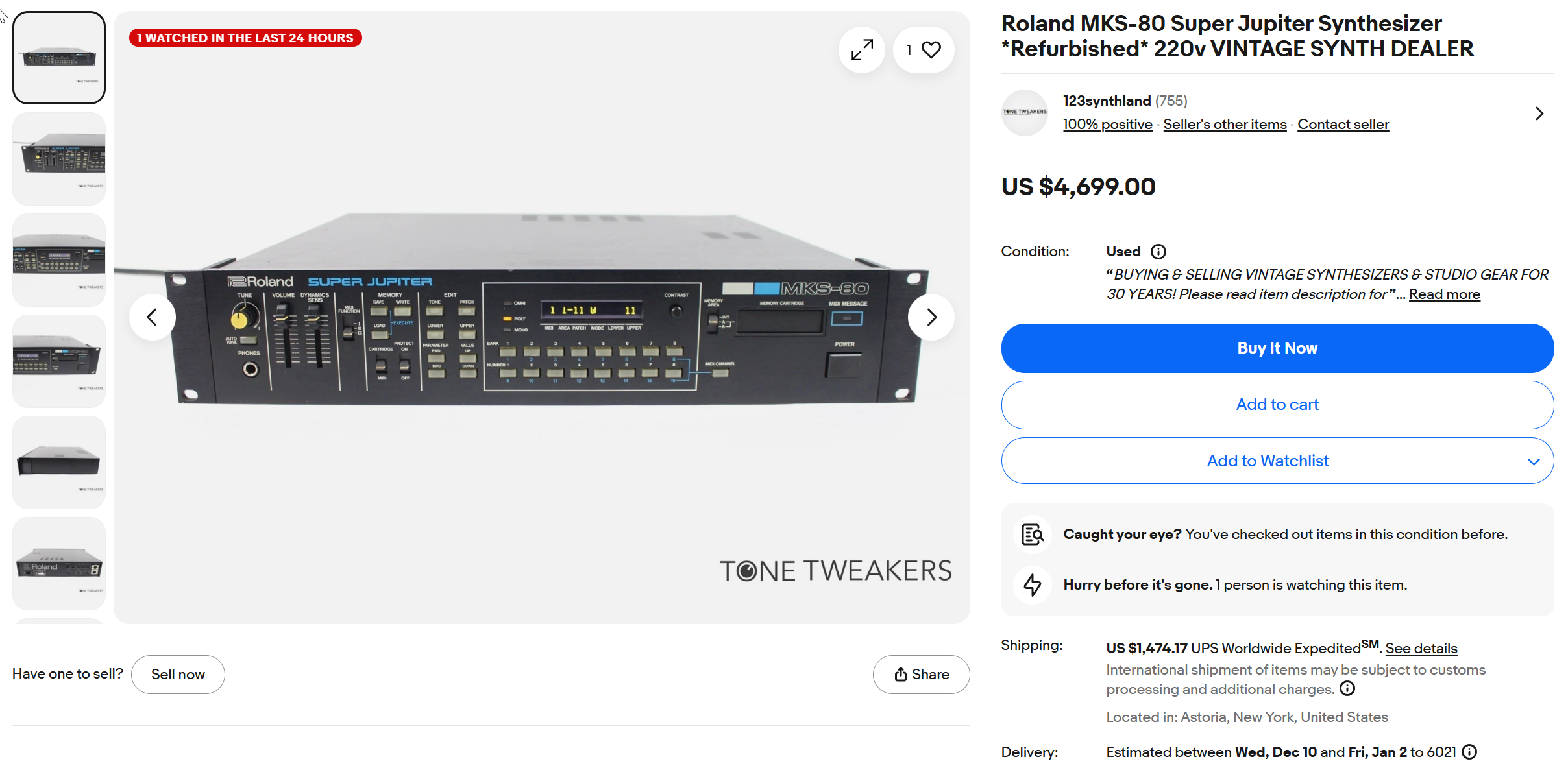
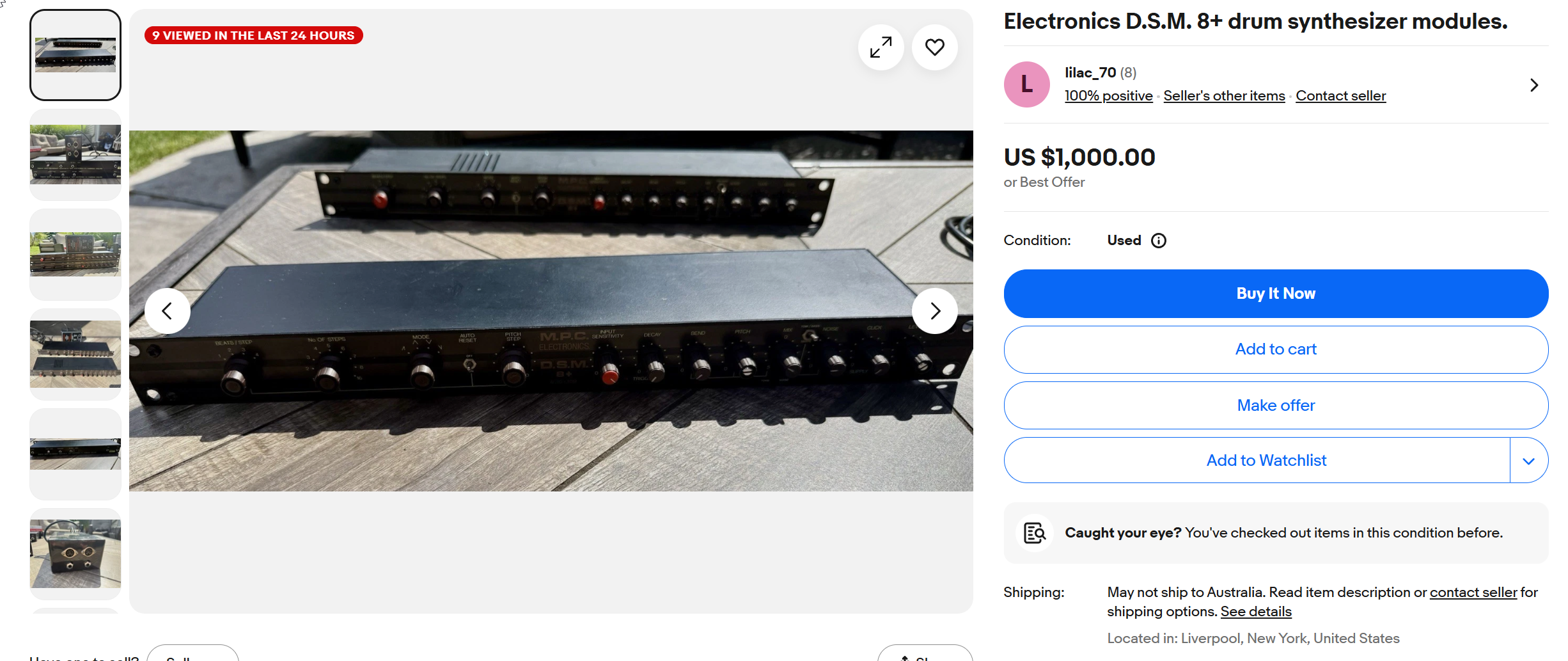
Price Watch
Find below images and links to the items we showed for the price watch segment.
| Korg MS-20 MKII | https://ebay.us/961YTp |
| Roland SVC-350 Vocoder | https://ebay.us/5FJihV |
| Roland Super Jupiter | https://ebay.us/NptktZ |
| Electronics DSM drum synthesizers | https://ebay.us/kIWTPs |
Name That Synth
No name that synth this week – send one in!
If you are after more information about Name that Synth – please check out this page here.
Saturday Sonority
This week’s Saturday Sonority we might talking about …..


Recent Comments